MSc Tropical Disease Biology
Tropical diseases affect more than a billion people worldwide, with devastating consequences for people’s health, education and livelihood. The impact is far worse in resource-limited settings, where these diseases thrive, and where health systems are often the weakest.
Apply now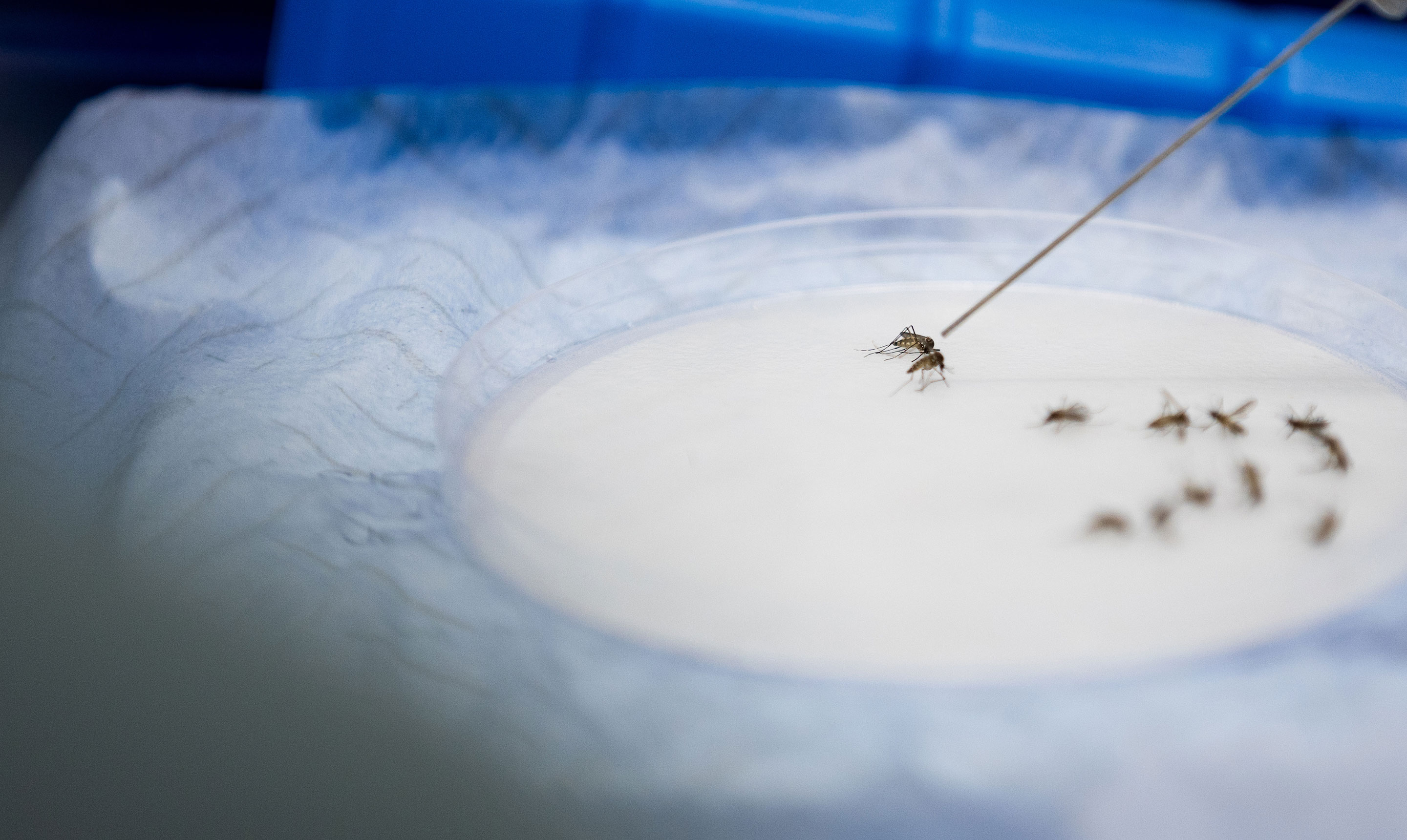
- Course type
- Master’s course
- Director of Studies
- Dr James LaCourse
- Location
- Liverpool, UK
- Start date
- September 2026
- Mode of study
- Full time, on campus
- Duration
- One year
- Home fee
- £13,325
- International fee
- £26,099
Overview
Our MSc Tropical Disease Biology dives into the biology of the pathogens and vectors driving tropical infections. You’ll master parasitology, vector biology, immunology and host-pathogen interactions. This will help you understand, monitor and combat diseases that hit the world’s poorest populations hardest.
Who is this course for?
Students and professionals with a background in biological sciences, biomedical or veterinary science, tropical medicine or global health research.
Intercalating medical and veterinary students who have completed at least three years of study.

“This course will open your eyes to the fascinating world of tropical disease biology. You’ll develop a keen awareness of the impact of organisms and their epidemiology, what that means for the world’s poorest populations, and what we can do to support them.”
Dr James LaCourse, Director of Studies
Why study Tropical Disease Biology at LSTM?
Learn in a research-active environment with cutting-edge laboratory facilities.
Explore diseases, vectors and pathogens of major public health importance.
Gain hands-on experience in lab and field-based research methods.
Tailor your studies to your interests through flexible module options.
Complete a research project with opportunities for international fieldwork.
“There’s a great academic community at LSTM, where you’ll learn from leading global academics, benefit from industrial collaborations and make international connections.”
What will I learn?
This one-year MSc is split into three semesters. You’ll complete taught modules in the first two semesters, followed by a self-directed research project in the third.
- Scientific and Professional Skills (core).
- Biology of Tropical Pathogens and Vectors of Disease (core).
- Research Methods in Tropical Disease Biology (core).
- Scientific and Professional Skills (continued).
- Three optional modules, such as:
- Epidemiology and Control of Tropical Pathogens.
- Applied Bioinformatics.
- Vector Population Biology and Control.
- Molecular and Cellular Biology of Pathogens and Vectors.
- Climate Change and Health.
- Applied Statistics for Health Research.
- Immunology of Tropical Diseases.
- Research Project (60 credits).
Teaching methods include lectures, small group work, laboratory practicals and field techniques.
Each 20-credit module involves around 200 hours of learning, including contact hours, research and self-directed study.
The course is taught on campus in Liverpool, UK, with opportunities to undertake international fieldwork during your project.
- Understand and analyse host-pathogen-vector relationships.
- Apply molecular, immunological and ecological techniques in tropical disease biology.
- Design and carry out research using appropriate methodology and tools.
- Evaluate scientific evidence and communicate findings clearly.
- Contribute to disease monitoring, control and prevention strategies worldwide.
- Public health and research laboratories.
- Disease control and surveillance programmes.
- PhD and academic research in global health or vector biology.
Our alumni work for organisations such as the World Health Organization, academic institutions, public health agencies and global research partnerships.
Entry requirements



Fees and funding
Home fee
£13,325
International fee
£26,099

Financial support for UK students
We have scholarships, bursaries, discounts and loans available, established through generous donations from alumni, staff and friends and funding from within Liverpool School of Tropical Medicine.
Financial support for International students
We offer various scholarships for international students, particularly those from low- and middle-income countries. These include full or partial funding through programs like the LSTM Global Health Impact Scholarship and the LSTM Humanitarian Scholarship

External Funding
Scholarships, fellowships and grants are available from a range of funders and organisations. Any scholarship, studentship, fellowship or grant can be used as an alternative to, or part-funding of, an LSTM scholarship.
How to apply
You can apply for a course at any time throughout the year using our online application portal, MyLSTM. You will need to register for an account the first time or if you’ve already created an account you can pick up where you left off by logging in directly to MyLSTM.
By registering for a MyLSTM account, you will be able to:
- Apply for courses at LSTM.
- Upload supporting documentation.
- Save your draft application.
- Accept an offer to study.
- Keep your account information up-to-date.
If you can’t access our online application form, please get in touch. Paper application forms are available on request.
Categories section – full title
Get study updates
Sign up for the latest on scholarships, application deadlines, events and new course launches. We’ll keep it relevant, and you can unsubscribe at any time.