Human Challenge Facility
Designed to speed up vaccine and treatment research for infectious diseases, our Human Challenge Facility strengthens the UK’s capacity to respond to future outbreaks.
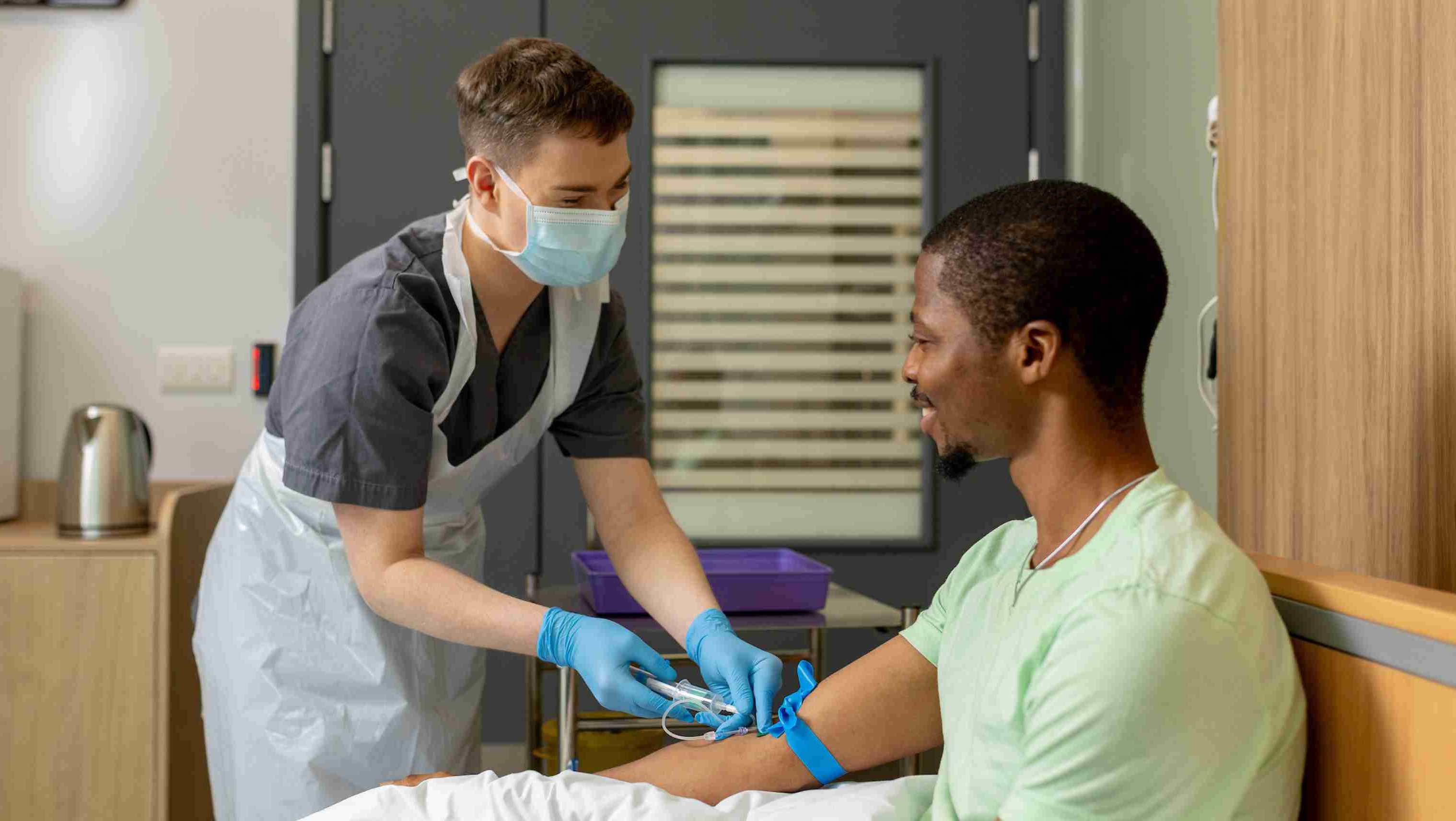
Our Human Challenge Facility provides 12-bed in-patient isolation unit that helps us test vaccines and treatments for infectious diseases more quickly and safely.
We run controlled human challenge studies, where volunteers take part in carefully monitored research in a clinical setting with appropriate healthcare support. This approach helps us assess the safety and effectiveness of new vaccines and therapeutics earlier, and it can reduce development and approval timelines by two to four years in some cases.
What the facility includes
The facility has been designed to support high-quality infection research, including studies involving higher-consequence pathogens. It includes:
- 12 in-patient isolation beds, expanding our existing outpatient capacity (18 beds)
- HEPA filtration and negative air pressure
- Containment level 3 laboratories and an on-site pharmacy
Strengthening national capacity
Our Human Challenge Facility will be the largest academic in-patient human challenge isolation facility in the UK. We deliver this work in partnership with Liverpool University Hospitals Foundation Trust and the University of Liverpool, helping to increase national capacity for human infection research.
Built on proven expertise
We have more than a decade of experience delivering human challenge studies through the Liverpool Vaccine Group. During the COVID-19 pandemic, the group supported the Oxford–AstraZeneca vaccine trial, with Liverpool the largest trial site outside Oxford.
What this enables next
With this facility, we can apply our human challenge models to more viruses and pathogens that pose a threat to human health, supporting the development of better diagnostics, treatments and vaccines.
From lab bench to clinical trial
We bring together vaccine science and clinical expertise to speed up progress from discovery to real-world impact. The Liverpool Vaccine Group develops new vaccines for infectious diseases, while our Accelerator Research Clinic runs clinical trials with volunteers to test them safely and effectively. Find out how you can support research that could protect millions of people worldwide.

News
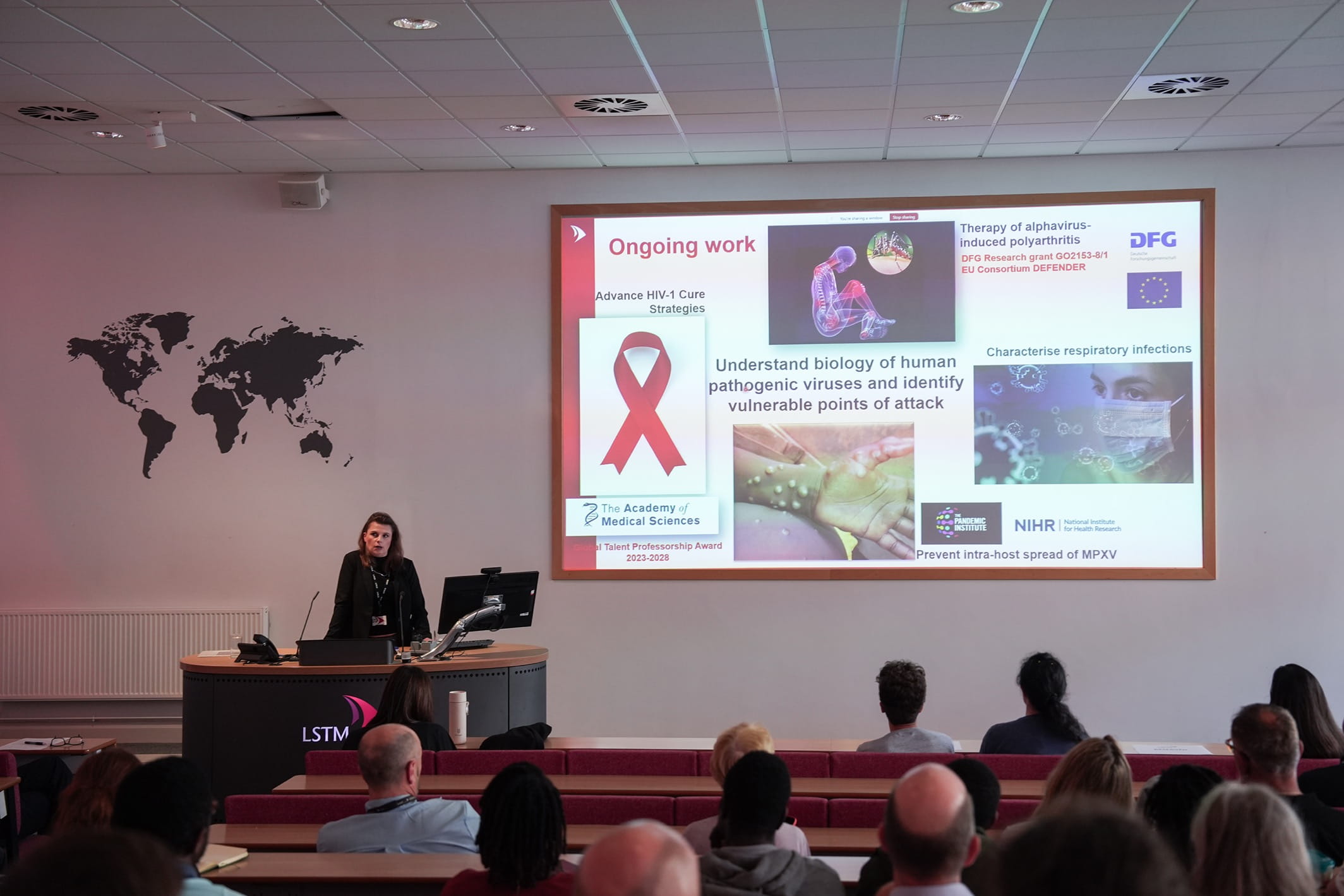
Inaugural Lecture – Professor Christine Goffinet
52:42