Herpetarium
From venom extraction and laboratory research to partnerships that improve access to antivenom, we turn specialist care and science into real-world impact.
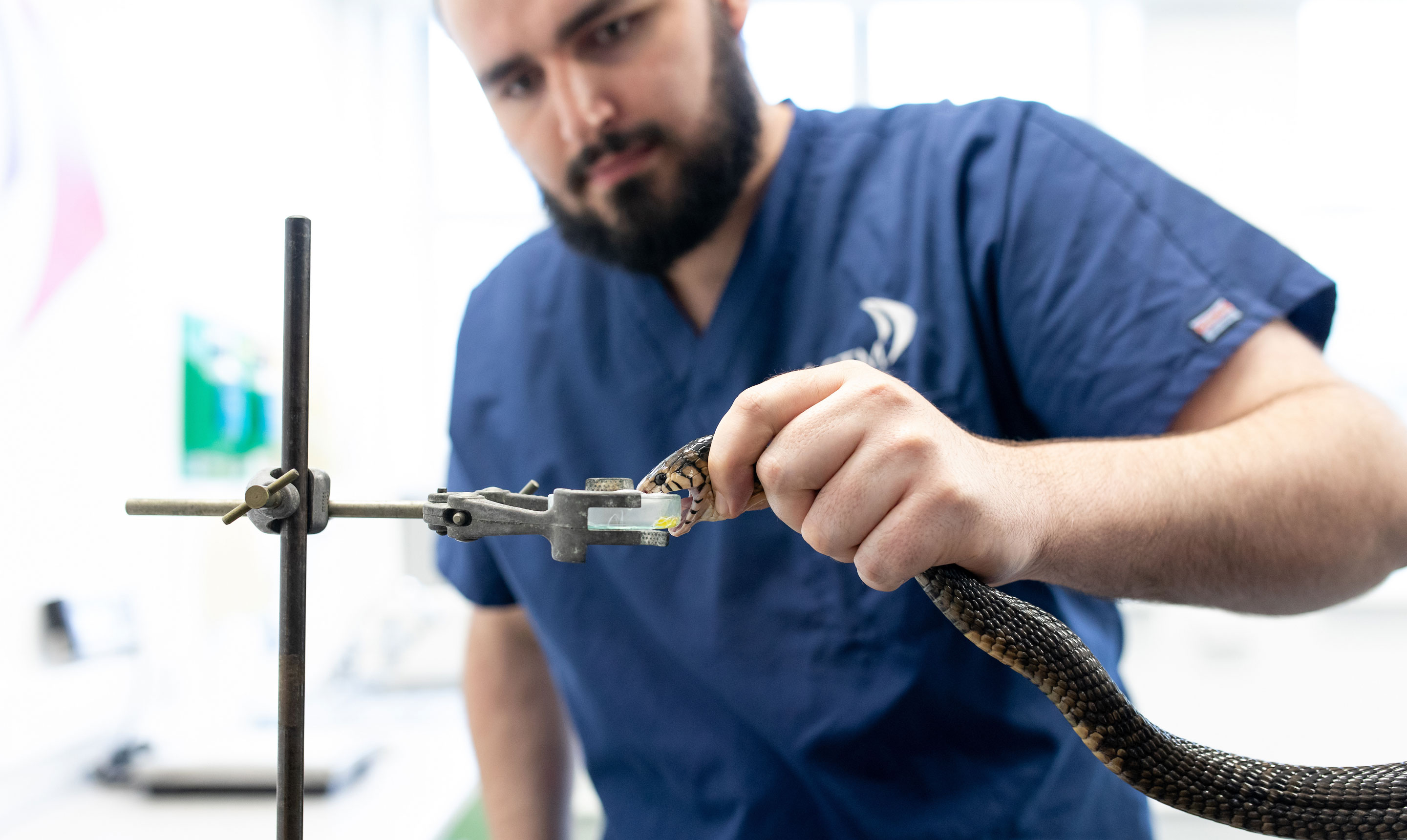
Based in Liverpool with global reach, our Herpetarium is the UK’s only Home Office-accredited experimental animal facility dedicated to venomous snakes. It underpins the Centre for Snakebite Research and Interventions, helping us study venom and develop better treatments for snakebite.
Snake venom varies not just between species, but within the same species from different regions. To understand venom properly and to develop new snakebite treatments, the Centre for Snakebite Research and Interventions needs reliable, high-quality venom from a wide range of snakes.
That work demands a specialist facility where we can safely house, care for and study some of the world’s most dangerous snakes.
About the facility
Our Herpetarium is a critical pillar of CSRI, supporting both basic biology and therapeutic research.
Led by world-renowned herpetologists Paul Rowley and Edouard Crittenden, the Herpetarium is home to more than 150 venomous snakes from 50 different species. It is the largest and most diverse collection in the UK, and among the most specialised in Europe.
Centre for Snakebite Research & Interventions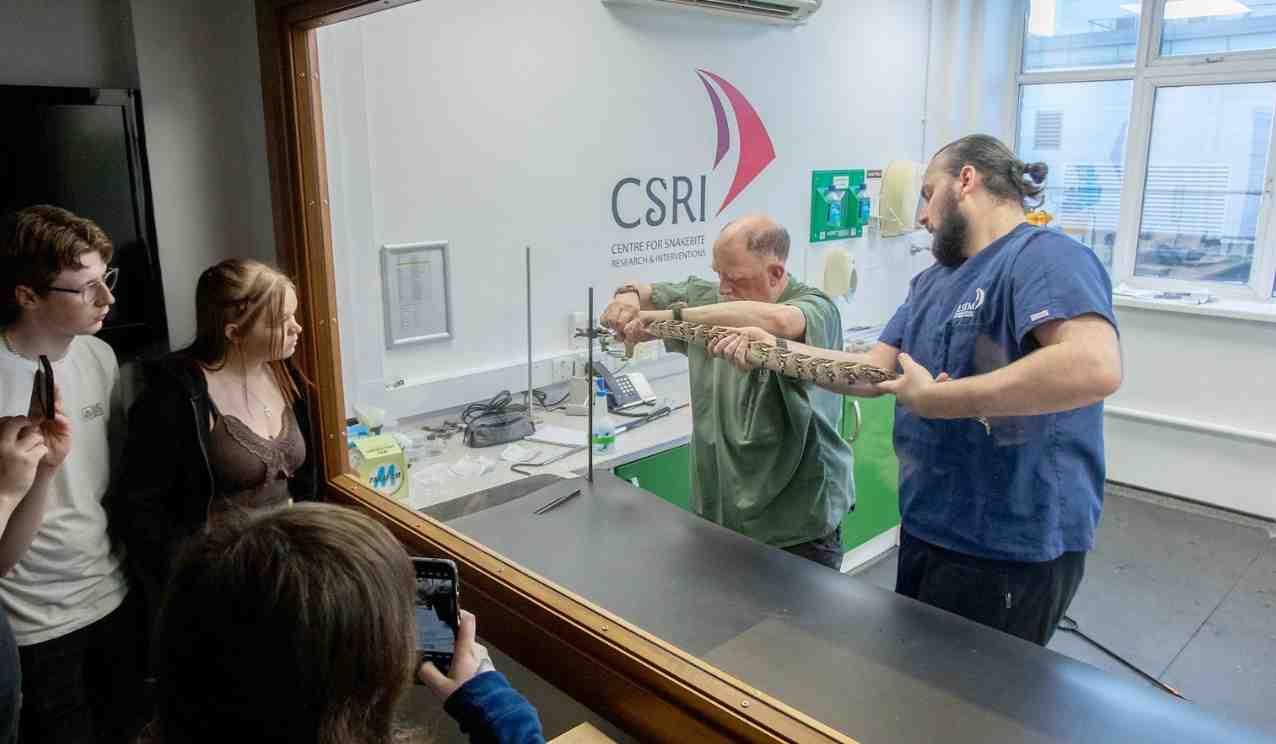
Our collection
The collection has a strong focus on African snake species, including:
- Haemotoxic vipers such as the saw-scaled viper (Echis spp.), puff adder (Bitis arietans) and gaboon viper (Bitis gabonica)
- Neurotoxic elapids including black and green mambas (Dendroaspis spp.)
- Cobras (Naja spp.), including spitting and non-spitting species
Our approach and impact
Our team are highly experienced in caring for and handling venomous snakes. They extract venom from each snake in a precise, carefully controlled process. We freeze every sample quickly, then freeze-dry it and store it under strict conditions to preserve potency.
This venom fuels a huge portion of CSRI’s work, including:
- Basic biology research into venom composition and evolution
- Therapeutic discovery, including trials of oral drugs and monoclonal antibody treatments
- Global collaboration, with venom samples shared internationally with research teams and antivenom manufacturers
Every drop contributes to the search for safer, more accessible treatments.
Public engagement
Since 2010, we have welcomed more than 3,000 visitors, including school pupils, university students, members of the armed forces, visiting dignitaries, research funders and members of the public.
A visit to the herpetarium is always grounded in science, safety and care. People leave with a deeper understanding of the research behind snakebite, and the ethical standards involved in working with these extraordinary animals.