foreign
ladies and gentlemen my name is Adam Roberts and it’s my pleasure to introduce the lecture this
evening thank you very much for coming and welcome to the evening’s events in this great space the legate theater
which is formerly the autopsy in surgery theater for medical students here so you’re in a place of History
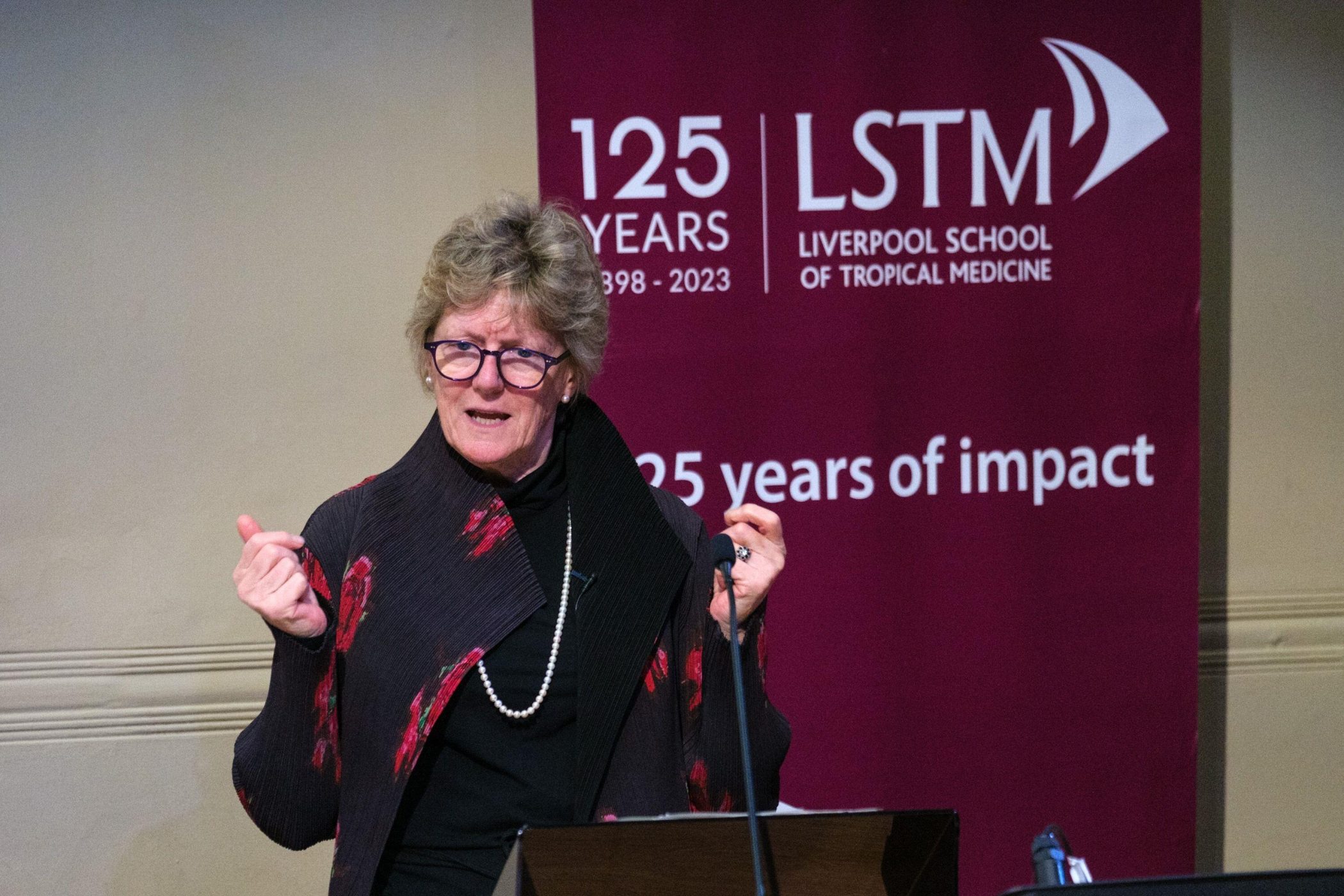
so as you all know lstm is celebrating its 125th anniversary in November 2023
as the world’s first Institute of its kind we’re particularly proud of our long track record in global Health
firsts over the last 125 years we recognize this as an opportunity not
just to look back but also to look forward to the next 125 years and the major health challenges that face
Humanity at the moment and the role of lstm and its Partners in tackling them
that is why tonight’s lecture and the topic of antimicrobial resistance is so important to us
this is the first lecture in our 125th anniversary series part of a whole program of activity
which is taking place over the next year you can find out more about this by visiting the lstm125 website or by
asking any of the team helping this evening before we get started I’d like to remind
you that this event is being live streamed and recorded and following Dame Sully’s lecture there
will be an opportunity to ask questions both in person and online we will do our best to answer as many questions as we
can within the time we have allocated housekeeping there are no fire alarm
tests planned for today so if you hear the alarm a member of Staff will point you in the right direction to the
nearest fire exit the meeting point is in front of the steps of the electrical engineering building opposite the main doors of the
Victoria gallery and Museum and it now gives me great pleasure to
introduce our speaker for this evening Dame Professor Sally Davis Sally was appointed as the UK government
special Envoy on antimicrobial resistance in 2019. she’s also the 40th master of Trinity
College at Cambridge University Dame Sally was the chief medical officer for England and a senior medical advisor
to the UK government from 2011 to 2019. she’s a leading figure in global Health
having served as a member of the World Health Organization executive board from 2014 to 2016. and as a co-convener of
the United Nations interagency coordination group on antimicrobial resistance reporting in 2019.
in November 2020 Dame Sully was announced as a member of the UN global leaders group on AMR
serving alongside heads of state ministers and other prominent figures from around the world to advocate for
Global action on AMR and in the 2020 New Year’s honors list Dame Sally became the second woman and
the first outside of the royal family to be pointed Dame Grand Cross of the order of bath for services to Public Health
and research having already received her DB in 2009. so it’s a great pleasure
that I would ask Dame Sally Davis to take the stage [Applause] [Music]
[Applause] [Music] thank you very much Adam
um director I am absolutely honored to be the first speaker in your 125th
anniversary series I think it’s some wonderful the work you’ve done over that
time and to support you is fantastic so as you gather I’m speaking to you as the
UK’s special Envoy are not paid they pay my expenses if I
travel from the government but it was the Prime Minister who appointed me because what I had persuaded them over
the last nine years in March next year it’ll be 10 years I’ve been working on antimicrobial resistance AMR is that
actually no one’s safe until we’re all safe and we really need to move on this carefully
and steadily across the world as well as in this country but I do leave this country to my successor Chris witty
who’s so terribly good I as chief medical officer LED when we
had a bowler we had one bad quite bad flu um pandemic I saw Novi chalk the sugar
Levy which I think is going to last I did have a worry for 49 days we might
lose it um many things and I care about them but actually the
one that I stay working on in public health is AMR and the policy work that we do is
clearly absolutely founded in Technical and scientific work that comes from all
of you and people like you across Britain and across the world so again I
want to thank those of you who support me by telling me the science and making
sure I’m going the right way because I came into this to act as an advocate and
to bridge the science and policy bit not to pretend I knew it all in the
laboratory and we really have got to bridge those and bring you into the
policy and bring the policy makers to listen to what you’re doing
and of course your Pioneers in this research about resistance I gather you
started looking at it one year after Fleming discovered penicillin in 1928
and now you’re looking at resistance and insecticides So you you’re ahead of the
game at each stage so today I’m going to shine a light on the type of work you do the light the
work of researchers but also policy makers and activists across the world who use their voices and their spheres
of influence to turn the tide against AMR we have clinicians veterinarians Farmers
dentists nurses early and late stage researchers and yes
I’m going to talk about singers as well working on this and everyone has roles
to play in mitigating it so we all know across the world the last
two years have been absolutely awful the most challenging for healthcare anywhere because of covert
but that had disastrous impact on the use of antibiotics and AMR meanwhile probably
even worse is we’ve seen a historically unprecedented increase in global poverty
as a result of covid with the World Bank estimating now that 97 million more
people were in poverty in 2020 than before covid the World Health
Organization have estimated that disruption to Health Services contributed to 14 million malaria cases
and 69 000 deaths from malaria last year that is a tragedy for each and every one
of those all the while three billion people worldwide still
lack hand washing facilities at home one of the basic messages as everyone in
this room knows to prevent infections and after interruptions to Health
Services during covid-19 drug resistant TB is rising now for the
first time in two decades so what we’re seeing globally is the
impact of initially untreatable and infection but it’s clear covid-19 is not
going to be the last pandemic our world will face and I’ve been arguing all along that
we’re in the middle of a quiet Insidious pandemic of AMR
without effective antibiotics our health food and environmental systems
which means our economies would grind to our health so this is about to a halt this is about security it’s about health
security but it’s about food security and environmental security I use a
metaphor of a lobster I think covid was like the lobster dropped into boiling water and it makes an awful noise and it
dies whereas I think of AMR as the lobster put into cold water and heat it
up slowly it will die if we don’t get it out but it does it quietly and people
don’t notice we’re going to need what we already do need antibiotics to treat previously
treatable infections pneumonia TB HIV malaria Ally
ask you to think about what it would be like to go back to that pre-antibiotic age where cesarean sections dental
treatment chemo for cancer are more dangerous than not having those
treatments to begin with and when I say this people think
she’s crying wolf and it won’t happen but as we’re going to talk not only are antibiotics are Finance
resource but we have an empty Pipeline and it takes 20 years to develop them
so what are we doing as an intergenerational gift to our children
and grandchildren every time an antibiotic is used in a
person an animal or in the environment we create conditions as most of you know
when bacteria become resistant to treatments and I think covert and the young teen
showed the public let alone the experts like you how viruses are hardwired to
survive and mutate well so a bacteria
and actually when I talk about AMR I’m talking about viruses as well HIV
the high proportion ever increasing of viruses that are resistant to first-line
treatment TB malaria fungi they all have antimicrobial resistance as a problem
so I’ve started to talk about antibiotics and anti-infectives AS
Global Goods as essential infrastructure for health systems and Food Systems
because if people don’t look at them like that we’re not going to move forward and of course
it’s our excessive consumption of antibiotics in the global North
by humans and we will talk about animals that has made this worse
we we meet the demands of intensive disease prone farming systems in some
countries by just pumping animal feed and water with antibiotics for
preventive use I often talk about aquaculture and how people tip
antibiotics into the water it’s appalling but not Scottish and Norwegian
salmon and trout they’re vaccinated it’s cheaper
to use antibiotics and you get growth promotion then good animal husbandry and that’s
what drives resistance and it’s going to leave us medically defenseless
but I would argue it also destroys biodiversity and I think it compromises
animal welfare and food security over time so
our inequalities and are in action are driving what’s now the third leading
underlying cause of death behind only ischemic heart disease and stroke
earlier this year the Institute of Health metrics and
evaluation in Seattle did a global burden of disease assessment with Oxford
University and produced the most comprehensive estimates of the global burden of disease of AMR
it’s published and I’m sure you all know this in February in the Lancet and what they did was look at 204 countries 471
million individual health records to assess the problem
over 1.2 million deaths in 2019 directly
attributed to AMR that made AMR a bigger killer than HIV
or TB or malaria we don’t talk about it Chris Murray who leads the ihme The
Institute that did this rang me up and said Sally it’s much worse than I expected and I said bother I was hoping
it was going to be less worse than I expected and to find that it’s the third
most important cause underlying cause of death I think is quite shocking
what that study also showed us is how in
sub-Saharan Africa it’s particularly bad and that methicillin resistance staff remains a
very significant Global burden of of illness and this is important because
it’s not actually on the who’s priority list for developing new and effective antibiotic treatments so we need this
data not only to look at the size of the problem the geography or epidemiology of it but actually as a wake-up call to the
world for how and where we’ve got to Target and treat infections
I don’t think that anyone can have an excuse left for not taking action on AMR
for the nearly five million people whose deaths were connected to AMR it’s
already too late how can we ignore it and we live in a cycle where AMR drives
inequality and inequality breeds infection breeds AMR I absolutely accept
that at the moment more people dive lack of access to antibiotics than of
AMR but that just shows that the whole problem is one that if only we put our
minds to it and our pockets to it we could sort and women and children as you
all know are on the front line of this AMR and infection crisis
being cared givers and parturition and they bear the brunt poor Sanitation
and in Britain older South Asian ethnicity males are more likely than white counterparts to contract nasty
ebsl infections so you can begin to map and see where we
need to work but as I said before sub-Saharan Africa you’re two times more likely to die than
of AMR than if you’re in a high income country and we’ve we’ve been talking about this
Alexander Fleming warned of the misuse of penicillin and that this would lead
to resistance back in 1945. the World Health Organization sounded alarm Bells
at our medicine cabinets are empty and the world still fails us on AMR
there are days when I wonder whether I’ve failed in that I haven’t got more
action but at least now as compared with 10 years ago people are beginning to
talk about it and it’s in the newspapers and other things but we’ve got to make
sure that our Global connected systems collect the scientific evidence and move
forward on it and I’m quite interested in how antibiotic residues are polluting our waterways as one issue that we need
to look at last year there was a major study of over 250 rivers in 100 countries showing
that over one quarter of these Rivers were polluted to toxic Levels by
antibiotic residues Madrid has the most polluted river in Europe ranking in the
top 10 percent of global places with the highest cumulative concentrations of
active pharmaceutical ingredients apis and Glasgow came in the top 20 percent
this study remember 250 Rivers only found two unpolluted Iceland and the
Venezuelan village where the indigenous people don’t access modern medicine
and it points to low and middle income countries being most affected
perhaps because those people buy their antibiotics over the counter but lack
expensive or effective sewage systems to filter out the drugs but it may be also to do with
manufacture because we know that a lot of the manufacture happens in
middle-income countries and many of them spew out apis and even the
Pharmaceuticals themselves at really unacceptable levels so a bit like
climate change where we’ve kind of offshored the bad side of some of this
with antibiotic production we’ve offshored it as well
we’ve got a broken Market I think many of you will know this the global scientific Community developed covid-19
vaccines rapidly why well they were built on earlier Investments and
research the Oxford one on a MERS vaccine I remember signing off the
grants the MRNA ones on efforts in cancer
but you know we have not got the work going on that we really need in to get new
antibiotics and anti-infectants and even if we do get them as it stands
most new antibiotics are not available in all parts of the world so of 25 new chemical entities developed
between 1999 and 2014. only 12 had registered sales in modern
time countries that’s because registration is expensive
and if you want to register a drug you’ve then got to have a special packet
and inserts in the right language we’re going to need to have the
um planned African medicines agency agree
registration for all of Africa and then make simple packaging or something so
it’s available because learn middle income countries are not benefiting from
the novel antibiotics and we we’re not even getting new
antibiotics registered in all high income countries and that is really interesting that a
lot of them are not registered across Europe into Eastern Europe
I think we could say now that frame are a lot of the research is happening but
the antibiotic Market is so broken that only five of the 12 companies and biotic
companies that have gone public in the last decade are still active four of the countries were acquired two
went through reverse merger processes due to trials failure and one company
that reached FDA approval simply went extinct
um post licensing it went bankrupt this year entases which was um the
AstraZeneca spin out with all their antimicrobials was Fielding offers for a
buyout at only 180 per share even their their initial public offering was valued
at 15 per share there’s no money in this yet I can tell you and tasis has a
beautiful anti-gonorrhea drug that the world needs
it’s unviable for large companies too let alone those small and medium
Enterprises and but it’s in the small and medium Enterprises where 75 of late
stage antibiotics are in the pipeline because of limited funding the smes
channel most their efforts into discovering and developing new products
but they don’t have the money for commercialization and distribution
um and in fact a study of European Public Funding showed only 25 percent of
late stage antibiotics projects have stewardship and access plans
and 86 of national level funding for antibiotics is directed in What’s called
the push end the basic research so we’ve got basic research I would argue not
enough we’ve got smes doing some but then they seem to go out of business
because they can’t fund the commercialization and distribution and
the big companies are not making enough money so they’re not buying them so there’s this glaring Gap that we’ve got
some research into usable and actually accessible products doesn’t come through and then when they do come through
they’re not even registered in all the countries it’s not a lack of research though I’d
like more it’s not even a lack of success the success rate from phase one to FDA
approval in the last decade was over 16 for antibacterial new chemical entities that apparently is more than double the
overall average success rate for drugs and between 2019 and 2021 22 projects
left the pipeline due to discon continuation or disinvestment but during
that time 38 new projects did enter the pipeline and many more of these now are
Innovative rather than adaptive but we’ve got to make sure that not only
Innovation is carried through to drugs that can be marketed and bought and used
and have impact but that that Innovation translates into access
the access to medicine’s foundations latest AMR Benchmark found two-thirds of
products have no access attached to them so Innovative treatments don’t make it
to those patients that need it particularly in the countries where the most vulnerable to infection and
probably need the most so it’s all of this story the prevalence the failing market and
everything which is underlies why the world of the who has said the world is
failing on Mr I last year worked with the G7
um quite a lot and I laid it out very clearly to the health ministers and I
challenged them to work with industry and their Finance ministerial colleagues balancing Innovation access and
stewardship and wanted them to build on the advances made in r d for covid-19 by
being strong and acting across the disciplines and actually we were very lucky that we
had Rishi sunak as Finance Minister because he gets AMR and he personally
responded and put it into the G7 Finance Minister’s discussions
so now um to address these economic problems the G7 countries have agreed to improve
the market conditions for antibiotic development the G7 Finance ministers
made commitments on AMR for the first time ever emphasizing the role of pull
incentives that can be piloted across each of the economies and Health Systems
designed to ensure that sustainable pipeline of new and equitably accessible
antimicrobials that we want to see and Germany has picked it up and Japan has
started the discussion of what they may do next year sometimes it’s a question
of Framing and Japan is the father and mother of universal health coverage so I
think we’ll have to frame it within that and then maybe they’ll pick it up so we’re driving forward progress and I
think some is being made many of you will know about our pilot in Britain that I really pushed for we we’ve
nicknamed it the Netflix model and it’s a world first system we’re paying for
novel antibiotics by subscription we will pay a subscription each year for 10 years
based on the value of those antibiotics to society not on the volume of pills
not on the impact on an individual patient but much broader and this
approach benefits the NHS patients of course because it guarantees sustainable use and a sustainable Supply
by embedding stewardship and giving companies well a certainty of demand
we can use more or less within that level though if we use over a certain
amount we would have to pay more we’ve um did a very rigorous process I was
worried at the beginning it was too rigorous because it took so long but actually it was fantastic because we’ve
had confederacol from shinogi in keftazidim with Avid bactan from Pfizer
go through this process and the NHS has now signed contracts based on that
subscription for them to come into use and I am waiting with baited breath to
see how this mechanism is built into the NHS going forward as routine
I also want to tell you that the Pasteur Act is on the hill I hope after the midterms it might pass it’s bipartisan
um in Congress and that would establish a subscription mechanism they hoped for
11 billion in the program they’ve now cut it back to six and a half billion but based on the assessed value of drugs
to patients very similar based on talking to us about our subscription mechanism so we’re really hoping that
will go through because that would enable patients covered by federal Insurance programs to access treatments
at no cost while guaranteeing revenue for companies and the pastor RX got Provisions for
stewardship um as well in it and that would absolutely change the antibiotic market
so we’re hoping because we need some game-changing thing like this it would
send a signal to the world that would really shift us how and show how a
challenging Market can be overcome perhaps that’s what our future is with a
Level Playing Field because it makes no sense at the moment for companies to make new
anti-infectives they don’t make enough money on the other hand as I keep saying to achieve execs of these companies so
when you’re anti-cancer drug make someone more prone to infection and you
haven’t gotten new anti-infective you’re going to be a free rider on someone else and they Shuffle and admit yes
G7 didn’t stop just on that um especially under our presidency we
had collaboration at our hearts of the work and the health ministers agreed to
work with industry to strengthen supply chain resilience through a broader more
geographically diverse quality assured manufacturing base I mean isn’t it odd
you know where your clothes come from you know where your food comes from you don’t know where your drugs come from
particularly your antibiotics and we need to understand this to get on
top of the fragile Supply chains as of the end of June in 2020 10 and a half
percent of all drug shortages listed by the usfda were antibiotic shortages
change it and we’ve also got the G7 committed to build knowledge about AMR in the environment and start to look at
how we can develop International standards on safe concentrations of antimicrobials released into the
environment from manufacturing or Healthcare facilities and rather hoping that we will be careful about that and
conservative and I believe there’s even a hospital in Scotland that only prescribes treatment so they were
manufactured in an environmentally friendly way that must limit their antibiotics
we need more research evidence and monitoring of the impact of Mr on the
environment and climate change but we also need to learn from covid-19 how to
handle a health threat that’s a threat for the planet as a whole it’s a bit like for those who remember the book The
Rachel Carsons story so what about surveillance clearly
terrifically important you saw that in covid but that’s why we set up the UK’s
Fleming fund with over Oda a big International Aid investment
dedicated sporting countries across Africa and Southeast Asia building Labs
capacity infrastructure to generate data to share it and take action and actually
one of the labs in South Africa was doing genomics and they pivoted to covid
and that was really good because that they were key in finding the beta covid-19 variant but you know in Uganda
the Fleming fund Investments are allowing local researchers to get 9 000
samples in livestock and people to demonstrate how resistance transfers
between humans and animals and we hope that that will teach us all something
and have the policy makers who I think that surveillance does really
underpin this interconnectedness of human animal and environmental health and to make the most impact we need more
data and to understand it and in fact there’s a new program launching from the government
um out of defra where we’re going to Pilot surveillance pathogen surveillance
across agriculture food and the environment and National surveillance Network to see using DNA sequencing
technology and environmental sampling how we can track through the food chain
AMR resistant pathogens and I hope that will help us show that one Health can be
helpful and we can learn from it you will know a lot more than I do about
working in low-income countries I was thrilled when I read about msf pioneering the rollout of mini Labs I’ve
seen through the trendy challenge that I set up how data can be used very
differently and I’m thrilled that I’ve just been given three million pounds by
the welcome trust to run another Trinity Challenge on AMR in low mental income
countries so why are we still in a mess
well I think I began to realize a couple of years ago that policy isn’t the
biggest answer that the bigger answers are people as
consumers and investors and if you look around they are the ones that change the world
we need policy I’m not saying we don’t so think about the fact that 80 of
antibiotics are used in animals um mainly because it’s cheaper than
biosecurity or as well you get growth promotion so
consumers have pressurized supermarkets and fast food chains to supply protein
that hasn’t been pumped with antibiotics the US version which has been pretty affected the Chain Reaction scorecard
ranks fast food chains across the U.S on their antibiotic use policies and
practices and if you go to the top one which I think is Chipotle they have a big sign saying we are the best even
McDonald’s who thought I’d ever um talk about McDonald’s have said
they’re going to improve but they’re not going as far as I want they’re going to
eliminate the use of highest priority critically and important antibiotics
um by two to uh 2027. even they respond to Consumers so begin
to think how consumers have worked in other areas how can we use consumers in this area or
investors so you will know about student activists
investing for the climate so my students at Trinity College in Cambridge have
um advocated with our endowment fund which is the biggest in Oxbridge and
then they’ve gone to the agms of yum which is the parent company of KFC
McDonald’s and Pizza Hut and they pressurized by example shareholders to
agree that there must be a gap analysis reporting on the use of antibiotics in
the supply chains of those and so young was the first public company to do that so we’ve got the
students doing activist investing and also from the UK we launched with
two ngos fair and access to medicines the investor action on AMR initiative
trying to get AMR into ESG of companies
and I think it’s more than 11 trillion dollars on demand Investment Management now come on have signed up to this so
we’re really pushing at all these different ways of making a difference
and we need leadership you need it at every level I’m honored to be on this un global
leaders group actually the best on it is um prime
minister Mia Motley of Barbados you may have seen her at cop 26 telling off the
rich countries she is she a force of nature she’s fantastic and she is on the side of AMR and we’re
pushing from this global leaders group to push on
prevention of infection wash IPC sustainable use of antibiotics for
health security food chain security and environmental security and we’re taking
it up the political agenda and talking to I was in Washington two weeks ago and
spent an hour with the World Bank they have now written AMR into things that
the fifth can be spent on them and other they’ve made money available for other
AMR interventions in low-income countries I actually think we’re not going to get
where we need to be if we don’t get AMR into pandemic
preparation response and Recovery plans so I have been speaking at the who to
the international negotiating board who are discussing with member states what
pandemic instrument will come out arguing for one health or Integrated
Health across humans the food chain and the environment arguing for AMR to be in
there after all if we’re going to have end up with legal obligations for surveillance my metaphor is you want a
Christmas tree with surveillance lights on all the time that are doing AMR and other important things and then when you
get a signal something might not be right or an outbreak or a pandemic you put turn
them up to flash all the time but you don’t have nothing and then turn it on
when there’s a pandemic or an outbreak you have to have them routinely working and AMR is what will keep it doing
so I’m pushing for the political the consumer the investor there’s plenty
of space for the public and so I thought I’d kind of finish just on community
leadership and engagement um one whose standards out to me is Eric
venant the founder and chief exec of rollback anti-malarial resistance
initiative in Tanzania he’s a pharmacist and he’s been teaching children in
schools and empowering them to act as agents for change for the families and communities he’s used arts crafts drama
on infection prevention and control use of antibiotics he’s had messages on
tuk-tuks uses local radios Community workshops they’ve reached 5 million
people so far it’s just amazing and so we need to work with other people
and get more people involved in that sort of way and I was talking before we
came out here about a wonderful program called The Commonwealth pharmacist
Association program for AMR which has been going since 2019 that pairs
pharmacists in UK hospitals with pharmacists in in Zambia Ghana Tanzania
Uganda and it’s amazing what they’ve each learned our pharmacists here have
learned from those and the others have learned too meanwhile one of our Trinity challenge
winners Med sure a startup in London has developed a network of 1.6 million
registered clinicians who share knowledge across this peer Network and they’ve got a whole massive program on
AMR for community health workers and pharmacists talking about students
in Australia there’s a science some citizen science project Scoopa poop
collecting um um poop yep from Wildlife droppings to
look for AMR so we need political action but all of this is building awareness
and data for action and pushing things but there’s still inequity
in education in knowledge education and access and so I would argue that public
engagement doesn’t currently match the scale of the threat and if we don’t have
the public arguing for Action we’re not going to get there so
then I told you I was in Washington two weeks ago what was I doing well actually I went to
the first night of a musical on AMR called the mold that changed the world
it’s really out of the box it is the story of Fleming and um his discovery of penicillin and
the eventual toll of pandemics it’s wonderful with a professional cast and
then a chorus so the new the Washington one had some science teachers some
nurses doctors some Farmers big Pharma people and singing the chorus it was
sell out for six nights it was wonderful you know it brings new audiences in and
then we went and did a few songs from it all they did I went with them to
introduce it at the European infection society and then they went and did a children’s version and then National
Children’s Hospital in um in Washington so and then last week it was in Atlanta
funded by the CDC Foundation I’m now looking for money to take it to New York
why am I focusing on the states at this point well it has been in the Edinburgh Fringe that’s where it developed up in
Scotland but because of the pastor act I’m really putting a big push into the states to try and get that Pasteur act
through so as I come to an end I argue I have done for nearly 10 years
AMR is a global challenge that we’ve got to take seriously and do something about but if we want to do that we’ve got to
get everyone to understand it and then everyone needs to use their voice in it
and I think some of the things around covid are on inspiring and particularly
the science and unparalleled so does that bode well for Innovation for Mr and
the pandemic we’re living through um silent as it may be I think so but I
hope that also we’re going to get more young people and women as well um taking PATH in science diplomacy
policy making investing consumer interests coming to this
I mean I think we’ve got a short window to build forward from covid-19 and I
want Equity at the heart but we also are beginning to map out a road
map to a high-level meeting on AMR at the United Nations in the heads of state
week in September 2024. I do want to end by saying you’ve done
125 years I know you’ve been with us on this journey you will be with us on this
journey for the next 125 years making a difference and I want to thank you for
that thank you [Applause]
thank you [Music] foreign
[Music]
[Music]