hello everybody Hillary Hillary Ranson would be here to set off this seminar today because it’s
it’s one of the impact case studies which Hilary has shortlisted for our
eminent ref submissions to put that into context for you if you are on a rest
panel you get to read something like a thousand papers and score them and you
read them until your eyes bleed but then finally you get onto the impact case
studies and these are actually quite fun because they tell a story and they show
how a piece of research in keeping with the mission statement of this
organization which you’ve been seeing next to the left how a piece of research then goes on to do some good in society
so let me hand over to Andy to tell you about their particular impact case thank
you very much so yeah hi everybody I’m gonna talk today about tiny targets which I’m sure you’re all familiar with
and goes through the the work that we’ve been doing on this tool for petty
control from an initial research project to now being a large scale vector control operation so just to give a
quick little bit of historical background it was back towards the end of the 19th century that David Bruce in
South Africa he was sent to investigate an outbreak of cattle disease and
ultimately he discovered that the disease is caused by Trypanosoma and that these were being vectored by pepsi
fly and then in 1902 Joseph Dutton who’s actually from Bebbington so bit of a
link between Liverpool and sleeping sickness from a long time ago he
discovered in Gambia Trypanosoma gam BNC as being the causal agent of sleeping
sickness outbreak in that country
and then in Uganda in the early 1900s there was a huge epidemic of sleeping
sickness in the kasuga region which is estimated to kill almost a third of the
population there around 300,000 people and then Aldo castellani and again David
Bruce identified that it was the Japan is ohms that were causing this disease and again they were being back dirt by
taxi flies
so I’ve mentioned animals Japan osemosys and human-animal Japan Asylum Isis so
yeah there are two different kinds both are transmitted by pet supplies there’s
the human sleeping sickness and animal verisure and which affects cattle and livestock and is called Magana and I
will this will be my final slide to talk about animal trips it’s a huge problem
in Africa affects virtually all species of livestock over 35 million cases a
year so it’s huge economic impact of a million cattle killed every year and
it’s estimated to cost about four billion dollars in lost productivity every year so it leads to less milk and
meat production lower reproductive capacity less grass power animals are
more susceptible to other disease and increased mortality and then for the
human side of the disease well that’s really a tale of two diseases in fact to
be of two forms have began B&C form in the resiliency for Gambian C form is chronic and Jimin it’s found in the
western central part of Africa to the to
the west of this black line it causes about 90% of all hat cases in the world
and humans are the most affected by the
disease although there is animal reservoirs as well and then the revision form of the disease which is found in
East and Southern Africa it’s an acute infection in humans it only accounts for
about 10% of all diseases and here it made me animals that are the reservoirs and then humans as our secondary
and then what can we say about both what are the common things for both diseases well there’s no vaccine there are no
prophylactic drugs until very recently treatment has been with very toxic drugs
and very difficult to administer drugs but there is changes in that domain now as well ultimately its fateful for
humans if it’s not treated and it’s spread by texting wise and pet supplies
which I’m sure you’re all familiar with invest a huge area of sub-saharan Africa
the test about covers over 11 million square kilometres stretching all the way from the west across to the east of the
continent and there are two groups of species which are vectors for sleeping
sickness so the river islands pieces are the important factors of the Gambian form of the disease so these are the papayas
group and they’re found in West and Central Africa and then the savannahs
pieces are the vectors of the Rhodesian back Rudy’s inform of the disease and
they’re found much more widespread actually but you can see they’re in the
east and settle and the western area
so by the 1960s things were going well for sleeping sickness control there was
a huge effort for screening and treatment of affected people and there
was a steady decline and the number of reported cases across Africa though by
the 1960s and early 1970s we were down to less than 10,000 cases per year which
is great but unfortunately changes in
political stability in countries within the colonial era also people taking
their eye off the ball because there’d been such a decline in cases and the longer thinking of it being such a
problem this then led to an increase in cases again towards the end of the 70s
through the 80s and 90s and again we’re having large-scale outbreaks in the
1990s
so then in 2012 a lot of international attention on sleeping sickness and that
there was London declaration on NT DS which was a commitment to control or
eliminate at least ten Antibes by the end of 2020 one of them being sleeping
sickness and then the w-h-o also said their roadmap for eliminating the
Gambian form of hat and their definition of elimination of Gambian has a public health problem by 2020 when less than
one case per 10,000 people in endemic cosig and for this to be and more than
90% of endemic close eye on less than 2,000 cases worldwide and then
eventually to stop transmission by 2030 and one of the important things in the
WHL road map is the factor control was included for the first time and this is
a picture of the whu-oh steering committee which includes our very own Steve tour flying the flag for vector
controls is that the strategy no longer just relies on the screen entry so if
we’re thinking about vector control what are some of the advantages for what are
some of the advantages of pet supplies which lead to them being being able to be controlled by a vector control well
they’re very low reproductive right one offspring per cycle unlike mosquitos where you can get hundreds of mosquitoes
from the single cycle both males and females are dependent on blood so they
have to be mobile and seek out a host every few days to get a new blood meal for energy and there’s also been a lot
of work on hosting behavior to understand some of the cues which lead to pet supplies to hosts in order to
obtain that blood meal so understanding those those older cues and visual cues
would help with the development of that review tool too and this biology means that if we can
impose a relatively small mortality rate on that supply say 4% of the populations
are day then in theory we couldn’t interrupt the translation of the pan is ohms so it really does give hope for
using vector control fork and disease control and then in terms of vector
control there are many options but for Gambian hat very few of them are used a
number of different techniques have been used for rhodesian hat so ground
spraying aerial spraying order baits and insecticides or cattle but these are not
necessarily conducive to controlling the river eigenvectors of Gambian hats the ground spraying is expensive its
logistical be difficult it requires a lot of manpower people going out spraying and in the field targeting
breeding sites to kill the flies aerial spraying not surprisingly is extremely
expensive technically it’s also complex you know you’re using four aircraft per night to
fly across infested areas and spray insecticides that they will fly for 100
kilometres then they will turn the fly another 100 kilometres back in the same direction so it’s expensive technically
complex odor baits have been developed for savannas theses these are also
relatively expensive they’re large so they’re not very logistical practical
for the river rhine flies which are you know in the forest area along river
courses and then insecticide treated cattle this represents the cheapest option for vector control but
unfortunately in the areas where dandy in hat is endemic the density of cattle
is low so it’s not a feasible
and then this just shows quickly the different costs attributed to each of
those back to control methods per kilometre square so aerial spraying up
$535 per kilometer square whereas cattle spraying as between fifty and a hundred and twenty dollars per kilometre square
so all of these methods have been developed primarily for the savanna species of pet sea fly but how can we go
about controlling controlling the river ain’t at sea which transmitted Gandy and peaking sickness so this question led to
the start of a four year project by Michael Han here at the school and NRI
and Greenwich and international partners to look at how riverine tetsu identify a
host to feed on so they started off by
looking at taps and targets which have been developed in the 70s and 80s this is a trap that’s typically used for
control of flies in where we have river running populations but you can tell by
the size that it’s huge it’s not very easy to put that across large areas and it’s extremely expensive so it’s never
really been done in a systematic way and then we have a target with an odor trap
and then one of the large targets use for Savannah’s faeces so the group analyzed River entity responses to
different shapes different colors always daughters and different sizes
so first of all starting with different shapes with weather
Tetsuo attracted to oblong squares and weather vertical oblong or horizontal of
Long’s are attractive and this work was done in Burkina Faso and DRC so with 50
equals in a few species in DRC and Christina Palace in Burkina Faso and
what they found was that in Burkina Faso her palace was attracted to the vertical
of longs more than the horizontal but in DRC it was the opposite of history was
the horizontal rather than the barrel oblong that were the most effective but interestingly for both species they find
a square target of relatively similar surface area with equally attractive to
the to the rectangles so basically they take home from this was a shape wise a square is going to work well for a
palace species and also for precipitous species and then in terms of color there
was a lot of work done looking at different colors in the 70s and 80s with the savannas pieces and Jenny Lind and
others looked at this for the riverine spaces as well looking at different colors blue black white green yellow ‘s
and what they find was again it’s blue that’s the most attractive color but not
just any old blue it’s got to be this Belgian blue which again is the one that
was most attractive for savanna species and is what is used for catch
traditionally so we’re now at a square and it’s got to be blue and then also
thinking about odors because those large savanna targets have an odor bait with them that’s based on the odors from ops
and that increases caches of morstan’s
and validities savannas theses eight to ten times when it’s added to a target
but doing the same work with River Rhine species we don’t see this similar level of
increase the maximum increase in catch size for River and theses ox order is
only two times compared to an undated track and then they also the lizards a
more natural host for River Rhine species and again compared the catches
on target its baited with lizard o dirt Curtin unbated targets there was an
increase one and a half times but nothing particularly strong unlike the
the work that was done on the savanna spaces so it tends to suggest for riverine species having a no debate to a
target isn’t going to be particularly beneficial and then finally they also
started to look at the size and whether
different size targets get different size of patches not surprising they did do so a classic one meter by one meter
target is getting 14 pet supply and then a small target 25 centimeters by 25
centimeters was getting 6 so you think okay well the smaller target isn’t that
interesting to the patching class but then if you consider it as the number of Tet CR square meter then that large
target is only collected is only killing 14 pet c per square meter first a small
one is getting their cousin of 96 so there’s far more bang for your buck
using a small target compared to using a large target so cost effectiveness is
much more interesting with these small targets so you’re getting a 7 times greater increase in killing compared to
compared to the large target and then they also find that some plies
do land on the target but others will come to it there are titles to blue with a fly around and then fly away so how do
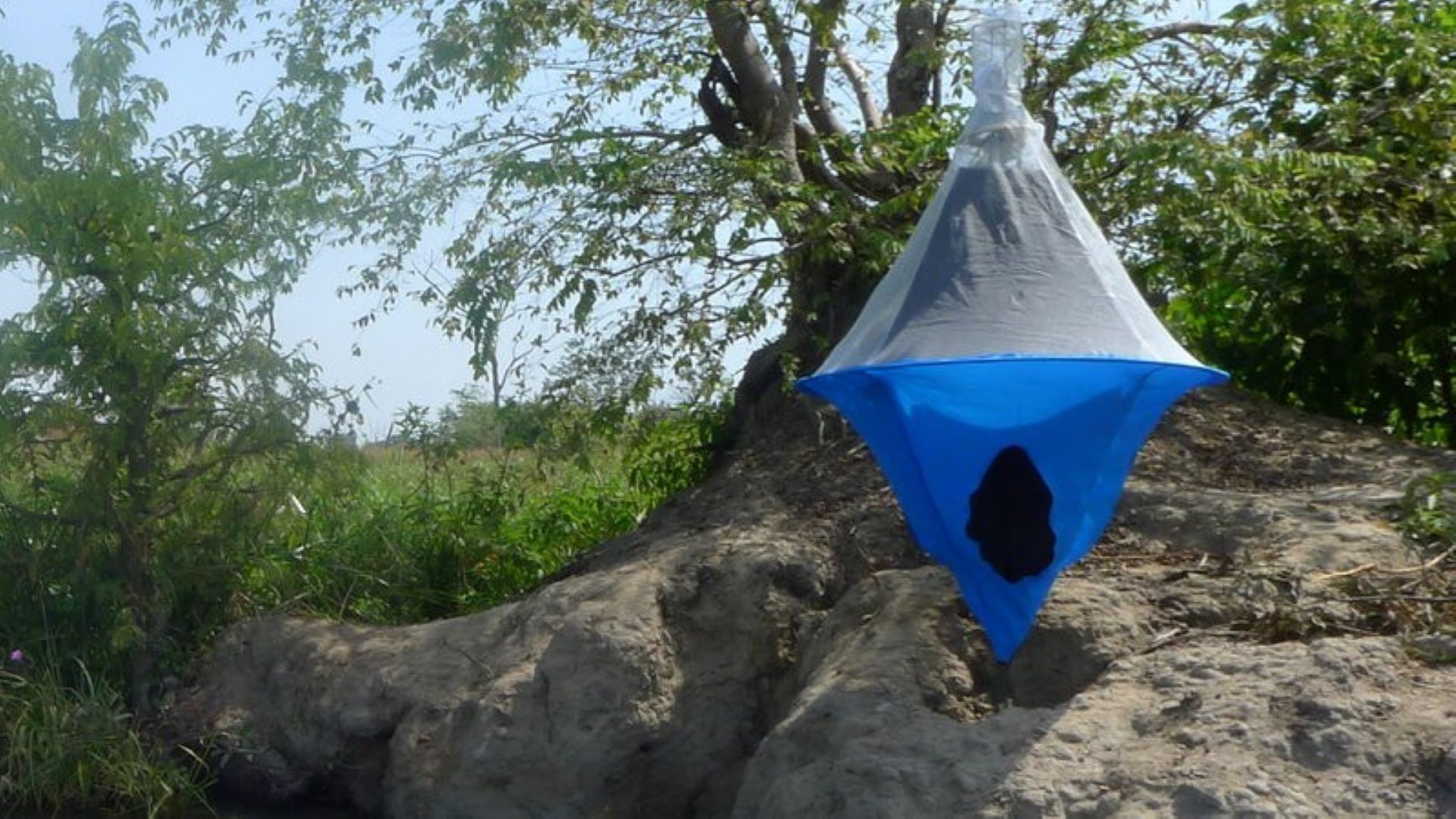
we kill these ones as well and this is done with the addition of a flanking net
on one side of the target so it’s the same size 25 centimeters by 25 centimeters made of mash impregnated
with insecticide and this time the flies come they try to fly run the blue target but they collide with the mesh and take
up insects Titan and are killed and they can’t see the mesh target so that’s how
they collide with her and so the tiny target was born and it was found that
this was twice as effective for killing flies compared to the traditional traps which were sometimes used for control
it’s also ten times cheaper than trying to do control with traps because the
insecticide is impregnated in the fabric in the production phase it lasts for
over six months previously and they were using traps they were to spraying the trap so it
wasn’t a long-lasting effect and of course because of the sizes and far easier to deploy than a large trap and
much more practical for deploying over a large distance or a large area compared to deploying traps so this then led on
to the question of Bob will they actually be useful will they have an impact in the field and this led to
trials on islands in Lake Victoria so we
had one Island where there were no traps sorry no targets and one Island with tiny targets and chatting was done on
both to see what the population of flies is like and you can see that in terms of
mean daily catch is relatively similar in the first few months before targets
have been deployed but then once targets have been deployed from the gray area onwards there is an immediate decline
and the number of flies on the island with targets and then this persists
throughout the experiment and so we’re getting a control of over
99 percent reduction in fly numbers in this work and obviously this is an
isolated population because it’s in an island but it shows that deploying targets at Penn of a density of 10 per
10 per kilometer can eliminate populations but that’s just a small
island with an isolated population what about the practicalities in the field so
further trials were done in northwest Uganda and then in 2014 we started the
deployment of tiny target at a large scale in the West Nile region deploying
them along riverbanks as shown by the by the team here and this is done twice per
year because of a certain sector side it’s effective for six months so we need to do it two times to finish your
coverage for and so this is really the
scale of tiny targets in Uganda so in 2014 we scaled up to an area of two and
a half thousand square kilometers across five districts which is shown in right
here and that was under our first project targeting taxi and then in 2017 with additional funding
under our Capano project we scaled up even further I did another two and a half thousand square kilometers take us
five thousand square kilometers across seven districts and then since the end of 2019 we’ve scaled back slightly to
four thousand square kilometers and to give you an idea last year and the two
deployments it was about 42,000 tiny targets that were deployed along the
Riverways here and those are deployed by people want to it’s a huge amount of effort for for the teams and it is by
and large managed by the national control program in Uganda working through district entomologists who are
in anxious and then what’s the impact that we’ve
observed off those tiny targets with this population of Petzi and West Nile well here we can see the catches from
Sentinel map sites so the green bars are trap sites which are outside of the
intervention area so there’s no control going on on the Tetsu population is just continuing as it would and then the blue
bars represent the catches from the Sentinel sites which are inside the
intervention area across those seven districts so we can see that there has
been a huge reduction in the catch index in the intervention area and that has
now been sustained for a four year period the light gray as the targeting
tetrapods and then the dark gray is when the Capano project started in 2016 2017
rather so we’ve got a sustained reduction of eighty to ninety percent
and the taxi population in the intervention area across this time and
Uganda last year only had two cases of sleeping sickness off Gambian sleeping
sickness I should say and in 2020 they will submit their dossier to whu-oh for
elimination and then also just to quickly touch on another a particular
situation for Uganda you know we brought our proposals thinking that we were just
working in this fixed area and then in 2016 there was insecurity and violence
in South Sudan which led to a huge influx of refugees from South Sudan into
Uganda almost 800,000 people coming from an endemic country to
– with a huge amount of control going on and very low case number so with this
situation we added additional vector control around the areas which would be
where refugees resettling expanded pets control of operations for an additional
thousand square kilometers and there was also intensified screening in the
refugee population as well so it’s just to say that you know tiny targets can also be used in a crisis situation and
when you have a national partner as we have in Uganda they’re able to react quickly and increase coverage by what
was 20% compared to what they were doing previously so we went from five thousand
six thousand square kilometers with the refugee crisis so that’s Uganda and then
with our other partners we’re working in another countries of course so one of them is Chad and our colleague in
yakitori doz has been quite involved in those in the Chad intervention so here
it’s the mandala focus which is in southern Chad slightly different to Uganda because there’s a lot of swamps
as well as rivers so here the tiny targets are deployed along the river and
also around the swamp and again of
course we have a free intervention survey to establish our taxi densities before intervention starts and then we
go back to check what the impact has been so this is the impact of tiny targets on the teks population and Chad
so you can see that there is a huge decline and also you probably think that
it looks like we only went back to check three times so that’s not the case
whereas you went back and all of these occasions to the trap pick Sentinel
sites but for most of those rounds of traffic recall absolutely no flies
the intervention is having a huge impact on the ffensive LY population in this area and then here the graph on the Left
shows the number of hat cases in the manual focus and also the number of
people are in screens so we can see that before tiny targets were introduced we
were getting between 120 and 140 cases tiny targets came in in 2014 and we can
see that there is a reduction in cases down to about 45 and 2014 and then down
to 20 and 2015 and this decline has continued since then and screening has
maintained at the same kind of level and then also in the trapano project we have
added a second focus here in Chad in in the marrow area which is ganador and
southern Chad and then here on the right we just show the case data for for the
country as a whole so you can see the number of cases was dramatically declined we’ve gone from having more
than 100 cases a year to less than 10 cases a year and epidemiological models
just more than 70 percent of this decline is in fact due to vector control
and we wouldn’t have seen it if we just continued with screening and treatment of populations
also part project is Ivory Coast here they are working in two foes I going on
Sintra these are relatively small areas but have very high population densities
and the use of tiny targets here has been really effective and seen over 90%
reduction in dead sea numbers over the course of the project sorry the graph
here shows the cases the label is missing and so you can see from the
graph as well the number of cases in Ivory Coast is also decreasing and is extremely lower now in the 2016 to 2018
period they only had five new cases and they will also submit an elimination
dossier to whu-oh this year and then
moving on to Guinea so here tiny targets
were used in three different pose sites or in buffer do Baraka and for Acharya
very different to Uganda here we’re in a mangrove system dealing with tides as
well and just to show a little bit about
the impact of tiny targets so back in the beginning the first started working
justin Botha and gofer split into two sides before west and Gotha East which
was separated by the Rio Pongo River so for 2012 to 2013 in both of West the
were only medical activities so screening and treatment for Zika and in both our East there was medical
activities but they also introduced tiny target deployment and what they saw was
the in buffer West during this period there was a an increase in prevalence of the disease and an incidence of new
infection of 1.09 percent whereas in both East the target deployment led to population
and reduction of 80 percent amongst the Kathina and they also had a disease prevalence falling from knock point
three percent to not point one percent and an incidence of new infection of
0.07% so two areas next to each other but very different stories 2012-2013
period and then similar to reacting to a
crisis like in Uganda with the refugee crisis from South Sudan here in Guinea
they faced arguably a much more devastating crisis with the Ebola outbreak in 2014-2015 of course this led
to active screening stopping you know medical activities were interrupted
passive screening also was declining because people had so little faith in
the health system were very worried about going to health facilities so
during this period there was very little going on in both West for his in buffer East where they had already introduced
tiny targets they weren’t able to do any of the medical work but they did actually continue Teti control so
throughout the whole Ebola crisis tiny targets who are deployed continued for
years in both East and this is because the program there works with the community and have a very good
relationship with the community so they use people from the community for for
the deployment and this continued as I said during this period and then afterwards when the crisis was over in
2016 and they went back in and the medical surveys and before West they found that the prevalence had risen from
97 percent and 2013 2 percent in 2016
and some villages up to 5% and then both for East they found that they’ve
maintained this 8 percent reduction in the test fly numbers and they couldn’t find any cases
he did look but they couldn’t find any
so that’s really where we’ve got to with introducing pet to control that scale
and obviously one of the important things is what are the costs is it effective
so economic analysis has been done by alex jar using data from Uganda and Chad
and we’ve found that the cost effective controls using tiny targets is reduced
by more than eighty percent compared to using traps for controlling riverine
populations so it’s gone down from four hundred forty dollars between four
hundred forty and eleven hundred dollars to about seventy seven Philomath seventy seven dollars per kilometer square with
tiny targets and this dish shows the differences between Uganda and Chad so in Uganda it’s about seventy six dollars
and in Chad it’s sixty six dollars per kilometre square which equates an annual
costs of between 20 cents and one dollar for take our parson protected
so those are the first four countries sadly we can’t ignore DRC which is by
far the most important country in terms of contributing number of hat cases so
in 2014 Lobo lay there were three thousand six hundred and seventy nine cases of Andean
hats and of these three thousand two hundred were from DRC the over eighty
seven percent and then even within DRC
1885 cases were from the former band unda province which is a huge area
covering almost three hundred thousand square kilometers larger than the UK and this one province was contributing more
than half of all global jihad cases so
far we’ve been working in these four countries previously with ham not work in DRC if we want to eliminate she can’t
so DRC has a long history of screening and treatment and they have a huge
operation of screening and treating populations in the country which they’ve
been doing for very many years they don’t have very much infrastructure for
vector control in fact they only have two entomologists working on vector
control within the national program and it’s really not been a priority and it’s
not something that has been done in any systematic way previously and modeling
has shown using data from Bandhan do province that if we just continue with
the strategy of screening and treatment we’re not going to get to the elimination goal in fact elimination
won’t happen until the best 2059 worse 2092 and that depends on if we were to
maintain screening levels current average levels or increase this or
maximum potential levels further analysis showed
that a vector control was introduced in combination with screen height and
persistent hatful size then this would help drive towards the elimination goals
and the elimination goals could be achieved in time for the 2020 2030 cut
offs prepared by w-h-o so we started
working in DRC back in 2015 and yes a
Bunga help soon so this is one of the health Dillons in band in do it’s one of
the health stones that produces the highest number of cases so of course it’s a priority for us and this is a
project that we started to really see whether or not we could put a system in place in DRC for for doing vector
control so it was very much an incremental project starting with a relatively small area of five hundred
square kilometers in 2015 and then scaling up to 2,000 square kilometers by
2017 as I said there’s no infrastructure there’s no system in place for better
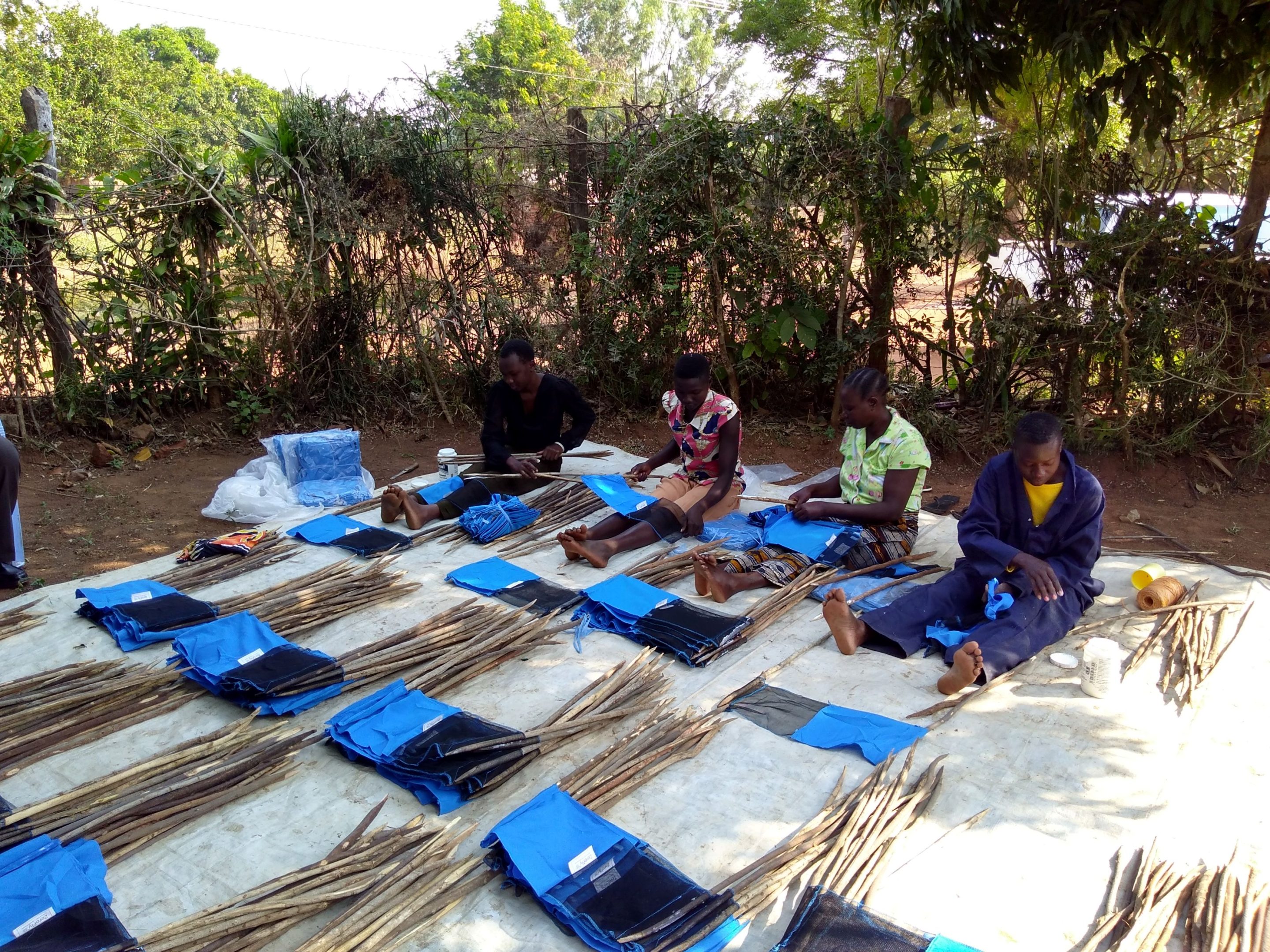
control in DRC so for this initial pilot project all of the activities were overseen by one of the anthropologists
from Kinshasa and the postdocs from Liverpool so you know doing the surveys
were pre-intervention doing the deployment twice per year and then doing
the follow-up surveys on a quarterly basis lsdm where were present for every
single activity and then what we find
was similar to the other countries we’re getting this reduction in population
densities 94 almost 90 percent reduction after the first deployment of tiny
targets relative to what we had before the intervention started so we do
deployment twice per year and nano quarterly and logical monitoring so
there’s this nice reduction and it’s been sustained over the duration of the project so it looks like we can use
tiny targets here in DRC as well as in the other countries and then this is
just a little bit of the reality of working there so the teams deployed
targets from these traditional dugout canoes they go down the river putting out targets every 50 meters they sleep
in the field and they do relatively long distance of river about 60 kilometers a
river they can cover in seven to ten days on each of these targets is
reported in GPS unit as well so that we are able to monitor but yeah Sibonga is
just one health zone and in do which as I said is 300 thousand square kilometres
and produces more than half the world’s cases and the no infrastructure no
system in place for vector control so scaling up as a challenge of course and
needs to be done in a targeted way we’ve got limited resources we need to make sure that new resources are being put to
the best juice so to decide where to scale up – we developed a two-stage
approach where we would first of all identify priority health zones for
battery control and then in the second stage identify within the health so in
this weather there are priority areas rather than just doing blanket coverage of the health zone so that the vector
control becomes really really targeted this led to us identifying 11 priority
health zones and the map here on the Left shows the case density so really
sure with the hotspots and then the map on the right shows when biker control is
going to be introduced into each of these areas so it’s 11 health zones and 14 intervention areas across the 11
health zones and by the end of 2021
factory control over close to 12,000 square kilometers so this is about 4% of
the size of the former abandoned de Provence but it does cover roughly 50%
of the cases that were declared between 2011 and 2015
so the emphasizes the importance of doing the targeted approach you know
we’re only able to cover 4% of the province to get 50% of the cases and the
areas highlighted in green are where we’ve been working for the longest so yes a Bongo we start in 2015 then the
other green areas in 2016 yellow intervention areas started last year the red ones will become involved
in project this year and the orange ones
so by the end of 2020 one will be covering 12,000 square kilometres we’re
working really closely with the program helps them in this scale up helping them
with the planning and providing them a technical support for all of the different activities and then also one
of the really important aspects of this project is strengthening the capacity of the national program at the moment you
know two people in Kinshasa can’t do back to have control over 12000 square kilometers so you know we need to put in
place a system which involves the central level the provincial level and health zone level similar to the system
that’s in place where for medical activities we need to make sure that there are people at those different
levels who are trained on petit control but who are also equipped with all the
materials that they need in order to do the to do the project then type in the
local communities of course is a key part of it as well and need to be buy-in an order for for the success of the
project and we worked with an anthropologist the ITM who’s one of the
partners on the project on the defensive ization work package for the project and
then we’re also developing new systems for data collection new systems were for
planning so it’s really a radical change for putting a place it back to control
system in DRC over a three-year period
and then that just gives an overview of overview of the current level of tiny
target operations were working over five countries and these five countries
accounted for 88% of all jin-haeng cases that were reported between the 2009 and
2018 tiny targets cover about 14,000
square kilometers and protect a population that estimates it to be close to two million people currently and then
that will increase as things scale up in DRC next year as well and then this just
shows what the G hat situation is like at the moment from 2009 2008 een so you
know they’ve been impressive declines and the case numbers we had about 10,000 back in 2009 and now in 2018 the number
of cases reported was 953 which means in
2017 we’ve got two left me two thousand cases of achieving that elimination gold the WHL set of less than 2000 k2 by 2020
and then to conclude it seems a bit crazy that we’ve done all of that in
such a short period of time back in 2011 twins tiny targets were deployed in an
island and Lake Victoria you know reduces the population by 99 percent
here we are fast forward to 2020 we’re in five countries across the live in
full side 14,000 square kilometers a year deploying a hundred thousand targets per
year and then by the end of next year that’s gonna double it’s gonna be two hundred thousand targets over 20
thousand square kilometers so to get from a research project that was in its infancy back in 2007 to this a
large-scale control and in ten years is
really quite cool story to be part of I think and then of course also important
to add that there has also been a change in strategic planning or strategy for G
hat control w-h-o have included battery control now as a crucial tool for
controlling and eliminate and Gambian sleeping sickness and we also have an
industrial partner who is very committed to eliminating G hat Vestergaard
produced two tiny targets and they have pledged to donate hundred percent of the
targets for the elimination cause so there’s a lot of partners thank
‘national control programs in Chad Ivory Coast DRC Guinea Uganda lots of partners
in terms of academic partners IRD Surdas of ITM operational partners no Mesa path
blue square find and of course funding from the Gates Foundation cargill
foundation and BBSRC and also the Etsy group here
Liverpool past and present all hopefully listed there
sorry Syl thing selfie Dumpty should also be under this so thanks to these
people that all of this work has been possible thank you
[Applause]
thanks very much that was the excellent amazing young story do you know when you
started you said something about knocking out 4% of the population for a year to see elimination if you’ve got
any idea of what percentages you’ve achieved in the different countries
difficult to say in terms of percentage of population obviously we’re achieving a really high percentage of control in
terms of the the numbers that we’re getting in the trance so 80 and 8%
reduction and the modeling is showing that even if we get a 60% reduction in
our crack caches then that would beat elimination so in terms of overall
population difficult say but definitely on the right line in terms of what they are in TV
it defines do you correctly in Uganda having scaled up your coverage initially
you that’s somewhat scaled back more recently have you seen any resurgence in
the population of sexy in those areas and therefore increasing so there are
two areas in Uganda that we have already started to scale back and in two districts and these are districts have
had to control for a long time and have had a long time of having no no cases so
there is an increase in the number of flies but there isn’t there’s no increase in the number of cases at the
moment and then actually in the current project the new Japan o2 project will
continue to scale back further and see what happens will still be present so
you know things do start to get worrying and we can respond but it’ll be an interesting opportunity to have a look
and see in an area that said five years of taxi control population is reduced by
90% what then happens once you see stop control how long does it take for
populations to rebound to sort of pre intervention level but certainly in no
cases
thank you thank you I’m to thank the team that is a really fantastic presentation and really a promising
researcher so my question is about climate change and I wanted to know whether there has been there’s any
connection that you know with it such a changing climate whether this beautiful story could
change my colleague who’s here to answer
I would say undoubtedly climate change will have an impact Jen Lord has done
some analysis certain Tanzania Zimbabwe so she would be a better place to answer
lame answer thank you Andrew that again that was a wonderful presentation hello
just often we see when interventions like this implemented on scale that
there can be sort of unexpected benefits and something that comes to mind of course is you know with the mosquito you
know the beard nets for malaria prevention having a positive impact on early Earth and things like this hey
have you seen or explored or anticipated any in this secondary or unexpected
benefits from the large-scale implementation and it equally may be the flip side have there been any unexpected
or unintended consequences of this large-scale we haven’t explored any
other unexpected I suppose one of the
things in many of the countries is that the focus is so far if you really unbuilding a system and making sure that
this is a secure system in place for petty control first and foremost
we have been asked whether we can use the system that we’re putting in place in the RC for example to introduce other
vector control methods for other diseases but at the moment we’re not at
that stage so in terms of unexpected benefits think of Annie look edible
funds thanks for that presentation and I
just wanted to ask about the like thought process behind the safety of
staff out from lsdm and the teams that are working out in the DRC like what kind of things goes into making that
decision okay we’re going to send team into this area PLC so I suppose first of
all I should say that where we work in DRC is very far away from where the current bulldog breakers and also very
far away from where the violence and fighting and in the east of the country
so in those respects were in a fairly safe place then in terms of safety in
the field everyone gets a satellite phone there’s not particularly good
phone coverage so you have an emergency but one that you would be able to call if you needed any help
safety in terms of life vests for all of our team members as you can see and we
do risk assessments before we travel like anybody before going to any country
we work with the national program we’re never in the field by ourselves you’re
always there with with our partner so I think
it’s fairly safe obviously anything can happen but I think these are do what we can to change your because safety and
security protocol as well every number all the hospitals are MC phone numbers and things like that
so it’s a broadly very positive I mean I think Guinea is a really nice example of
how the local communities or really does accept her and you know the matter at the rate was continued Petra control
throughout therefore the crisis you know when of all I was going on and medical
teams had come to villages you know the villagers wouldn’t let people in they were still suspicious of everyone coming
from the outside but when the team came from the national program for a taxi control they were recognized they were
accepted they were able to continue working Uganda as well I would say that
we’ve got pretty good acceptance there DRC is a bit more interesting so as I
said we work with social anthropologists from ITM and so she’s done quite a bit of work looking at the acceptance of the
work and the first area that we started working in a Topanga is there’s all sorts of rumors and things that go with
with the work that we’re doing are we there to steal mermaids from the rivers
are we there to steal diamonds and things like that – it really highlights the importance of good community
sensitization and DRC and with the new project with the scale-up project you
know we’ve made a really conscious decisions to make much more of an effort on that side and really sort of use the
traditional communication channels which would be used for all other diseases yeah learning lessons and hopefully
improving things I’m not sure that that Michael
thanks Andrew that was that was a fascinating journey I loved your slide 54 you showed how a simple island study
could be to such tremendous okay many other countries this is a question
following up from what Justin asked about positive outcomes and you haven’t touched on the incidence of animal Japan
s alliances so particularly in the villages where that may have been a problem in the past have you noticed any
other indicators of a lawsuit Japan samaya those other species so we
haven’t been looking at it because it’s now an implementation project rather
than a research project but we have recently gone to work with find in
Uganda and started doing some cattle something to the our King know
particularly in areas close to where we have been working on areas where the
guard is making the traps
so the beste card produced the targets and they also juice the traps that are used for monitoring the targets the
production is similar to llin production where the insects that have impregnated
in the fabric during off well as meant to be impregnated during the production
process so to try and switch that to local production well there probably
isn’t profit now that they’re gonna go to nature uh-huh so there’s no market but then in
terms of traps so DRC the national program there have a long history of
making their own tracks so they do do that and we do something hi I’m Justin
do you think that final target could like induce selective pressure on the
fly population like selecting for those who fly that are lost so much attracted
by them then at the switch on the behavior you must be the parent of resistance resistance
I don’t think so there’s not really been any sign of resistance and tech supply
previously their biology doesn’t really lend itself to it either I would say
time ticks away bit of quite lively to question-and-answer session any more
Parthian shops before we finally close
then we should just thank Andy and also Steve for an excellent
[Applause]