so welcome everybody to the relaunch of the lspn seminar serious series in our temporary
i hope online uh format and so we’ve got today and
we’ve got a number of a series of um speakers based um in here in liverpool and also
in zimbabwe and malawi um and so we will be using the chat um
forum on here on teams for for any questions so please do post questions that come to you as you go and
then i will be reading those out at the end of the seminar so this seminar is one in our sporadic
series of impact seminars that is celebrating the impact of the work um research at lstm
and our and our partners and i think as my role as uh ref coordinator i can
say that the most enjoyable partners have been learning more about the reach and the impact of the work that we have so
behind all their headline grabbing uh grant successes and high profile publications are the really
important stories of exactly how our research is impacting on the communities that we
work closely with and the seminar that we’re going to hear today on the scale-up of hiv
self-testing i think is it’s an excellent example of just um the scale of the reach and the impact
of the work and i think that we don’t really often take enough time to to reflect and
to celebrate these stories so i hope you would um enjoy this seminar i’m really looking
forward to hearing from our um we’re going to be hearing from six different speakers representing the
team working on hiv self-testing across lstm and we’ll be starting with um professor
francis cohen uh for calling in from zimbabwe so welcome francis so
um good day everybody delighted to be here i’m actually in london rather than zimbabwe today but
um i will be back in zimbabwe on friday it gives me huge pleasure to introduce
this impact case study on global self-testing on behalf of the lstm self-testing
group you can see the names of the people who are going to speak listed on this slide but there are others in the
team who will refer to as we go through so i’m sure it’s not new to many of you
here that unaids has set a fast-track target to
end aids by 2030 and to do this we’re going to have to scale up
essential hiv prevention and treatment approaches to allow us to outpace the epidemic
now the entry point to accessing both prevention and treatment is hiv
testing unaids have testing targets and by 2020
the target is that 90 percent of people with hiv will be aware of their status
referred to as the first 90 and then that 90 of those are on treatment and 90
percent of those on treatment are virally suppressed in zimbabwe and
malawi which we’re going to talk about a lot today in 2019 it’s estimated we did
achieve the first 90 for the first time since the start of the aids epidemic so
that’s fantastic news but what these broad brush targets hide
is the huge disparities in access and uptake of testing that exist and that hide
real inequities in coverage as we move forward trying to attain
the goal of reaching 95 percent of people who know their status
with testing to ensure that 95 of people who are hiv positive know
their status it’s going to get harder to reach those people who have not previously tested and we’re
going to need increasingly acceptable innovative and
easy to access approaches and this is where hiv self-testing comes in
so what is hiv self-testing it’s where an individual performs their own test and interprets
the results and because you can do a self-test pretty much anywhere
it allows for innovative delivery strategies we believe and i think the research that
we’re going to present will show that you can use self-testing both to reduce the testing gap
and to reduce inequities in coverage so um lstm has been part of a
global body of work which has started with formative work moved on to
exploring issues related to early scale up and most recently doing really
broad and extensive implementation research to optimize the delivery of self-testing
at scale and we’re going to present examples of all of those to you today
um i’m going to hand over to peter macpherson to tell you about some of the scene setting
work that was conducted in malawi um in the in around the time of the
previous ref actually so thank you very much francis
and good afternoon everybody my name is peter mcpherson i’m a public health physician and i’m
based in malawi and blanta at the malawi liverpool welcome clinical research program where i head
the public health research group and and i want to take you back to 2010
and where we were only just beginning to start thinking about self-testing for hiv and around about 2010
he’s having treatment had been available for a few years in africa people getting onto treatment
lives were being saved but still very few people probably less than half of people
were aware of their hiv status and were able to access the benefits in terms of life-saving treatment and preventive
strategies if you wanted to get an hiv test the usual way that you received one
was either attending a health system a health center even if you were sick or or to request a
test or perhaps within your community there was something called voluntary counseling and testing um
mobile or fixed services where you could go and request um heavy testing but what we and many
others found was that people you know if you wait for people to come to health facilities until they’re sick
that’s very often too late transmission has already occurred and they they often have substantial morbidity
and a high risk of mortality or or alternatively if you ask people to motivate themselves to attend
dct services very often they are not accessible or acceptable to to quite a lot of
population groups who are not otherwise all served next slide please
so a number of groups around the world including ours and blanthar have started exploring hiv
self testing so there have been some studies from francis and zimbabwe looking at early approaches
to hiv self-testing looking at feasibility in emergency departments in the usa and
interestingly who had been a multi-country survey amongst health workers showing
that health workers were frequently testing themselves um you know in between seeing patients
in clinics so there was a clear momentum towards uh you know an approach to history testing
that put people in power and in charge of the loom testing schedule and what really catalyzed action was the
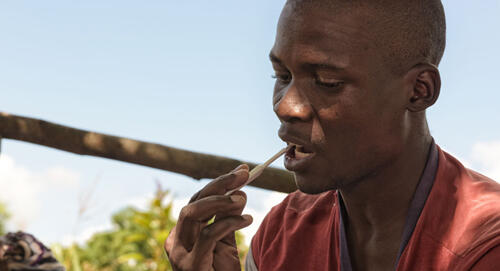
development of the earthquake and test quake this is the the the the kit that is shown
um in the image here and can be used on oral fluids by people themselves or all with platforms so the image in
the middle here the map so it’s part of lantar where i work this is actually within indorandi very densely populated neighborhoods
where one in five adults are hiv positive and way back in 2010
myself aubrey chocolate corbett and others i set out to explore whether heavy self-testing could be used
whether it’s feasible uh to implement that scale within these sort of densely populated urban
areas we identified health surveillance assistant areas so these are geographically
defined areas within um within the city where health workers have responsibility for the population
and we identified neighborhood champions essentially um who got training in delivering
self-test kits distributing them from their home and receiving test results as well
and so the very first formative study after our initial assessments uh was one as part of a cluster
randomized trial with a total of 16 660 people and i did this trial with
those as part of my phd back in 2010 was welcome and so we
throughout 14 different clusters or neighborhoods in the city we we trained and identified these
neighborhood distributors for self-test kits and we invited people living within their neighborhoods to come to the
neighborhood councillors place of predators collect textbooks and introduce them and tell us the results
next slide and these data show the results of the
first year of implementation of hiv self-testing in blancar which was around 2012 broken down by age
group and sex and these results are were very exciting to us although children published them across medicine back in
2015 and what we were extremely excited about was an uptake of hiv self-testing was
extremely high particularly amongst young men and women who we’ve found previously
were a very difficult group to reach with heavy testing uh so you see for example in the 16 to
19 year old woman essentially by one year every young woman in these neighborhoods had tested for
hiv next slide please overall over the first 12 months of the
self-testing intervention 76 of the entire adult population self-tested for hiv
and 35 of those people were first-time professors and we repeated this in a second year
and found very similar rates of coverage with about 75 percent of the population
testing in a second during the second year but a much lower number of people testing for the first
time to get considerable
and we also asked people about their preferences next slide and what we found very clearly that was
that people were very keen to self-test in the future if they had already self-tested so people didn’t want the inconvenience
of going to health centers or to hospitals or they didn’t want the lack of privacy that came with people
coming door-to-door they wanted to receive self-testing from the counselor or to do it in private
themselves next slide and so finally just to complete that
that kind of cycle of implementation we were also very much aware that very few people who tested
hiv-positive were linking onto effective treatment so at the time only one in five adults who tested hiv
positive and blantar successfully linked to antiretroviral therapy without an interruption within
the first six months so we randomized seven of those fourteen neighborhood clusters
that had got access to safety salting self testing to additionally receive
the option of starting treatment for hiv at home after the self-testing positive and in the control controllable patients
have the option of going to the facility to start treatment as they usually did and what we saw was that three times as
many people in the population started art when treatment was away was made available at home after self-testing
so taking together these five these findings that we published in gamma in 2014 were very powerful suggesting
that you could achieve very high coverage of hiv self-testing in busy urban populations that are otherwise
hard to reach and you could get people on to treatment rapidly as well um and so i just want to thank stop my
portion of the talk by thanking the large number of the team particularly liz and all of you and who contributed to this huge body of
research and i’m going to hand over to the next presenter now
so peter has um explained the wonderful work that they
did in malawi but at the time that work was finishing still the picture on the global stage
was not great so fewer than half of people living with hiv knew their status
there was relatively limited evidence for self-testing other than the work that had been done
in malawi kenya by miriam and a few other settings only three countries in the
world have policies in place and only two are high income countries were actually implementing self-testing
and it’s worth mentioning that in several countries around the world hiv testing was expressly prohibited by
law there was no normative guidance in place no quality assured hiv self-test
products for low and middle income countries and very limited policy and regulation
we’ve already discussed the testing gap and disparities in testing access
and the lack of testing delivery options it’s worth also saying that the worst
huge concern over so the potential for social harms um and something that was often raised
when you brought up self-testing was that people the fear that people might test themselves get a positive result
and go off and kill themselves so this was a real deterrent to making
hiv self-testing available so peter’s already described some of the
really important work that lstm led that was influencing
the start of the discussion around self-testing another piece of uh the puzzle critical
really to um scaling up was a meeting convened by lstm by miriam tegmeyer
and who and unaids and that was the first international
symposium on self-testing which resulted in an aids and behavior
supplement and really set out the research agenda
for um self-testing to try and change the try and change
the environment the global environment so that self-testing could be scaled up
so as they say the rest is history shortly after that meeting unitade
launched a call for funding to which a team of us applied
the team was led by population services international and then there was a
research consortium led by liz corwer to tell shtm with myself and miriam as deputy
research directors um initially based in malawi zambia and zimbabwe but subsequently expanding
to the eastward ii and south africa we work closely with ministries of
health and a really important partner was the who hiv
department we put in of course a stellar proposal and
that resulted in funding of something called the star initiative star stands for self-testing
africa here are the members of the lstm
star team on this slide many of whom you’re going to hear from today
so in 2014 i’ve already indicated there was work to be done
formative early scale up and optimization this had it had to happen both in terms
of informing the policy needs and also the
market needs and in fact the title of the star grant was a grant to shape and
stimulate the market for hiv self-testing globally so
formative work was planned and undertaken by target group to
understand how to generate demands the accuracy safety and acceptability of
self-testing and how to encourage linkage to either prevention and care
as well as studies on basic costing early advocacy and legal policy and regulatory review
and then these themes got developed further but as we proceeded to the early scale
up research and implementation research to optimize models
importantly we were responding directly to the demands of who
and ministry of health and our findings of our research fed directly into
technical updates country level and who level normative guidance
so i’m going to move on to russell daycamp who’s going to take us through the legal policy and regulatory
revision thanks very much uh francis and i just want to acknowledge my other team members vicky watson from
lstm and eliot cowan who used to work with the fda who both assisted with the work i’m
about to present on next slide please so um so we would task it looking at the
regulatory uh and to a certain degree the the policy side of hiv self-testing so why we looked
at uh regulation is essentially it’s the law so people have have to do
it uh so with um hiv self-testing it obviously both encompasses both the public sector and
the private sector so uh policy alone would only really uh cover the
the public sector so um with uh regulation of uh hiv self-testing we
already had to look at the regulation of in vitro diagnostics in general so to include all diagnostic tests and what
we had to look at but with a specific focus on the challenges around hiv self-testing so with regulation you have to balance
the quality of the product uh with actually getting a product on the market so the needs of
the public with the needs of the manufacturer so uh first of all we did some formative work
back in the start of star in 2015 where we looked at uh key stakeholders
we’d identified in this sector so this was mainly people within policy mainly people within the regulatory bodies
and people within the national reference labs with expertise in hiv and self-testing
uh and doing this through uh qualitative methodologies in-depth interviews uh we
found that there was really a lack of understanding of what regulation actually was amongst
those who weren’t in the regulatory uh bodies uh and we also found in apart from one
country there wasn’t really a focus on in vitro diagnostics for regulation um much of the efforts was put into into
pharmaceuticals which uh was a trend globally um because of this lack of understanding
there was also a lack of collaboration uh between uh those with the technical
expertise uh those in policy and those involved in regulation so much that uh
in some countries regulators were not talking to these uh these experts at all people in policy and were forging out a
completely different path uh when developing their regulations um there was also
uh concerns that francis mentioned earlier around social harms to do with hiv self-testing
across all the groups broadly there was also a con concerns around the performance of hiv
cell tests in the uh in the hands of intended users would they do them accurately uh and uh there was an emphasis really
on the on the quality side rather than the market access side so um next slide please
um so taking this uh these uh results from the formative work um
we propose an intervention to uh strengthen uh collaboration both within
countries between uh policy uh diagnostic and regulatory bodies
uh and between countries uh in the star consortium that were
to bring forward regulation um so we started these in in 2016 through 2019 uh
with all the countries uh joining in a stepwise process because they joined star in a stepwise process
um and as we’ve said with ministries of health and national regulatory authorities in the reference labs
uh with the idea of of putting together joint plans to develop ivd regulations
and for countries to solve common uh problems that they had and also to promote the concept of
convergence to simplify market entry
into these countries so convergence essentially is making sure that your regulations are as
similar as possible between countries and there’s various ways which you can do this
which i don’t have time to speak about in depth today um so i will move on to the next slide to
show the progress that we made um so this is is the steps that we went through with the countries
uh to develop in vitro diagnostic regulations um which would include hiv self-tests
so the first element was a clear legal mandate so in in one country there there was no uh
legal instrument which the regulator could use for diagnostics i.e they didn’t have the legal mandate to do it so that had
to be put into place and the idea was then next to prioritize ivd regulation among stakeholders so
this is very much around bringing those groups together then to develop convergent regulations
and then finalize them and you can see over the period of star um the three initial countries malawi
zambia and zimbabwe moved uh from uh these prioritization
actually up to finalizing uh regulations south africa was brought on it was already more developed but this allowed
them to share their expertise with the countries that were uh at an earlier stage
and lesotho and suartini joined late but they would be able to at least bring over deregulation
onto the agenda next slide please next slide please thank you very much
okay so uh just to uh kind of demonstrate in in regulatory terms how
uh the star project addressed some of the issues with um regulation
of hiv self-test devices so this slide shows the process of a
of a hiv self-test from the factory on the left through to the
individual on the right and there’s a number of different processes that has to go through to get to that individual so on the left
hand side um we um interacted with wh o p
q and this is a body in who who standardized the quality assessment
process of certain ibds to help them get onto the market and so we work with them to develop a
technical specification series for hiv self-tests we also did various
bits and pieces um in terms of uh improving the way that kits were quality tested on
their way to the individual user and we also identified um potential ways
that the quality of the testing in the hands of individual users which was raised as a concern by
stakeholders uh could be dealt with so this is really around re-reading of tests observation
of people doing it dry blood specimens and also potentially
video support um so next slide please so thank you very much so
uh i’ve already talked about this so this is how we mitigated some of those risks on the last slide um so i’ve
talked about the tss uh i’ve talked about convergence uh so
with lot verification testing um we helped countries introduce testing
that was suitable for hiv self-testing and for the end user performance which is the most risky element of hiv
self-testing there was work on adaptation of ifus which i’ll talk about um the re-reading of test stability so
this was initially seen as a way to um check the quality of people’s
interpretation but we did some experiments around the stability of these tests and found that
in some cases you could use certain tests uh for checking people’s interpretation but
some would uh give false positive results over a short period of time so re-reading was not the panacea that
we were hoping it was and there were also some community preference studies to see which models
communities would prefer and they generally preferred re-reading um so next slide please and i’ll try and
be quick through this because i’m probably over time so we also looked at the group as our whole and this is
many others and the consortium used that usability so this is how people used uh the self-tests um
so this was mainly uh focused around the instructions for use the material that is in the test that tells people how to
do it uh and in short there were differences between rural and urban populations with
rural populations uh performing the test less well with just ifus and this also may have been
related to literacy so there were iterative modicate modifications the ifu’s to make them
um more understandable to those groups and we also found that accuracies
improved when a demonstration video was also um included uh
in uh supporting these these groups uh and then there was adequate accuracy
with those groups so um with all that in mind i’m now gonna hand over
um to the next speaker um who yeah so i’m going to hand over the next speaker
hello thanks russ um so my name is nichola desmond and i’ve been based for many years at
mlw along with peter but recently i’ve just moved back to liverpool school and um so i was involved from the very
beginning of hiv self-testing working alongside liz peter orgu and others and when we conducted
the original pilot test and at that time um we understood that the the biggest policy concern as
francis has mentioned and russ has mentioned was around social harms and this idea that
um self-testing at home may kind of um increase potential for suicide and post
post-result so i thought i got a welcome trust fellowship to explore social harms
and the social consequences of introducing hiv self-testing amongst general populations
from 2012 to 15 um but then within the star consortium we
realized that these these concerns were translating more to you know particularly vulnerable
populations so the work kind of then translated into trying to understand social harms amongst particular
populations that were um considered more vulnerable by policy makers and that
includes sex workers and that’s going to be the focus of the next um the next couple of slides next slide
please so our approach with high risk populations and sex workers in
ins specifically was to explore in-depth the inclusion of hiv self-testing within
other established sexual health programs in malawi um so hiv and sex workers is generally
high in the malawi setting as elsewhere at around 63 prevalence and there are higher rates of
hiv in the underlying community population in the southern part of malawi so this
became our focus um where we worked alongside one ngo that was responsible for
um sexual health services um within the southern malawi setting in malawi um and this was this was
pakishari so pakicherry works across both urban in blantire
and semi urban and rural locations where sex worker populations are encouraged
by sugar plantations such as in chikwawa district or tea plantations such as malangi
district in reality sex workers are highly mobile moving between locations
and from being largely venue based to potentially street or home based depending on their location and they may
move from one type of sex work to another as they move location so pakicherry expected to provide 10 000
kits overall um during the start our star and work with them
but only managed distribution of 5281 through 51 peer educators who are
engaged already within the sexual health programs um we targeted so 57
of those targeted were sex workers aged between 15 to 24 so younger age groups
and of these 4 096 kits were returned and of those around 33 were positive
but only 61 of those linked to care for the first time and we don’t actually know how many
overall were first time versus repeat testers for this cohort however what we do know is that there
were high rates of retesting amongst those with prior knowledge of their positive status and already on art
and it’s likely that many already known positive cases were re-testing to confirm their current
status so linkage is also likely to have been under-reported in this particular
population as sex workers often use aliases when they’re attending irt services
or they may attend services outside of their local vicinity because of issues around stigma so we
conducted a nested mixed methods study um within the package area distribution in order to
monitor social harms as a result of hiv self-testing now this followed a formative stage
where we conducted a rapid ethnographic assessment along with key in um key informant interviews
so we recruited over all 265 parties participants out of a total of 300 that
we planned to to recruit um across both street and venue-based sex workers and this was
across the three sites blantar chicago and melangjo so a baseline and immediately which was
immediately following hiv self-testing and then again at three months post um post hiv self-testing we used audio
computer self interviews to explore sociodemographic sexual behavior testing
history and the focus here on social and social harms we conducted also alongside the akasi
a pictorial longitudinal diary study for all sex workers enrolled
at baseline um in order to understand through that daily sexual behavior
reporting on a daily basis and social harms as experienced on a daily basis alongside weekly reporting of hiv
testing behavior so 40 of the women within the 265 were also recruited to
a qualitative serial biographical interview study and they were interviewed at baseline
and again at three months next slide please
so most women within the cohort i’m just gonna report on a few of the key findings from this study
so most women have received only primary or lower than primary completed primary education and
the majority had also previously tested around 87 percent had already had um
had experience hiv testos testing there were high rates of intimate
partner violence reported at enrollment around 48 and this reflects um general population
reports of into intimate partner violence in these types of settings um so we only have data complete for 130
of the akasi and diary um so that the the results that i’m reporting on here the numbers i’m
reporting are based on that 130 population so key to um understanding hiv
self-testing decision-making processes were the power relations that pre-existed and
then were reinforced between the sex workers themselves and the peer educators and venue owners
so peer educators educators in this delivery setting were seen both as supportive but also
as exerting some pressure on on the sex workers um overall 29 over 130
um events um there were there were 29 events of coercive testing reported out
of 130 participants and 28 forced disclosures between
sex workers um but um sorry forced disclosures
um of sex workers um which um related to um disclosures that
have been forced by intimate partners family members peers but particularly again the peer
educators the peer distributors also relationship problems were more
likely to have been reported if hiv self-testing was initiated by someone else
now this was obviously slightly concerning so we explored this this further but we found that there was
some evidence for an increase in verbal abuse immediately after testing
but no evidence that this was different for self-testing than for standard testing and we also found that whilst regret
at having itself tested was reported often in in younger sex workers this regret
reduced over time so we’re still conducting more analysis on social harms and
that data will be out soon next slide please
so this work um has contributed um both the both the work that i’ve just
um um [Music] presented here and the work amongst general population has contributed to
both national and international policy decisions as francis has already highlighted and we’ve been involved as a star
consortium in the who steering advisory groups and guidelines development groups as
well as contributing to key key population policy developments and sitting on for example the malawi
hiv self-testing task force so the who um recommended
as we’ve also been sick we’ve also um played a key role in developing the
guidelines the who recommendations for hiv self-testing and assisted partner notification in
2016 as well as the market-driven response that has progressed from there
for example with the who um pq guidance and the erpd through the global funds that russ
has already talked about um the star consortium work i think has contributed very much to moving forward
the debate and um highlighting the fact that social harms are
are less of a concern are much lower than expected when um when discussions around
self-testing first came about in around 2012. um i think i’ll end there and pass over
to euphemia who’s talking about community-based self-testing
thank you very much nick hello everyone so i’m going to talk about um or before
i do that i’m ephemia swandan i am based in zimbabwe where i’ve been leading the implementation
of the various research that has been conducted on star at the zimbabwe site
so i’ll talk about the community-based hiv self-testing which is a model that we implemented and
evaluated a lot when we were bringing self-test kids to the people
next slides please so we started this model of community
based distribution by a pilot that we conducted in zimbabwe where we distributed kids door-to-door
and we managed to distribute over 8 000 kids within a short within a short period of time within
three months and this work was important in informing how we scaled up hiv self-testing
at community level within the phase one of star as you will see on the figure on the
right within phase one of star we distributed over 6 000 kids sorry over 600 000 kids
with the majority of the kids having been distributed using the community-based distribution model and
as nick has mentioned this work was also important in informing the wh or guidelines that were
released later in 2016 next slide please
so as we developed the models for actually all the models that we
implemented on staff one of the key research points that we
did was to conduct research on people’s preferences for how hiv self-test kids could be
developed and as we developed the community-based distribution model we
conducted district discrete choice experiments in order to find out how best people would
prefer to access these hiv self-test kits so just to start by defining the discrete
choice experiments there are experiments where an individual is given a set
of alternative programs as shown on the picture on the right and the characteristics of the programs
are given in this case for example you can see the person is told the alternative one is
the characteristics of alternative one are given um and the characteristics of alternative
two are also given and the person is asked to make a choice between those programs
based on the individual characteristics and this is important in that it shows us what peop what
preferences people have for programs and it also allows us to see the trade-offs that people are making as
they are making those choices and this is important information that programs
need as they make decisions on what to on how to format the programs that
distribute the hiv test kids so uh across all the countries that did
the discrete choice experiments we got consistent findings where it was clear that people favored
the distribution to be done by lay counsellors rather than community of rather than health workers
there was trust of people who lived within the same communities to be the ones who were
distributing the hiv self-test kids and people did not want to have to collect the test kits from mobile
clinics or and also they wanted the kids to be distributed directly to them
without having their sexual partners being the ones who are given to distribute that is they were not in
favor of secondary distribution being carried out by their partners and in terms of linkage to hiv care
people were favoring that after they had self-tested they should be able to
get linkage to for example confirmatory testing hiv care services
to be done in their homes or at the councillor’s homes and across all studies it was also clear
that people are really against having to pay for services and this is something that was consistent
even with our other work another pricing experiment that we conducted in zimbabwe it was clear that people would not want
to pay for hiv testing so that’s something that programs would need to be aware of as they bring the test kits or even as
they look at what the pricing options are next slide please
so here i am we are showing the results of a community-based
distribution study a trial that we conducted in zimbabwe in 38
clusters this com in this uh study particip
we conducted door-to-door distribution of hiv self-test kids across all communities so they were they
weren’t any communities that did not have hiv self-test kids the only difference was whether
the distributor’s weight was the way in which we distributed the sorry was the way in which the
distributors were paid for for the work that they had done and what we see from this door-to-door
distribution strategy where we distributed over 80 000 self-test kits was that we were able to achieve a very
high uh uptake of hiv testing with um 88 percent of people reporting that
they’d ever tested for hiv and this was very high significantly
higher than a 75 percent um coverage that he had recently been
um it’s a 75 percent uptake of ever having tested for hiv which has been
recently reported in another population-based study that had just completed
when we started this work of importance in terms of overall
coverage of self-testing in the community we found that community-based distribution was
associated with a 50 coverage and we were very happy to see that it reduced inequality because men
and young people who are typically groups that have a lower uptake of hiv testing
also showed coverage that was similar to what was seen for the general population
where we had 46 percent coverage for men and a similar number for young people less than 25 years
next slide please so this is now showing the impact of
community-based testing across the initial star countries and what you can see for both zimbabwe and
malawi we show high coverage of 50 and 42
in zambia the coverage was slightly lower it was lower
significantly because they had a different model of our community-based distribution which was different from the
distribution that we employed in both zambia and malawi and what you can see as shown on the
figure to the right is that the model is very good in reaching the key people that have
traditionally been left behind in terms of testing so the young people and the males were equally covered
by hiv self-testing and another model that we have employed is community-led self-testing where we
have engaged communities to take a lead in distributing hiv self-test kids in their community
and we found that this has been a very well accepted and well received intervention with
malawi reporting a very high coverage of 74 percent after
community-led distribution of hiv self-test skills was done we’ve also conducted a study in zimbabwe
where we implemented community-led hiv self-testing but the results haven’t been presented
yet because they are still under imbaku next slide please
so we haven’t seen the effect of community-led distribution on uptech
it was also interesting for us to be able to see whether this translated to linkage to poster services yes this
is really important our self-testing alone will not give us the public health impact that we want if
people do not link to poster services and so we conducted a difference in
different analysis where we went to the health facilities that were catchment areas of the
communities in which we were conducting the hiv self-testing research and we collected monthly number of art
initiations in those communities where in those facilities that were catchments of the self-testing
communities and in those facilities that were not catchments of
hiv self-just kids and we were able to see that in facilities when
self-test kits had been distributed there was a significant increase in the number of art
initiations during the period of hiv self-test kids and what was interesting was to see that
before self-test kids was introduced as shown on the figure on the right the rate of initiation was the same but
there was a clear difference during self-test distribution and this difference
disappeared after the campaign style of self-test distribution had been
completed and we can see from the numbers there that this increase
in initiation was was significant it was a 27 increase
that we were very pleased about next slide please
so what about the cost effectiveness um this is uh was an important question for us in
terms of how how cost effective is community distribution
but what we are more interested in what’s more critical is the cost uh per person uh
hiv-positive person identified and what we’ve seen from the research that we’ve done and
the research that we did uh prior to start is the fact that community-based distribution is really expensive
whether it’s hiv self-testing or the provider-delivered testing and
as shown on the figure to the right we saw very high unit costs and so
it might be important to see how we can target hiv self testing kids at a community level bearing these
costs in mind and it’s likely that as we do a broader community level distribution we might be
able to benefit from economies of scope as we go forward next slide
please so in summary just summarizing the
impact of community-based distribution we see that it’s a very
important model the image on the right is showing the importance of community-led distribution
in the modeling study that we did showing that for some key groups it would be
difficult to reach the first 90 without hiv self just testing i have already
discussed that it was able to increase coverage particularly among men and young people
and we have seen the potential value of community led testing and as we go forward it
might be important to think about how community-based testing continues
policymakers might think about maybe conducting periodic campaigns so that there is
potential to reach even those people in a campaign style and be able to meet
the pent-up demand and not do it on an ongoing basis based on the cost
thank you i’ll hand over to miriam thank you euphemia my name’s mike
and i had the community health systems group here at lstm on star i’ve been the deputy research
director with francis and i’ve led the qualitative research network
what has been so brilliant about star is the scale of the impact that star has
achieved it really has changed the global debate around hiv self-testing and for me
as a community health systems person i’m really excited about the way it’s
changed the debate about self-care not just for hiv testing
but for putting people and communities at the center of universal health
coverage and we targeted next slide please francis we targeted sort of three main areas for
demonstrable impact increased access to the kits in these in low and middle-income countries
reaching large number of people previously untested and shifting policy and practice and
i think we’ve now showed you some of the underpinning research that we targeted at these three areas
but really what brought this together was the leadership the vision and the collaboration the way we brought
people on and so this was a group effort it was ministry of health it was russ
has told you about manufacturers regulators reference labs communities themselves
um comms people ngos civil society it was having those conversations and
working in a coordinated way to ensure that our research was meeting their needs
next slide and so some evidence of the impacts firstly on products
staff through its sheer size and ambition was able to drive down the price of test
kits and reducing barriers to market entry for manufacturers
so a market landscaping done by psi the regulatory work we’ve talked about
the wh show involvement the accuracy work they um caused the bill and linda gates
foundation and sift to do a buy down of price of in june 2017
so prices went right down and that enabled ministries to step in
and say right scale up and as we speak now there are four tests that the who
has pre-qualified um above and beyond this um
the erpd process next slide um the direct impact on testing is now
huge four and a half million tests have been distributed through style another eight million have been um
purchased by others like global fund by pepfar and so the direct impact uh is huge and
we’ve seen very limited evidence of harm but created mechanisms
alongside this distribution to to monitor that and for the next
slide please and it’s influenced policy globally so
right now 77 um countries have hiv self-testing policies in place and more
are coming on board and we’re seeing our work uh both as lstm and a star referenced in those policies
across the world not just in sub-saharan africa next slide
i’ve been quite involved in the coveted response here in liverpool and it’s made me reflect a lot on
self-testing um in general and what lessons we’ve learned and what platform style has
created for covid in in low and middle income settings
where the same in vitro diagnostic regulatory frameworks will also be applied
to covered point of care diagnostics and covered self-tests and and the same need to bring people
together across disciplines the same need to communicate and work with our community
and have person-centered approaches to scale up um are going are going to play out
for example the instructions for use for doing your own sars cov2 self-test which is a little
more uncomfortable than an hiv self-test i have to say will need to
be optimized for communities to use them but without self-testing true decentralization
and proper track and trace systems won’t be in place so i’m going to end there and
hand back to hillary um and thank you all very much for listening
to to this seminar so thank you to all our speakers for a
real fascinating tour through um all the different steps that need to be
put in place to really have this impact we are nearly out of time but i am going to try and take
one or two questions and if we can and i’m going to see if i can see um
well i’ve got a question actually yet about um sustainability of the
testing model and that was something also that i wanted to pick up on um about the
i think you mentioned that they were i think both russ and miriam mentioned about the role of um the
private sector and the subsidies um i think from gates foundation to make them accessible
what’s the future for that and what’s the have the cost of production of these
kits come down to a level in which the subsidies will not be needed or or how do you see the future if donors
withdraw from this yeah i mean i think the the global debate has shifted so much that the combination
of price reductions and prioritization in ministry of health
um has has made that sustainable what we’ve got to be careful with here
is replacing something that already worked that was maybe cheaper
with something that’s more convenient and maybe a bit trendy and that’s part of what we’re trying to
unpick with the data uh francis or euphemia might want to add
on sustainability in zimbabwe
[Music]
yes um i can add in terms of sustainability it’s been good that as we were
implementing self-testing we’ve been working closely with ministries of health and other key players in the hiv
testing services department and so this is something this is a model that has been adopted
by all the players and funding has been mobilized for hiv self-testing
funders so it’s something that is being continued because it has been adopted at
country level and perhaps just to add briefly one of
the issues at the start was that because the policy
environment was not friendly it wasn’t worth manufacturers trying to develop a kit but we’ve gone
from a situation where there was one kit available at a high price in a couple of high income countries to
where there are four kits competing um for the market share and that
has a way of driving down the price of kids in the longer term yeah i’m going to just take one last
question because i realize that we’re on two o’clock there’s a question from helen and uh asking about the acts um
what what thing happened had on enabling children to access hiv testing
and leakage to care you feel me again i think yes um so
in in the research that we have done we have followed ministry of health guidelines on the
edge of consent for hiv testing where the minimum age is 16 years old
so we were not as part of our research and implementation offering hiv self-test
kids to younger people but to people younger than 16 but in the younger people
the adolescents we’ve already said that there was a very it’s presented a very huge increase in
the uptick of testing there has been research that has been
conducted among young people um where their caregivers have been
consenting for hiv self-test kids but i haven’t seen these results as yet i’m not sure if
francis has seen them
i have seen them they’ve been actually published i think in lansing global
health looking a study done by rashida ferand and colleagues in zimbabwe
and looking at the effectiveness and cost effectiveness of testing for children by their
caregivers and that actually did make a difference to
the uptake of testing in children of people who were reluctant to bring them
to facilities to test
okay thank you i think we we are out of time now so i’m going to forward on any remaining questions to the
um our speakers today and they can pick up on those but thank you again to all our presenters
and thanks to everyone for attending this session thank you
thanks for joining us thank you