Peer breastfeeding support for mothers of low-birth-weight infants in western Kenya
2023 – present
About the project
Newborn infants born weighing less than 2,500g (i.e. low birth weight, LBW) have the highest risk of dying in the first 28 days of life. In Africa, those who survive often have long-term health and growth problems associated with feeding difficulties. Postnatal care in Africa often focuses on addressing immediate life-threatening problems in mothers and their infants.
The findings from our feasibility study on the use of peer mothers for the follow-up and post-discharge care confirmed that mothers of LBW infants receive limited support with establishing breastfeeding if their infants are discharged from the postnatal ward and as a result have significant problems with feeding post-discharge.
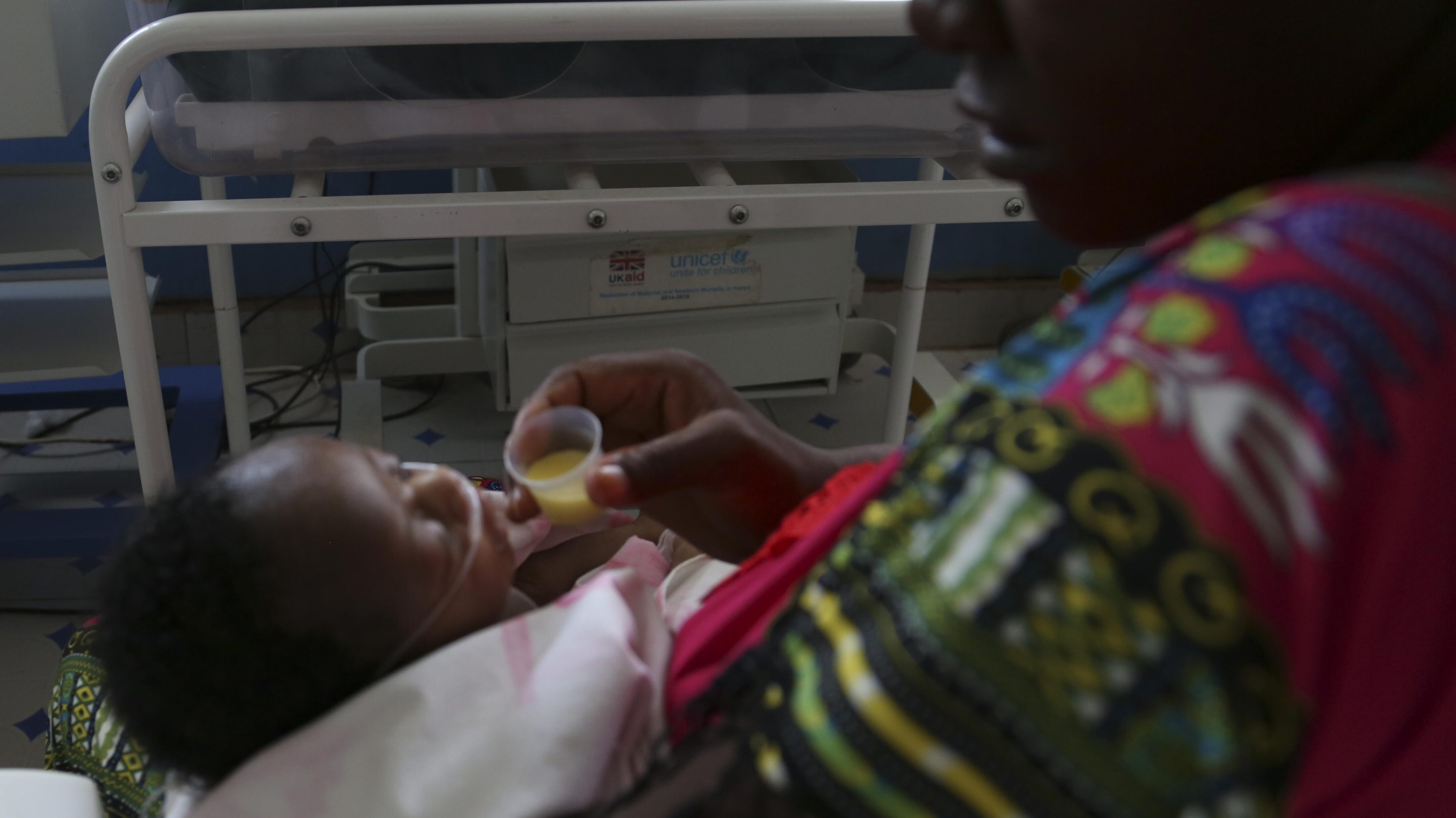
This study, funded by the Royal Society of Tropical Medicine and Hygiene, assessed the feasibility and acceptability of using trained, peer mothers to provide breastfeeding advice and support to new mothers of LBW on the postnatal wards and in the postnatal clinics in hospitals rural western Kenya. This peer mother support was valued by the new mothers and local healthcare workers and demonstrated the potential for scaling-up following more rigorous evaluation in the future.
This study was co-led by Dr Helen Nabwera (Senior Clinical Lecturer) and Dr Fiona Dickinson (Midwife/Monitoring and Evaluation Data Manager) in collaboration with colleagues at the Kenya Medical Research Institute (KEMRI) Centre for Global Health Research, Homa Bay County Referral Hospital, KEMRI-Wellcome Trust, UNICEF-Kenya, Action Against Hunger-Kenya and Birthlink UK.
Funding was awarded by the Royal Society of Tropical Medicine and Hygiene, Small grants scheme-2021.