Building molecular research capacity in Burkina Faso
- Video
13 July 2024
Building molecular research capacity in Burkina Faso
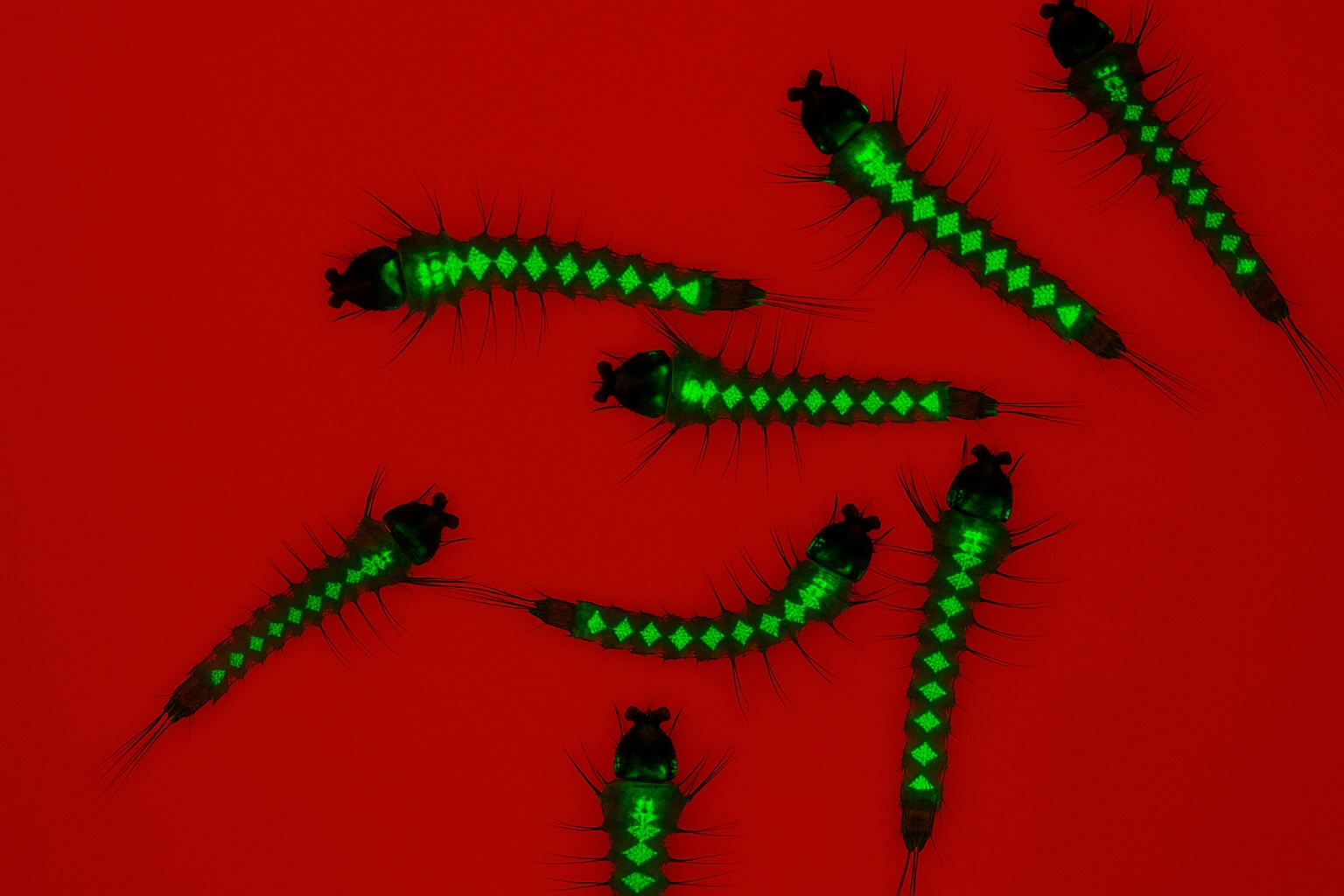
PhD students from IRSS Burkina Faso have worked with Liverpool School of Tropical Medicine’s vector biologists to generate a transgenic mosquito – a cutting-edge genetic technique that could help reduce disease spread.
The partnership between LSTM and IRSS, funded by the Gates Foundation, is designed to build capacity in molecular biology and genetic control of mosquitoes while physical research infrastructure is being developed in Burkina Faso, where malaria and other diseases are endemic.
It is an example of the equitable partnerships involving LSTM in research and training to improve health outcomes around the world.
Professor Tony Nolan, the LSTM lead on the programme, explains more along with Gilles Yemien and Odette Zongo from the Burkina Faso team.
Professor Tony Nolan: So what we work on, um, is something called genetic control, which, um, is an exciting technique and has a lot of potential because it’s a way of introducing genetic traits into a population. In our case, we work on mosquitoes, the mosquitoes that transmit malaria. And the ultimate way of, um, blocking malaria transmission is to actually control the mosquito.
Things like insecticides have worked very well, but uh, they have their challenges, uh, one of them being resistance and the cost and the overall, um, logistics of implementation. Whereas with genetic control, you actually release mosquitoes that have the modified traits and you try and spread that into the population and takes some quite complex molecular biology and genetics just to understand it, nevermind to actually build it.
And so that’s why we are trying to build that capacity, uh, within these African scientists such that they can become. Leaders and inform around these technologies and allow those countries to make more informed choices about whether to adopt, um, this type of technology as well as having the capacity internally to actually develop and lead in it.
Gilles Yemien: Uh, mosquito need to take the blood for the x maturation, and, uh, by taking this blood from human, they can transmit the parasite to the human and make it ill. So we are investigating the potential gene that are involved in that process. In order to develop unity control tools, we look for the specific gene and then practice gene function in order to impair the mosquito to be able to, uh, to use the gene for the for, for the blood digestion.
Uh, we did a knockout of the gene that mean no, we silence definitively the gene. By a CRISPR cast name specific tools, which is a high precise or genetic engineering tools.
Professor Tony Nolan: We’ve had these breakthroughs before in our lab, but this is the first time that, um, the Burkina team, anyone from Burkina, actually has made transgenic mosquito.
So it is a monumentous milestone. So the idea is that with these skills that they’ve now picked up the molecular biology and genetic. We are at the same time in collaboration with IRSS in Burkina Faso, building that molecular lab capacity and insectary capacity, as well as the methods to inject the mosquitoes within that country itself so that they should be eventually equipped to use the skills they’ve picked up here and work in those labs there and transfer that capacity across, um, to Burkina.
Odette Zongo: To come here in, uh, LSTM is a very really opportunity for us because we learn a lot of things with, uh, Tony Lan group. Thanks for Tony, for all he has done, because we learn really a new tools and, uh, we are hope confident and we can maybe carry this, uh, tools that we learn here in Bu Faso.