Sustainability and environment
At LSTM, we recognise that climate change hits the world’s most vulnerable communities hardest. As a socially conscious organisation, we are committed to championing climate justice through our research, our operations and our partnerships.

We’re improving global health outcomes through research, education and partnerships.
At LSTM, we know climate change has the biggest impact on the world’s most vulnerable communities. As a socially conscious organisation, we must advocate for climate justice at every level.
It’s our responsibility to integrate sustainability into everything we do.
Our sustainability commitments
- Build and maintain a culture of sustainability across LSTM.
- Embed environmental sustainability into our research, teaching and operations.
- Raise awareness through communications and community engagement.
Upholding global standards
We are proud to be a signatory of the United Nations Global Compact, supporting:
- Human rights.
- Labour.
- Environment.
- Anti-corruption.
We are also signatories of the Concordat for the Environmental Sustainability of Research and Innovation Practice, reinforcing our commitment to responsible, ethical research.
Sustainability and Environment Committee (SEC)
Our Sustainability and Environmental Committee (SEC) brings together voices from across LSTM and leads on the development and delivery of our environmental commitments and sustainability initiatives.
It ensures a proactive, evidence-based approach that is aligned with our values and strategic goals.
Governance of SECEngaging our community
LSTM runs an open Green Network for staff and students who want to champion sustainability and help reduce our environmental impact.
To accelerate our progress, we appointed our first Sustainability and Environment Manager in 2022, who is focused on embedding environmental action across research, education and operations.
Reducing travel emissions
International travel is essential for the work we do at LSTM, from research partnerships to fieldwork and global collaboration.
We know that travel, particularly by air, significantly contributes to our carbon footprint. That’s why we’re challenging ourselves to reduce emissions by ensuring all trips are necessary and as carbon-efficient as possible.
Green labs and work spaces
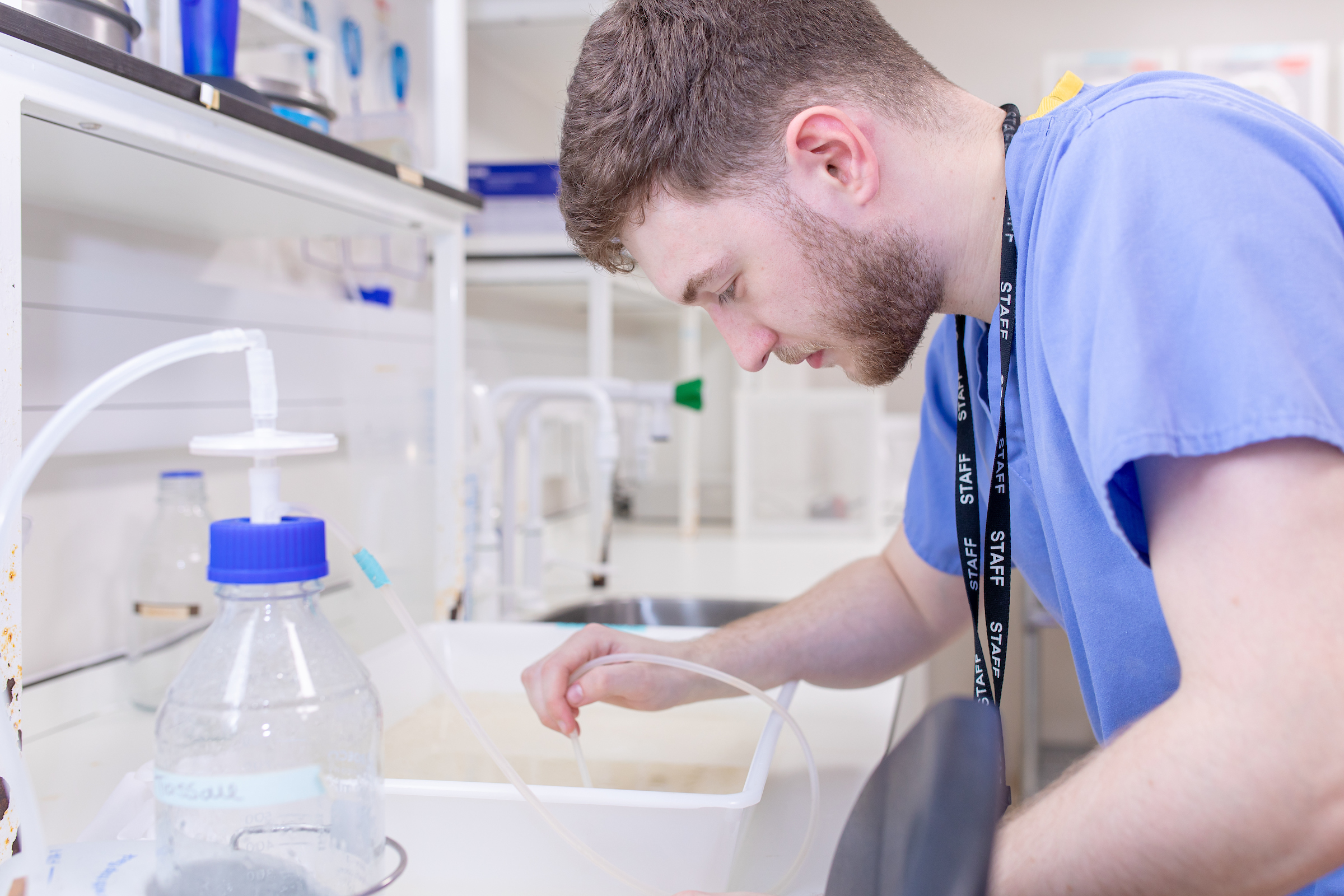
Our Green Labs Guide gives practical advice to help research teams reduce environmental impact across:
- Laboratory waste.
- Energy and equipment use.
- Sustainable procurement.
We’ve joined the Laboratory Efficiency Assessment Framework (LEAF) programme and are working towards our Bronze award.
Green Labs GuideReduce, reuse, recycle
We follow the waste hierarchy of ‘reduce, reuse and recycle’, and work closely with waste management providers to:
- Ensure correct use of waste bins.
- Monitor contamination levels.
- Identify areas for improvement.
Our Ban the Office Bin campaign aims to cut single-use waste and encourages sustainable habits across campus.
Biodiversity on campus
LSTM is based in the heart of Liverpool City Centre, where outdoor space is limited. But we are still committed to protecting and enhancing natural habitats where we can.
A staff- and student-led volunteer project has transformed an area of derelict land on campus into a small garden to create habitats and attract wildlife. This is a small but meaningful step towards increasing biodiversity on our estate, and reflects a shared commitment to environmental action.
Sustainability in estates management
We integrate environmental sustainability into all aspects of estates planning and operations.
- Since 2010, we’ve had a zero waste to landfill policy.
- In 2020, we switched to 100% renewable electricity.
- We’re reviewing our waste systems to improve recycling rates.
- LSTM is a member of the NWUPC and Electronics Watch, supporting ethical procurement.
- Our Sustainability Manager leads carbon data analysis and reporting, including scope 1, 2 and 3 emissions covering waste, travel and procurement.