MSc One Health in Tropical Disease
Human, animal and environmental health are deeply interconnected. As diseases move throughout species and ecosystems, the world needs a new generation of experts to tackle complex, cross-sector health challenges.
Apply now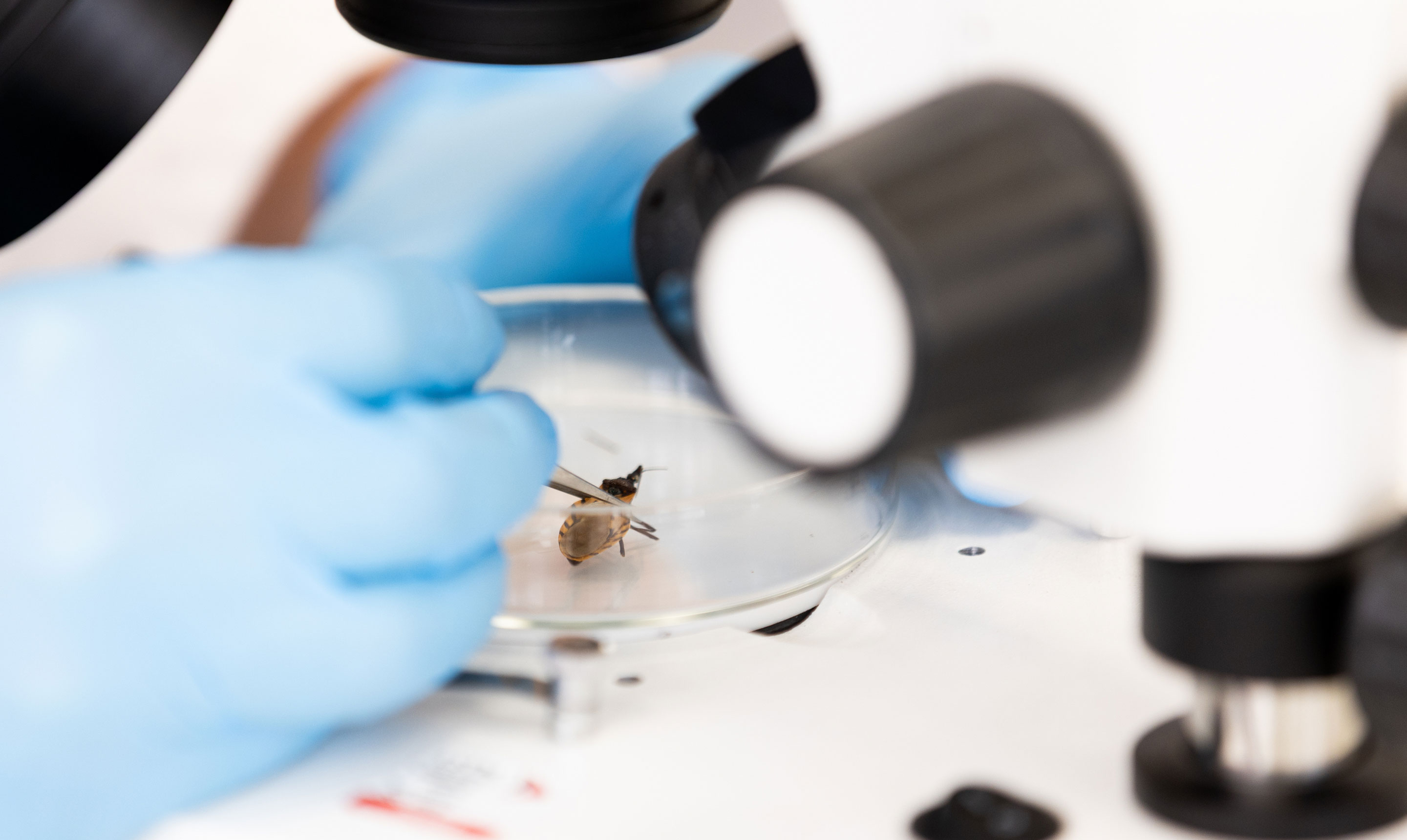
- Course type
- Master’s course
- Director of Studies
- Dr Alexandra Juhasz
- Location
- Liverpool, UK
- Start date
- September 2026
- Mode of study
- Full-time, on campus
- Duration
- One year
- Home fee
- £13,325
- International fee
- £26,099
Overview
Our MSc One Health in Tropical Disease takes an interdisciplinary approach to the biological and ecological drivers of disease in tropical regions. You’ll study zoonoses, vector-borne infections, food security and environmental change, and build the tools to improve health at the human-animal-environment interface.
Who is this course for?
Students and professionals with backgrounds in medicine, veterinary medicine, public health, biological, environmental and ecological sciences, conservation, agriculture or epidemiology.
Intercalating medical and veterinary students who have completed at least three years of study.

“Whether you’re a doctor, vet, biologist or conservationist, this course will help you lead research, shape policy and build resilience where it matters most.”
Dr Alexandra Juhász, Director of Studies
Why study One Health at LSTM?
Benefit from leading-edge facilities, including Europe’s largest collection of venomous snakes.
Develop essential lab, field and computing-based research techniques.
Work with an international team of research-active experts, with extensive experience in tropical regions.
Complete fieldwork abroad as part of your research project on a subject of your choice.
“Research into the biology and control of Aedes mosquitoes in Africa is lagging behind that in Latin America and South East Asia. With the rapidly growing problem of dengue in Africa, it is essential that this deficiency is addressed to protect the expanding urban populations who are particularly at risk.”
What will I learn?
You’ll study six 20-credit taught modules and complete a 60-credit dissertation for the MSc. PGDip and PGCert options are also available.
- Principles of One Health.
- Methods in Tropical Disease Research.
- Global Climate Change and Health.
- Scientific and Professional Skills in Tropical Disease.
- Animal Parasitology.
- Microbiology and Health.
- Key Topics in Snakebite.
- Applied Skills in Pathogen and Vector Research.
- Research Project (60 credits).
This one-year MSc is divided into three semesters. Teaching combines lectures, seminars, lab work, residential field courses and independent study. You’ll develop practical skills through real-world research challenges and complete a dissertation on a topic of your choice.
Each 20-credit module involves around 200 hours of learning, including contact time and self-directed study.
The course is delivered on campus in Liverpool, with fieldwork opportunities in tropical settings abroad.
- Understand the dynamics of zoonotic disease, pathogen transmission and ecosystem health.
- Conduct interdisciplinary research across human, animal and environmental domains.
- Use ecological and epidemiological methods to address global health challenges.
- Critically evaluate evidence to inform policy and intervention strategies.
Lead cross-sector collaboration and advocate for integrated health approaches.
- Global public health and disease control programmes.
- Veterinary public health, epidemiology and food safety.
- Research, policy and advocacy roles in One Health and climate-health sectors.
You will be ready to work with governments, NGOs, universities or international agencies tackling health threats at the intersection of people, animals and the environment.
Entry requirements



Fees and funding
Home fee
£13,325
International fee
£26,099

Financial support for UK students
We have scholarships, bursaries, discounts and loans available, established through generous donations from alumni, staff and friends and funding from within Liverpool School of Tropical Medicine.
Financial support for International students
We offer various scholarships for international students, particularly those from low- and middle-income countries. These include full or partial funding through programs like the LSTM Global Health Impact Scholarship and the LSTM Humanitarian Scholarship

External Funding
Scholarships, fellowships and grants are available from a range of funders and organisations. Any scholarship, studentship, fellowship or grant can be used as an alternative to, or part-funding of, an LSTM scholarship.
How to apply
You can apply for a course at any time throughout the year using our online application portal, MyLSTM. You will need to register for an account the first time or if you’ve already created an account you can pick up where you left off by logging in directly to MyLSTM.
By registering for a MyLSTM account, you will be able to:
- Apply for courses at LSTM.
- Upload supporting documentation.
- Save your draft application.
- Accept an offer to study.
- Keep your account information up-to-date.
If you can’t access our online application form, please get in touch. Paper application forms are available on request.
Categories section – full title
Get study updates
Sign up for the latest on scholarships, application deadlines, events and new course launches. We’ll keep it relevant, and you can unsubscribe at any time.