Exploring Global Health Career Pathways: Master of Public Health Student Reflects on LSTM Careers Event
- Blog
3 December 2025

Emily Buchanan, a student on the Master of Public Health (Sexual and Reproductive Health) programme at Liverpool School of Tropical Medicine (LSTM), attended the recent LSTM Careers Event in Liverpool, an afternoon that brought together global health organisations, alumni working in international health, and industry partners. The careers event gave Master of Public Health students the chance to explore global health career pathways, engage directly with potential employers in the sector, and hear first-hand insights from LSTM alumni working in public health roles around the world. Below, Emily reflects on her experience of the careers event and the opportunities it presented.
Last week’s LSTM Careers Event brought together a diverse range of global health organisations, alumni speakers, and industry partners for an afternoon designed to connect students with future career pathways. The event space was lively throughout the day, with staff, students, alumni, and employers engaged in conversations about postgraduate opportunities, medical placements, research roles, and humanitarian work. The schedule featured both employer showcases and alumni talks, allowing attendees to gain insight into the breadth of professional routes available after studying at LSTM.
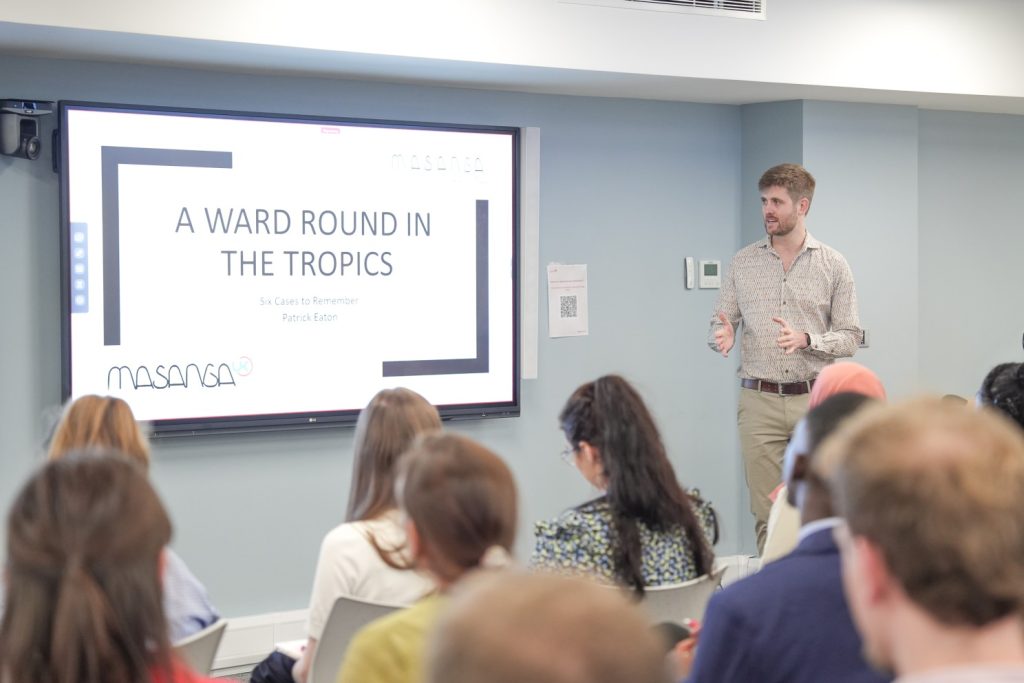
The alumni sessions offered a personal look into the real-world impact of LSTM graduates. Talks included Dr Caitlyn White of the Aboriginal Health Council of Western Australia, Dr Patrick Eaton from Masanga, Luke Vanstone from Liverpool School of Tropical Medicine, and Hassan Hussain of Doctors of the World UK – part of Medecins du Monde International
As an intercalating medical student particularly interested in working in Australia, I found Dr White’s talk especially engaging. Hearing about her work in public health and the unique health challenges faced by Aboriginal communities gave a meaningful insight into the realities of healthcare delivery across Western Australia. Her reflections reinforced my own interest in pursuing medical work overseas and highlighted the value of culturally grounded public health practice.
The employer stands provided a chance to speak directly with organisations shaping global health practice. Groups present included Medici con l’Africa Cuamm/ Doctors with Africa CUAMM , Acted , Assosiasaun Maluk Timor, Friends of the Cedar Foundation Tanzania, Evotec, Biofortuna, Floating Doctors, and representatives from LSTM’s PhD and PGR teams.
The Medtechtomarket Ltd stand was a particular highlight for me. Their team discussed how innovations move from prototype to commercial product and how clinicians can contribute to this pipeline. As someone interested in clinical innovation and problem-solving, it was exciting to learn how medical students and early-career clinicians can be involved in device development and translational research. It added a completely different dimension to the idea of what a global health career can look like.
Throughout the afternoon, I had the opportunity to ask questions about internships and working abroad. The exhibitors were very helpful in giving me advice such as how to structure CVs, what skills stand out in global health, and how students can seek field experience responsibly and ethically. Conversations with organisations such as ACTED and Floating Doctors were particularly valuable in understanding what humanitarian fieldwork involves on the ground.
Another well-received feature of the event was the professional photographer offering free LinkedIn headshots that will benefit us as we shape our professional profiles. This event connected classroom learning with real-world career pathways, giving us students direct access to people working across the global health ecosystem, and open doors to opportunities that may otherwise feel out of reach.