“Don’t do it alone”
- Blog
3 November 2025
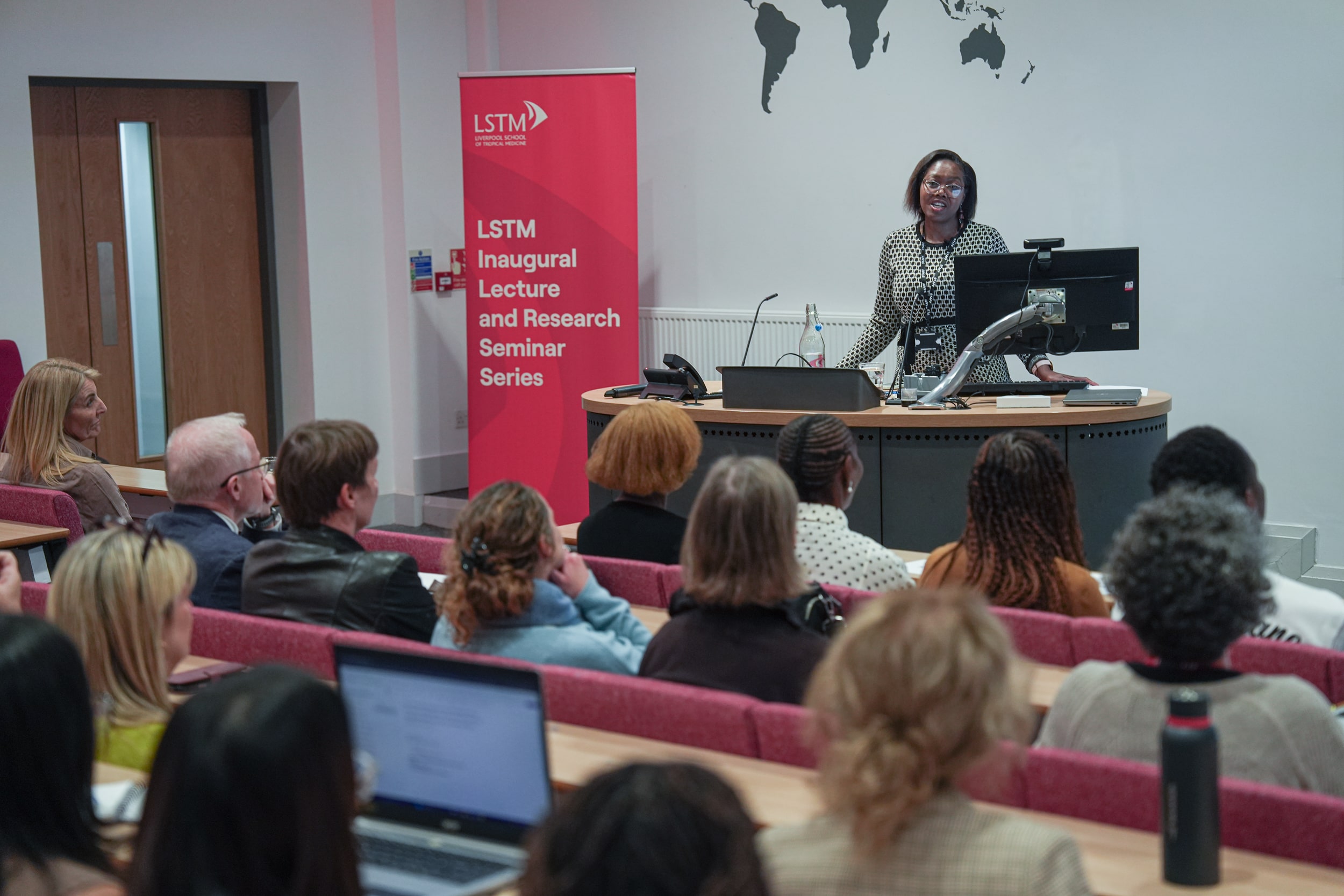
Lessons from Professor Euphemia Sibanda’s Inaugural Lecture
Starting with an emotional introduction by her mentor Professor Frances M. Cowan, in a true Zimbabwean fashion, she described the “caring” but “competitive” Euphemia Sibanda—a global health leader in implementation research. After a heartwarming acknowledgement to her family for their part in her success – which brought tears to my eyes – she began her inaugural lecture at LSTM. Professor Euphemia compared her professional journey to a recent 32km mountain trail she climbed: full of highs, lows, and moments of doubt, yet with the determination to keep going. It was the perfect personal metaphor for her talk, “Overcoming stumbling blocks: harnessing partnerships and mixed methodologies to improve HIV and sexual and reproductive health outcomes in Sub-Saharan Africa”.
Talking on turning evidence into action
Professor Sibanda spoke passionately about implementation research and how, to my surprise, it took up to 17 years for the evidence in HIV treatment to be adopted in real-life settings – especially in low-income countries. She reminded us that partnerships and communication are crucial to closing this gap between research and practice. At one point, she joked that “people aren’t rational when making important choices,” which got a laugh from the audience—but also hit home. Evidence alone cannot change health outcomes; understanding how human behavior works is an important factor too – which is an idea I will carry with me in the future as well.
Barriers and managing them successfully
She discussed the various challenges during her journey including stigma among nurses in Africa towards unmarried young couples seeking sexual health care. However, she also followed it up with examples of small but effective interventions such as incentives for couples to test together and the success of the HIV self-testing or “HIV STAR” Initiative- a great example of how partnerships can make a change.
One thing that I found myself particularly reflecting on was when she spoke about U=U (Undetectable= Untransmittable) which was a concept that was launched in 2016. I remembered that the first time I had heard about it was during my internship at a specialized infectious diseases hospital in Nepal only in 2019 and not in medical school before that. It made me realize how long a knowledge gap can exists for in the low-and-middle-income countries following research and how implementational research can help bridge it in the future.
Representation
The REACT initiative in Nepal and Zimbabwe an NIHR-funded health research consortium was also discussed. It was eye-opening to learn about such important work happening in my own country- something I would not know if I had not attended this lecture.
During the Q&A session with the audience, she was refreshingly honest about the challenges she faced as a woman of colour and a researcher from a low-income country—limited access to information, fewer networking opportunities, and sometimes being asked to join projects just for representation rather than having her voice truly heard.
Collaboration
What stood out and resonated deeply with me out of this entire evening was her message to early career researchers which was very simple but powerful:
“Don’t do it alone”
Asking for help can always feel uncomfortable but hearing it from someone as accomplished and grounded as Professor Sibanda reminded me that collaboration is not a weakness—it is the key to successful implementation of any change.
Why attend event like these?
Events like these are what makes studying at LSTM so special. It allows students like me to connect the concepts of global health from our literature with examples of those who were able to turn research into impact in the real world. It reminds us that collaboration, empathy, and persistence are just as important as the collection of data.
It is rare to witness such a genuine sense of respect, warmth, and community in an academic setting. Professor Sibanda’s lecture was not only informative but inspirational—a reminder that even if it seems like the journey is impossible, the experience and destination is well worth it.
By Ingita Chand, one of LSTM’s Student Ambassadors who is studying for an MSc in Tropical and Infectious Diseases