Introduction to the Centre for Snakebite Research and Interventions (CSRI)
- Video
13 January 2025
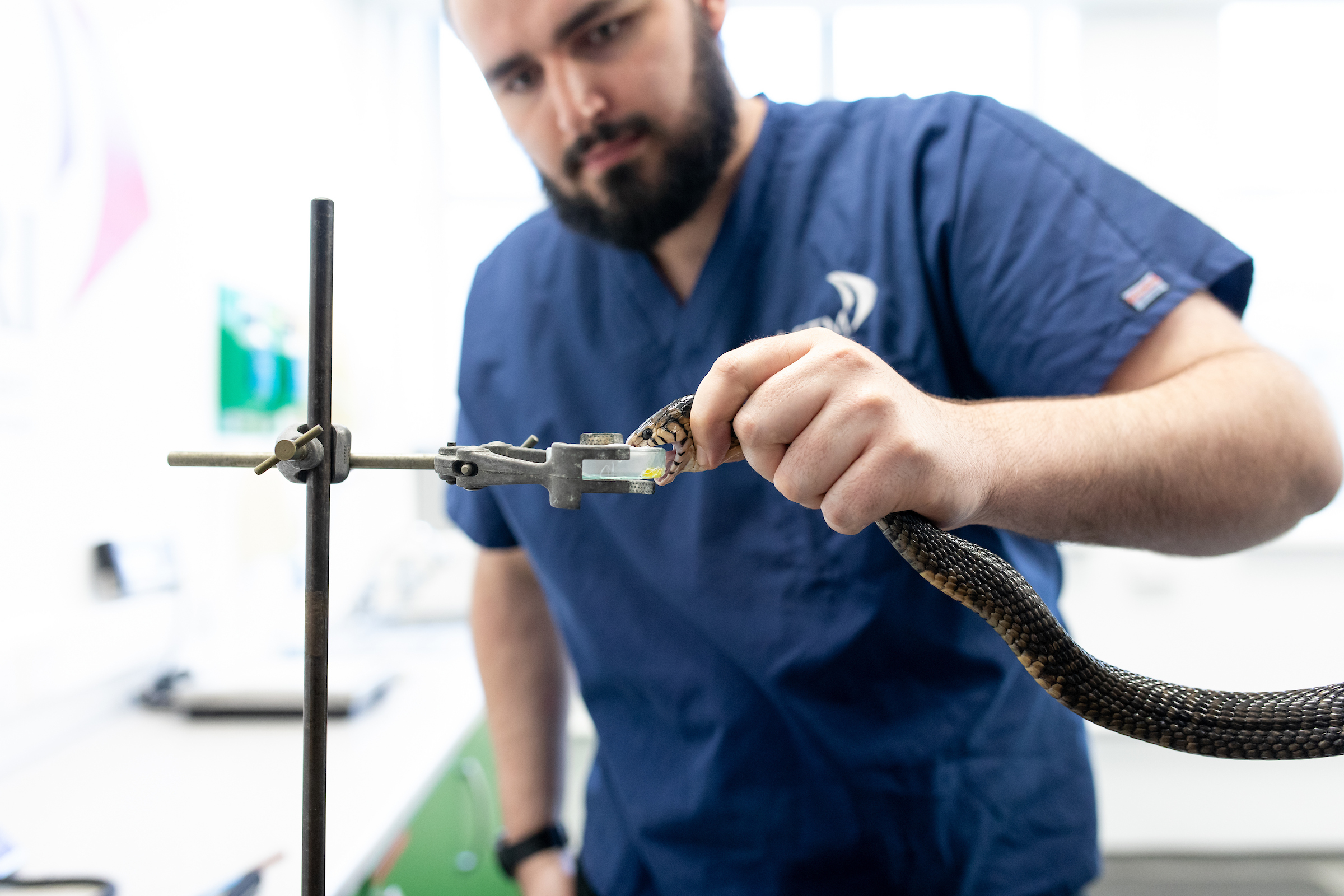
Introduction to the Centre for Snakebite Research and Interventions (CSRI)
Snakebite remains one of the world’s most overlooked global health challenges, affecting more than a million people every year and causing avoidable deaths and lifelong disability. For more than six decades, our Centre for Snakebite Research & Interventions (CSRI) has been committed to changing that reality.
Our approach to snakebite research
At LSTM, we take a holistic approach to tackling snakebite. Our researchers study venom biology in the lab, work directly with clinicians in the regions most affected, and partner with communities to understand the true scale of the problem. This joined-up approach helps us develop better treatments, improve patient care and strengthen health systems where it matters most.
World-leading snakebite expertise
Our team brings deep scientific expertise together with strong, equitable partnerships in snakebite-affected countries. It’s this combination, world-class research, trusted collaborations, and a clear focus on impact, that places CSRI at the forefront of global efforts to reduce deaths and disability from snakebite.
There is still much to do, but we’re ambitious about the difference we can make. Working with partners across the world, we’re driving forward research that can save lives, protect livelihoods and improve health outcomes for some of the world’s most disadvantaged communities.
Areas of research
- Antivenom development
- Venom toxicology
- Clinical treatment protocols
- Community health interventions
- Health systems strengthening
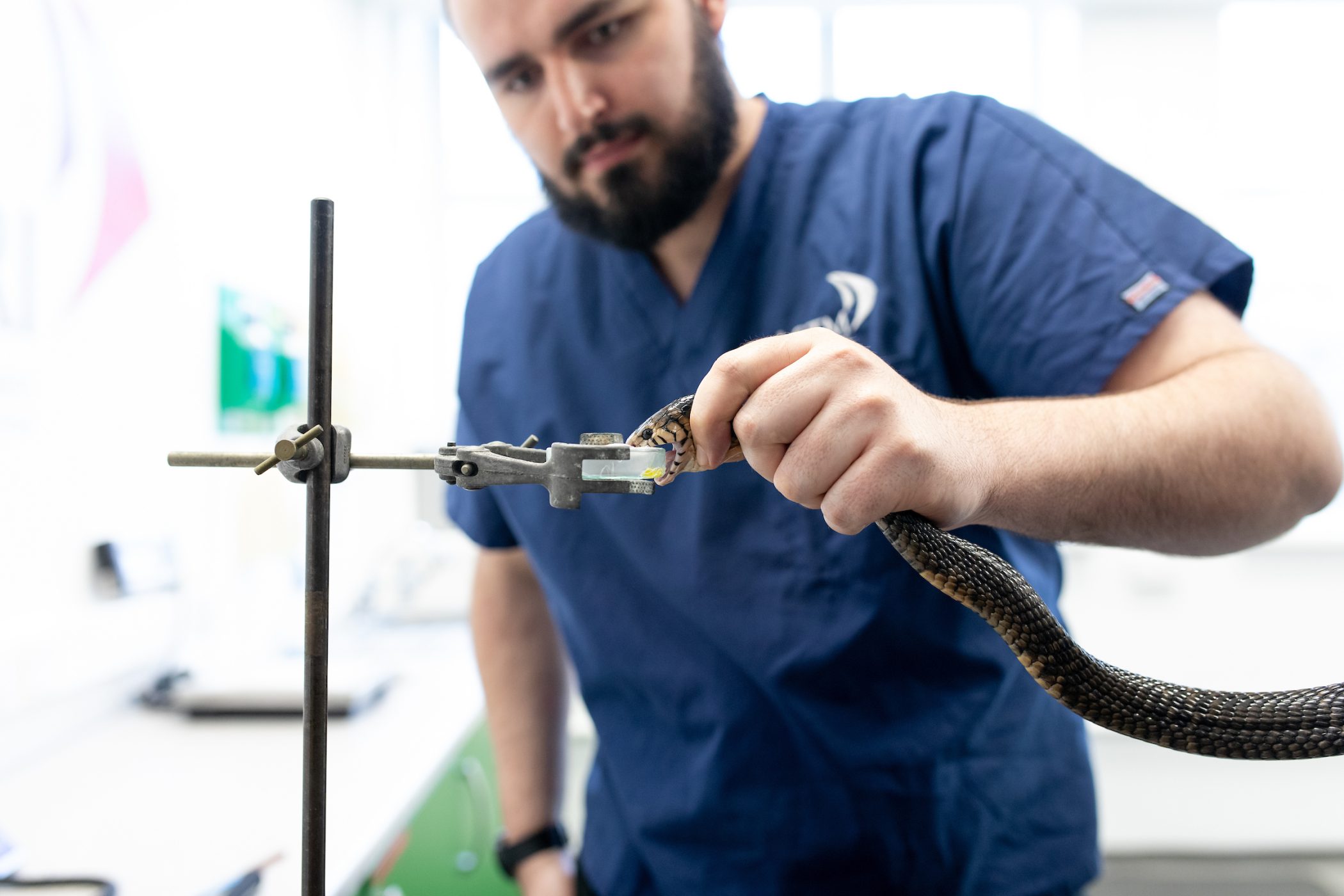
The Center for Snake Bite Research and Interventions at Liverpool School of Tropical Medicine has for about the past 60 years, been delivering on a mission to improve the lives and livelihoods of snake bite victims through scientific research. Snake Bite has for a long time being an under-resourced and under-researched global health challenge.
It affects a huge number of people every single year. Over 1 million people are bitten and venom by venomous snakes. More than a hundred thousand people will lose their lives and many more will suffer lifelong morbidity as the result of a bite by a venomous snake. The research that we do at CSRI is really broad.
We take a holistic approach to studying snake bite, whether that be working in the laboratory to understand what toxins are in the venom of different snakes so that we can better devise new treatments for snake bite. Or it might be performing clinical research in snake bite affected regions so that we can understand what a snake bite actually does to a patient.
Or we may be working in communities most affected by Snake Bite to understand the scale and the burden of disease in that particular part of the world so that we can improve the management and treatment of Snake Bite in the long run.
LSTM is all about impact, and the work that CSRI does is really key to that impact, uh, the work that it does in improving health in disadvantaged populations to improve the management Snake bite is a critical part of what LSTM is trying to achieve.
Despite all these great gains that we’ve made in terms of tackling snake bite in recent years, there remains a lot of work still to do. CSRI is really well placed at the forefront of the fight against tropical snake bite. We have a great team. We have unique resources, and we have diverse partnerships with key people in snake bite affected countries.
Collectively, we can make a real difference with our research to snake bite patients.