LSTM researchers find an easy alternative to nasal and throat swabbing for SARS-CoV-2 Diagnosis
- News
14 September 2020
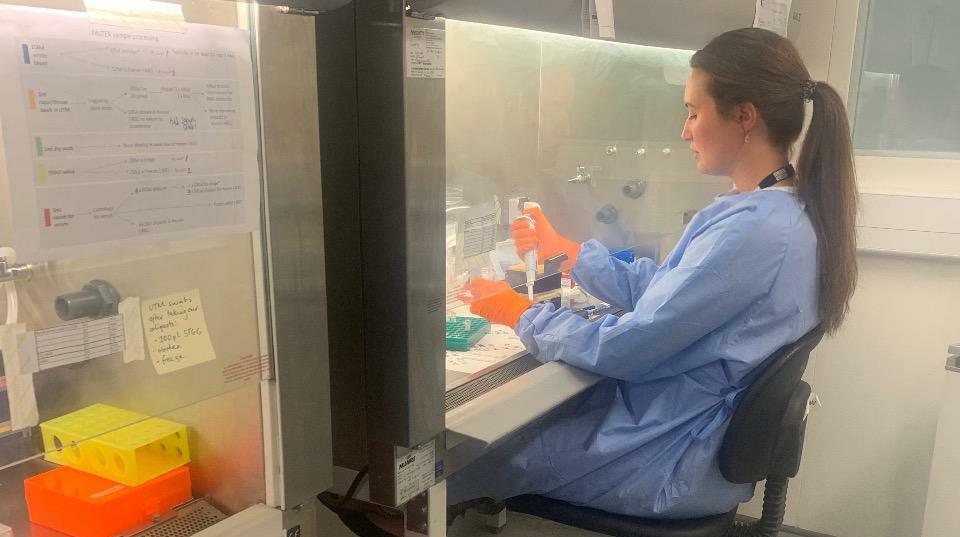
Researchers from LSTM, working alongside clinical and research staff at the Royal Liverpool and Aintree University Hospitals, have found that saliva samples are just as effective at diagnosing COVID-19 as respiratory swabs that are currently being used.
Calling for more research into the use of non-invasive saliva tests, the results of the study are published in the journal Emerging Infectious Diseases as a research letter. First author on the paper is LSTM PhD candidate Rachel Byrne, who has been working on a number of projects related to diagnostics of COVID-19 within the research group of LSTM’s Dr Emily Adams.
Rachel explained: “Saliva is a non-invasive, sensitive alternative to respiratory swabs for the diagnosis of COVID-19. We have shown in this study that from 110 paired clinical samples that saliva is consistent, and in some instances superior to swabbing for the detection of virus..”
Working with samples from clinical patients within the hospitals, the team compared self-collected saliva samples with healthcare worker-collected nasal and throat swab specimens from patients with suspected COVID-19. Finding the saliva tests to be as effective as the swabs the team now call for a continuation of investigation into efficient diagnostic strategies and say that techniques, such as saliva sampling, should be evaluated in certified clinical laboratories.
“Easy to collect samples, such as saliva, have numerous benefits as we expand testing during the COVID-19 pandemic.” Continued Rachel: “In the UK this will improve compliance to surveillance programs due to the painless collection as well as support the governments push towards mass testing and at home sampling. In resource limited settings saliva can reduce the burden of global shortages of swabs and transport media which are already impacting testing capabilities.”
You can read the full research letter here.