so welcome everybody to the latest in our series of seminars on the impact of
lstm’s work so visits to the hepatarium are a highlight of tours
of lstm but perhaps less well known is the leading role that um
lstm research has played and continues to play in the design and implementation of new
interventions to alleviate the suffering from snakebite and the critical advocacy work of lstm
in raising a profile of snakebite and improving access to treatment so i’m delighted to welcome professor
rob harrison who’s going to give an overview of the work of the center for snake bite research and intervention
over the years and but before handing over to rogues we’ve got a packed set of slides
just to remind people that they can post any questions during um during the talk on the chat and we’ll
address those at the end and as much as we have time to so welcome rob thank you very much
i hope everyone can see my slides and i hope everyone’s um coping well with with lockdown um
in preparing for me for this seminar peter gwen stanley instructed me to to not be shy and to blow our own
trump as loudly as possible as i described to you lsdn’s research activity and the impacts
that activity has had on snape bite and none of this would be possible
without the pioneering work that david thiexton and and alistair reid before him had
done on snake bite and actually by the way it was david who recruited
um all three of us myself david lalu and nick casewell to to snakebite research and
to better understand to but sorry before i start i just want to
describe to you some various um key points about snakebite and that is that there’s a group of
venomous snakes which are called the lapids these are the cobras and the mambas and the crates and so on
that primarily cause a muscular paralysis and this is an individual who’s been
bitten by a black member suffering the first signs of neurotoxic and venom
the inability to to open their eyelids and when that paralysis obviously
spreads down the body and affects the the respiratory muscles then people can
die quickly from respiratory death the other group of medically important
snakes are the vipers these are the the puff headers and the pit vipers and
so on and they primarily cause a hemorrhage and a non-clotting blood syndrome
and this is an individual from from west africa bitten by the sore scale viper
that is showing the first signs of of of this hemotoxic and venom which is bleeding from from the gums and
if you’re bleeding from the gums then then you’re clearly also bleeding from other areas in your body as well
and when it’s into cranial bleeding then that becomes extremely serious
it’s important that you know that the antivenom is is an effective treatment of of these systemic effects
of snakebite and is manufactured by taking the the venom from a snake
injecting it in sub-toxic doses into horses over multiple periods over
several years and then as those horses generate antibodies to the venoms
then you collect the blood from from the horses and you extract the antibodies from
those horses and that is the treatment and it’s important also that you know that
their anti-venoms are not considered effective against these dreadful
um tissue destructive effects of snakebite that victims who survive snakebite are
left with for the rest of their lives we know about the global burden of
snakebite from some work that the wha asked david and his colleagues in sri lanka
to undertake in 2008 which updated the 1954 data
to demonstrate that snake bite affects about 1.8 million people every
year and causes at least 94 000 deaths every year um and
put that into context of other diseases in these areas um so snakebite kills
one-fifth the number of people dying globally from malaria and in india alone snakebite kills
half the number of people that are dying from from hiv so it’s a considerable disease
and what was very important about the caster acne data was that snake by incidence and
mortality is much higher in asia and africa than elsewhere in the world
what we did is we took those country-specific data on snakebite mortality in the context of
other country-specific data to demonstrate that those countries
with the highest snakebite mortalities also had the lowest government gdp
and the lowest government expenditure on health and the the highest number of people
working in agriculture in a lot of these areas of the world that agriculture is subsistence farming agriculture
by people who are dependent on this very very low income and finally we demonstrated using that
data that those countries with the highest snake bite mortality were resident to people of the lowest
human development indices determined by education attainment
literacy income and life expectancy
so snape bite we then decided to call a disease of rural tropical poverty and that was a
an important statement to make in the context of what was going on and our focus has been on sub-saharan
africa because of this figure down here because the case fatality rate in sub-saharan africa
is higher than anywhere else in the world and we know that because some of the early work that david fixtan
here did in honor he’s here on the golf course in abuja
but his earlier work in in africa was was critical to our understanding of snakebite
so this is a publication back in 1980 on on the spitting cobra demonstrating that
people can be blind blinded by the spitting cobra when the venom gets into the eye
but the most important part of it is the fact that a lot of victims suffer long-term deformity
he also demonstrated that only nine percent of invented victims were treated in
hospital that five percent of patients bitten by the snake died
and that 19 suffered this but also that it was seasonal so when the rains fall snake by
incidence um peaks at exactly the same time when agricultural activity peaks
and that’s probably explains this this commonality between snake by incidence and mortality
and and seasons david also worked on on this this the
carpet biker saw scale viper demonstrating that over 50 percent of the victims um seek
the the consultation with a traditional healer rather than go to a health facility
that the consequences of bites is this non-clotting blood um symptoms and
the the frequent local tissue swelling that can result in a fulminating
necrosis requiring amputation and throughout these papers
published by david and i love us to read were was was the emphasis on the lack of
available antivenom in the facilities most frequented by snakebite victims
at the same time david published this paper and that was a protocol in a mouse model
enabling the comparison of the toxic effect of venoms
across their species range and the use of that information
to determine the effectiveness of antivenom to neutralize that pathology and this
early work 1983 has become a global standard and i was it was
adopted by the who guidelines and it’s adopted by all the pharmacopoeia in multiple countries
throughout the world so it was a tremendously important contribution to snakebite um but because he was
linked up to to anti-venom manufacturers he was very quick to use that knowledge and use the
resources that we have here in our herbitarium i.e the venoms to help in the in the assessment of a
new anti-venom developed for west africa with with our partners in
in microfarm uh illustrated here um and so david used used his his uh
preclinical expertise to demonstrate that this should be effective in humans and then by linking up with professor
david warren university of oxford uh undertook one of the first trials of an anti-venom in in west
africa this is perhaps their most important
publication it was a short letter in the lancet with an arresting title
crisis and snake antivenom supply for africa this court this letter caused extreme
concern um globally about the supply of effective antivenom for africa
but importantly it was brought to the notice of the nigerian federal ministry of health and it created an action that i wanted
to focus upon and that was to establish the ekitab study group
which was funded by the nigerian federal ministry of health with champions snakebite champions in
abdul masidi and mandel durfa in the federal ministry of health
um in collaboration with ourselves in in liverpool and professor david warrell
in oxford and what we did with with this funding from the nigerian federal
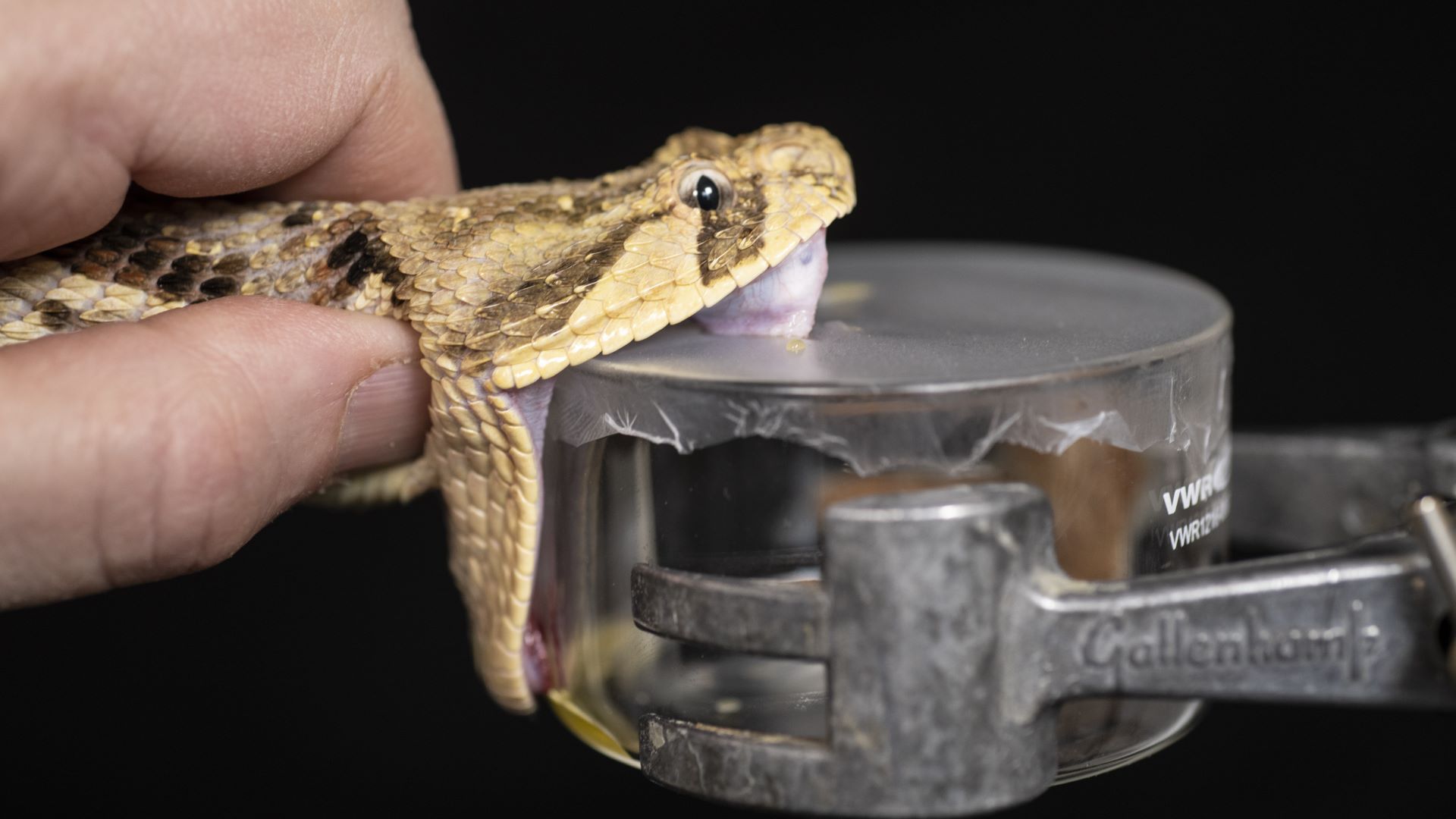
ministry of health was import the most medically important snakes from nigeria to our facility
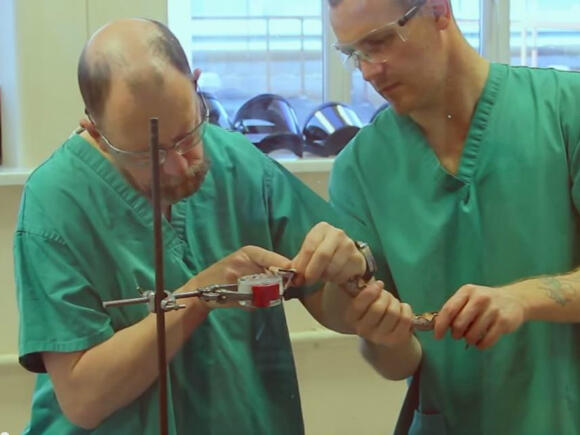
here in in liverpool and then paul rowley gavin laying and so on then took stocks of venoms from
from these animals and then provided them to five different anti-anti-venom manufacturers globally
that had agreed to use their generously agreed to use their spare manufacturing capacity
to generate experimental antibondings which then david pre-clinically excuse
me we then pre-clinically tested those anti-venoms in this mouse model
but at the same time while that was happening we also um undertook the following
activity so we constructed a a war dedicated to snake bite treatment and
then david warrell trained dr abu bakker and other members
of the clinical staff here in in the optimal clinical management of snake bite but also
surgical management of snakebite and that meant that there was a an expert team located in this
in this ward and we also purchased two ambulances because the the it was well known that the quicker
you get a snake bite victim to hospital treatment the better the outcome of that treatment
and so the pre-clinical testing of these five different antivenoms was undertaken
and published and what that meant was that three antivenoms of those five were um
committed to it to uh the largest anti-venom clinical trial in africa to date um one antivenom was withdrawn
immediately because it induced very high levels of adverse effects that i’ll talk about in a minute
um but that left us with two antivenoms that were extremely successful as i hope this
slide shows here so this is the cost of weakened product called equitab plus uh and one effective dose
with three vials so that’s 30 ml and that a single dose was effective in
83 percent of patients that were envenomed and
two doses provide nearly a hundred percent protection echitabg which was monospecific to just
the sore scale viper was effective at a single dose in 75 percent
and two doses gave near on um a hundred percent effect efficacy
so two extraordinarily effective anti-violence but a key question is safety and the ra
the reason i say that is because anti-venom which is obviously the the antibodies from a horse or a sheep
directed straight into your blood is is can cause extreme effects so in 50
of patients you get these late so by late i mean between four and eight days after treatment um
people suffer this these this urticaria this itching that that can go on for
for at least a week fortunately in many fewer patients and less than one percent
of patients you get anaphylactic type effects so angioedema is shown here
and also bronchospasm so classic potentially lethal effects of snake bite
and at about much the same time david lalu and his his colleagues in sri lanka demonstrated
that you could prophylactically treat snakebite victims
with adrenaline to reduce these adverse effects particularly these potentially
lethal adverse effects in over 25 percent of patients
and importantly he demonstrated also that that um the the administration of
hydrocortisone at the same time as your adrenaline is likely to negate the benefits of
giving adrenaline before antivenom which was a common practice before this this finding
and the protocols that were that came were outputted from this have since been adopted in the who
guidelines but what about the safety of our ecutab study group anti-violence
well there were severe effects in in 10 percent of patients
administered the echitab plus antivenom so this is the 30 ml vials a dose versus five
percent in in patients treated with equitab g which is just one vial so there’s a clear volume
association with with safety um the late adverse
effects so the the less severe parietas and urticaria
was about equal to to both patients and much better than other anti-venoms that
were around at the time
so on the basis of of of that anti-venom production in in by microfarm in uk and by costa
rica by ira institute of claudia miracado in costa rica proceeded at pace and we delivered
that anti-venom to nigeria um and i think upon at the time
of uh while we were being funded by the federal ministry of health these two anti-venoms were delivered
free to patients um they were effective and they were as safe as anything else on
on the market and the word got around extremely quickly and this is some data which which
started just which ends at about two years into our program
demonstrating the rise in snakebite victims coming to our the hospital that we were working
in um and by the time we ended the the study in in 2012
um the we were getting 3 000 patients per annum uh to to our hospital in in northeast
nigeria um and with sometimes in in the rain seasons 30 statewide admissions every day
so huge volume of patients and they were coming far from far and wide
so that we were getting patients apparently coming in from from from cameroon and chad because of the
knowledge that this this hospital had anti-venom the anti-venom was free
and the the treatment was extremely effective by the clinical staff
and this program would not have been as a big part um and so in the course of this
this project we delivered over 37 thousand five thirty seven thousand vials of these two
anti-venoms which equates very approximately to eighteen and a half thousand
life-saving treatments and it wouldn’t have been possible without
the kind of work that we did to gain the support of not only ministries of health in in
federal government but also in the state governments but also getting the support of of local uh
leaders so this is the emir of kaltungo receiving members of the ekitab study
group it’s a it was a critical um piece of of work to to to make sure
that we had effective engagement with all the local stakeholders
at the same time as we did all that and this is some work that that nick casewell did back in 2010
demonstrating that despite the fact that this this akitab g was designed specifically for the sore
scale viper of nigeria that in in this mouse model that this
antivenom was also equally effective of against the the toxicity of venoms in east africa
and north africa and the middle east but not against the venom from the sore
scale viper in in in asia so a real contribution to
the the likely effectiveness of this anti-venom beyond its its
original design and i’ve talked a lot about our publications and and
this is a an independent study that was performed demonstrating
that our publications and this is just one of the from 2008 to 2016 here
um where in the top 10 globally in terms of number of publications and in terms of the age index was top
three globally so the publications off particularly from from david thicke and aleister
reid really did leave the world um not just in in um uk
but also our grant income was was uh identified as well so this is a g finder report
called policy cures research that was commissioned by the welcome trust identifying that
um the lstm’s research is is one of the most multidisciplinary
because it was working on different different aspects of snake bite um and that we were
we were after industry we accrued the the highest um research grand income
of any institution globally and we did that over several consistent years
and what about the impact of of this work well this is the clinical impact this is
a paper that was published by bala abubakar the key clinician in in kaltunga demonstrating that the use
of the akitab g antivenoma um and and the akita plus antivenom
that it reduced fatalities down to 1.5 percent um and that’s an enormous contribution
to to live saved but also it demonstrated that that
most snakebite victims required only a single vial whereas previously with other
anti-venoms you could require at least six files so this was independent
illustration of of the effectiveness of this product and its contribution to
snakebite victims now what that has meant is is that this
antivenom so these are the uh the costa rican products so this anti-venom now designed for
nigeria is now being uh marketed and delivered uh distributed in burkina faso mali ghana and central
african republic so more more snake bite victims in other parts of the world
are getting access to this the institute of claudimira picada then expanded that
anti-venom to now include the ability to cover envenoming by neurotoxic snakes
as a result of the experience of of of the west african study microfarms product was one of the first
to be selected and approved by the who pre-qualification of
anti-balance program which i’ll talk to about a little bit more in a minute
so this acute study group project is is widely recognized i think as a
as a a model intervention in snape by a south-south model because the cost of
with with nigeria but also a north-south model intervention uh product protocol
and what institute of claude amir picado did then was was to use this model um
to demon to produce new anti-venoms to meet the clinical needs because of a
shortage or or or in the case of new guinea papua new guinea
the fact that anti-venom there was overwhelmingly expensive they produced two completely new antibonds in both of those countries
done clinical trials and and those are are being distributed in in those two new countries
so echitab study group i think has has created an enormous clinical impact on
snake bike victims not just in nigeria where it was originally designed but globally
it’s also had a considerable uh research capacity strengthening impact um so
the the main group working in in nigeria with with nasidi and durfa
were from baira university kano headed by professor abdul razak habib
um and this group has since become the authority on multiple different
aspects of snake bite in in africa and abdul’s
research influence has has since the akitab study group uh spread far and wide so he’s now the
one of the directors of the global snake snakebite initiative he was one of the key writers excuse me
key writers of the who’s strategy to half snake by mortality or morbidity by 2030
he has been for many many years the principal advisor to federal and many state uh ministries of health
on snakebite management in nigeria he’s one of the founding members of the african society of venomology
um and he’s published a numerous really important papers and this is just one of
them here demonstrating that the cost-effectiveness of of anti-venom treatment of snake bite
victim in terms of either the the cost per death averted
or the cost per daily averted demonstrating that that saving the lives
by of of victims um using anti-venoms can be extraordinarily
productive from an economic point of view he expanded this analysis then
to all 16 countries in in west africa which contributed data
um and and also provided some important um anti-venom
advocacy papers uh to the literature it’s also meant
that because of our association with with uh abdul razak and his team in bayern university karna
that we were able to to get grant funding from the national institutes of health research
to establish the african snakebite research group which consists of abdul’s team here
in in a in a snake bite research and intervention center but also we were able to to recruit a
new partner in kenya to this effort and what the african snake right research
group aims to do is to undertake clinical work to understand in detail the pathophysiology of
envenoming by the most medically important states determine the cost of illness of those
victims but also to the to the health infrastructures that are serving serving those victims we’re determining
the cost effectiveness of motorcycle ambulances in comparison to to education campaign
community education campaigns and then with welcome trust funding we’ve now added escortini formerly
swaziland into the african snake bike research group to also look at the clinical
capacity of the health infrastructures that are serving statewide victims looking at
clinical training needs looking at or trying to identify barriers to effective health care
and looking at what are the perspectives of community members to traditional healers to eff
to hospital-based health care
and one of the first things we did was to use our expertise in in identifying the effectiveness of
antivenoms in that mouse model i referred to earlier to demonstrate that
of the four antivenoms available in in um in kenya two of which were um registered
that the two anti-venoms that were registered for use in in kenya were actually the least
effective in neutralizing the pathology of the most medically important snakes of of east africa
this created as you can imagine quite a stir amongst not only the manufacturers but
also the ministry of health but a very effective outcome
has been that the product that we found the most clinically pre-clinically effective has
now been registered for use in in kenya
and we have heard anecdotally that one of the anti-venoms that we found was less effective has now been changed
in its production to apparently make it more effective
that association within the african snake bite research group has then expanded so with
diffid funding now we were able to invite our partners in nigeria and kenya to join us
in what’s called the scientific research partnership for neglected tropical snakebite
which aims to develop humanized monoclonal antibodies to treat the systemic effects
of snakebite not only across africa but also in india as well and it links up with
with the international aids vaccine initiative irvi to use their extraordinary
human monoclonal antibody platforms to generate these potential new products
um for for snape bite and also it brought in new partners in
india and indian institutes of sciences kartik suniga into this global program
and together those two major um research uh funds from from nihr and
diffid enabled us to create these new facilities here this is the
kenya snake bike research and intervention center and this is the the nigerian intervention center
so we have in in those areas not only constructed the buildings as you can see here
but we we’ve undertaken training and specific uh snake bite skills domains
and we’ve recruited staff and together
this now uh is equates to a consortium of 96 researchers
operating in kenya nigeria espatini india um it’s the largest consortium ever
devised for for addressing snake bite problems in areas that are
most affected by snakebite asia and and africa
and we’re now looking to to sustain this funding by by applying for
further funding from the nihr to create a phase two for the african snakebite research group
and what we want to do here if we are successful is to devote that research to understanding the scale
and impact of the long-term physical and psychological effects of snakebite so the
psychological effects of snakebite were first
identified by david and his colleagues in sri lanka who demonstrated in their study that the
long-term um psychological effect of of snake bite in terms of chronic depression
was was second only to the civil war and greater than the tsunami and it’s
that unknown quantity i the psychological effect in in sub-saharan africa
that we want to address as well as the physical disability
and very recently um we’ve secured welcome grant um to to develop
similar um humanized monoclonal antibodies this time in in camel antibodies to treat the venom
uh induce necrotic effects of snape bite so in conjunction to the to the clinical
and epidemiological work done by the the the african snakebite research group
we’ve now got um therapeutic studies to come up with much better products to treat
the the systemic and also the local tissue destructive effects of snakebite
throughout this process we’ve been quite active in generating different
types of advocacy to increase awareness this was important because
um snakebite is is a high mortality high morbidity disease
of of tropical poverty um but it wasn’t recognized as a disease
it was recognized by virtually all of the the international health agencies including
the who as an accident of nature um and so we became really pretty active at
trying to completely change the perception of snake bite in global
policy decision makers and part of the way we did that was to um this was
conducted by david williams in in at that point in the australian venom research
lab to to create what’s called the global snake bite initiative and our first publication there was to
demonstrate that of all of the the uh acknowledged under uh recognized
neglected tropical diseases snake bite actually causes
many affects many more people than some of these diseases and causes many more deaths than many of
those diseases and where possible we linked up with media
to to really [Music] expand that level of information to
other people who might not read the scientific literature so this was a piece in the financial
times supplement back in 2014 talking about anti-bank
talking about the the fact that that snake bite is as important as some of the more neglected
tropical diseases and this is some key work done by abdul demonstrating again
that while snake bite the dailies are important and in terms of the numbers so
this is the the disability caused by snake bite might be lower than some of the the
acknowledged neglected tropical diseases but higher than many that actually the income devoted to
research and and um changing snake bite is nil where and much much less than
than that devoted to snake bite to neglected tropical diseases that have less of an impact
and these are several other papers which are purely about advocacy that that i hope
to demonstrate we’ve been conducting over um consistently over the last 10 15 years
um we’ve also done more than just public published papers we’ve held some
meetings um workshops to try and stimulate policy change
the first of which is is the one that was funded by the welcome trust the hangston retreat
called the mechanisms to to reverse the public health neglect of tropical snake bike victims this is
one of the first workshops that actually brought in multiple stakeholders from different
domains that that should have been involved in snakebite from the very beginning but weren’t um this was a
two-day workshop um and the outcome of that one of the outcomes was
that the who then declared or announced its pre-qualification program for
africa anti-venom so it was an important outcome of this meeting um but
the outcomes were published then so we we drew up the first um published list
of interventions that could have been or could be implemented as a result of input from from all of
these stakeholders and that created again quite a media
stir so this is in nature news and this is the lancet all talking about the neglect of
tropical snake bite victims the next meeting a year later was um
in in in geneva because the kofi nan had asked us to organize a workshop
this time devoted specifically to sub-saharan africa to identify the challenges and and the
solutions and it was key in this meeting very
small meeting involving members of the who members of welcome trust and the global
health investment fund so donors clinicians so this is gabriel koga and a
colleague in in ghana um and the the big impact was was the the fact
that a kofi annan was interested in this and he was interested because of the
impact that snakebite has on rural subsistence farmers um in in sub-saharan africa
and the fact that these farmers have uh or don’t have a political voice to change their
circumstances and his big announcement that went worldwide was
snake bite is the biggest public health crisis that you’ve never heard of
and then nick was asked to organize the largest ever um uh conference on snape bite
uh held by natural alice in in in holland in 2018 so in the following year
um which uh attracted 300 delegates and apparently had a media coverage that
reached 13 million people globally
we also um through introductions from from david molyneux were able to
persuade the uk all-party parliamentary group on malaria and ntds
to include a session on snape bite and the key to this was was the fact
that we were going to have lots of members of the house of lords in the house of commons attend this um and that was the plan
but on exactly the same date as ours was one of the key brexit boats
and so a lot of the people that politicians that we’d hoped would be there didn’t actually turn up but there were
all of the major um uh funders from from uh the uk were there together with with
civil society groups and clinicians and scientists and actually through the coverage by the
and the interview with the daily telegraph we were able to get this quote and recognition
of snakebite from rory stewart the then head of diffid who has identified that
snakebite was a problem identifying that lscm’s research was important
and that elliston’s research on snakebite is a fantastic example of how uka can make a real
difference in the world so it was wonderful to get recognition at the highest political level of the
research work that’s been conducted at lstm so throughout all of this we’ve also
been working hard to ensure that that
our work fits in with global policy so this is just an example from a who perspective
i told you that david fixton’s early work on on the pre-clinical testing of
anti-venoms created the first guidelines for the production and control and regulation of
snake immunoglobulins and myself and david lalu have continued in writing those and
the updates on those guidelines and david and his colleagues in in sri
lanka have been involved heavily in in the who guidelines for those for the clinical management
of snake bites and myself and david lalu and and our
partner in nigeria abdul razak khabib were involved with core writers of the
the 2019 who strategy to halve snake bite mortality and
morbidity by 2030 using this protocol and if you want to read more about it it
can be obtained from from this publication here
and i think perhaps that all of the work that i’ve described thus far particularly the meetings that involve
welcome trust have perhaps influenced welcome’s decision to invest 80 million pounds over the
next seven years in snape bite research so that’s research to to devise new
snake bite therapies that are much more effective affordable
and sustainable than than current antivenoms and to conduct a a clinical trial
of for for sub-saharan africa
um so to to conclude then um i hope that i’ve been able to
describe in even if it’s just a very short summary the lstm
snakebite research group has over the past 40 years conducted science of multiple varieties
basic science diagnostic science epidemiology clinical science to acquire knowledge on on the the
precise mechanisms of pathology the scale of that problem and use that
research to inform interventions and to develop new clinical
tools um to improve outcomes for tropical snakebite victims
but also to use that information to teach so we were the lsdn was the first to
develop a module specifically
on on key topics of tropical snakebite we’ve engaged throughout our work with
with government ministries of health and and other key decision makers in
countries affected by snakebite to get their support for the kind of work that we want to do
so that we can sustain the benefit that our research has on victims we’ve contributed where we
possibly can to make sure that snakebite is included in health policy decision making in in
for instance the who in various civil society groups including msf and health action international and
others and i think we’ve contributed um in some small way to to ensuring that more money is
available in the future for snake bite research and we’ve been willing um
to engage with media so long as that engagement results in the promotion
of the problems of snape by and the potential solutions to that problem of snakebite
and so i hope what this demonstrates that is that although we’re a small group
um that the combination of all of this work meets
lstm’s mission statement which is to reduce the burden of six minutes sickness and mortality
in diseases that affect the poorest people in the world and to use that knowledge to come up
with effective interventions um which are relevant to the poorest communities
um and i’d also thank you all for for listening to this i’d like to
thank all of those people who’ve been involved in snake bite research over the years so the current snakebite
team here’s david thiexton and gavin lane key members of the early research team
here’s paul rowley in in younger years and paul has has extracted more venomous
venom from more venomous snakes than anybody else probably worldwide and i’d like to thank all our partners all
over the world who’ve joined us in in this fight against uh snakebite and finally i’d like to thank
all our funders and and many more that don’t appear on this list who’ve made this
possible so thank you all very much indeed
so thank you very much rob for that excellent presentation that not only highlights the major research
breakthroughs directors from this research but also the the equally important
activities that the group has um undertaken in raising awareness on this we’ve got a number of questions for you
rob i’ll pick out a few and see how we go with with time um firstly
uh thanks for a fantastic talk mr harrison um superb to see the powerful impact of
anti-venom through wikitap and other work but please can you expand on the challenges and successes
of research and interventions to prevent as opposed to treat snake bites that’s a great question
and the answer is actually quite simple it’s badly needed but i’m unaware of much in the way of of
research being undertaken that that is robust it’s a it’s it’s one of the many weaknesses of of
snakebite research and actually talks to a lack of funding for this type of work
and it’s it’s badly needed we know of many different examples of the kind of
preventive actions that the communities take um one of those
examples is is people will build um ditches around their homes fill it full
of of of sand and and stones and then pour diesel or petrol in there
and then light it or they they light they burn rubber tyres
and all of these things will certainly scare away snakes but but also the ecological damage is enormous
we’ve heard of people pouring flour around their homes in the belief that that might prevent snakes
from getting into their homes but no we need better um research surely
research that could be done on the way people design their homes even out of local locally available
materials to better prevent snake bites from getting into their homes
and another line of course there’s a few questions around the engagement the stakeholder engagement so i would be good to hear your
reflections on how to go about national stakeholder engagement considering the success of the ekitab
study so what we’ve done increasingly um since
the akitab study group is to convene where possible meetings with um primarily with with um
um ministers of health or or secretaries of state um
to to point out that the problem of snakebite um so for instance we were the host here
of the president of nigeria’s um commission for northeast nigeria to
to under so this was back in 2019 i think to better understand how we could
sustain the benefits of of the ekitab study group going into the future
we’ve increasingly engaged with the ntd community now that snake bite has been
made uh a who priority ntd so um that’s been useful so that we can
now include snake bite within the the the national meetings that are held on
on ntds making sure that snakebite is included so an example of that is trying to get
snakebite included into the core mtd networks um this is something that we’re working
trying very hard to do and with mixed success i have to say
some ntd communities welcome us and and others don’t welcome uh potential competition for limited
income um so there’s a couple of questions about future
challenges and picking one it’s what the challenges are bringing some of the new developments such as the
camellia antibodies to market in low-income countries i think the key challenge is
um once you one can assume that that they’re effective and that they’re safe um that’s a
massive contribution already in terms of the clinical management of snape by but key to this
is um cost um if these new interventions are not
affordable to snake bite victims so bear in mind so a treatment for schistosomiasis um
cost less than i think it’s 50 us cents for a complete treatment um that’s not true for from for the
the best anti-venoms available in sub-saharan africa the cheapest of those is fifty dollars a
vial and you might need two to three vials the most effective most widely available
is the south african product that costs three hundred and fifteen dollars a vial
it you require between five and ten vials so over a thousand dollars for people
earning less than a thousand dollars a day illustrates that if we don’t get affordability right
then we’re not going to make a difference and if we can get the costs down by making
these as recombinant proteins i at recommendations i antivenoms
are basically manufactured by bacteria and so we can upscale those hopefully at
a lower cost then that might address those but if they aren’t effective
against a vast array of uh bytes so i the whole of sub-saharan
africa or the whole of india you won’t get the economies of scale that will attract
the manufacturers and if we don’t attract manufacturers then we’re going to fail at that that
hurdle as well so there are still a number of things that that needs to be done to ensure that these products these new
products which look as if they’re going to be so fantastic actually get to victims
thank you two questions about the current status
of current epidemiology of snakebite i think you you referred to to one publication in your talk that
had some data on this but one specific question is where what country has the highest prevalence
of snake bites currently do you know that information on top of it india without a doubt
there was a very very good study performed in india as part of the million death study
that was conducted there that demonstrated that 56 000 people
die in india every year from snakebite and that was twice
the the the amount of or the the mortality rate that was estimated in the
earlier um publication that i talked about and about tenfold higher than government
data and what it it what it did was demonstrate that that mortality is
is quite focal in different states so you can target you cannot it identify different states
madha pradesh ultra pradesh for instance as as having the highest snake bite mortality rates
but there’s no doubt in terms of epidemiology we’ve got to get much better at this and we’ve got to come up with systems a
bit like josh longbottom has done recently and published using spatial mapping
to more efficiently gather the the data on on where people are being bitten what
their outcome rates are um and that’s another challenge for for the snakebite research community is
to come up with better systems for estimating um incidence mortality
and morbidity thank you take a couple more um
one specific question about the difference between the um equitab g and negative plus
antivening so equitab g antivenom i’m sorry i didn’t explain this well enough
um is an antivenom that is developed just for the sore scale viper
and the reason we did that is because the saw scale viper is responsible for 80 percent of deaths
from snake bite across west africa and so it’s a key snake species that we had to cover and
the other anti-venom was was against the most medically important snakes so
that’s the saw scale viper and the parfait and the spitting cobra so it’s what called a trivalent or
tripos specific antivenom so this would cover bites by
any any of those snakes including the sore scale viper um but the the difference here
and i think that was made clear in this slide is that you need three times the volume of the
tri-specific anti-venom to treat a patient than you do of the monospecific
yeah so but it was important because many many people are bitten by different snakes and so if you don’t show
signs of that bleeding from the gums which is so diagnostic for the sore scale viper
then patients could be given the tri-specific yeah thanks clarify that i think
just take one final question um from lee um do you have a strategy in place for
engaging traditional healers that is incorporated within our
new uh hope the grant that we’re writing to to extend the asrg phase two what we want to know in that
as i mentioned is is better understand how the the incidence and impact of chronic
physical and psychological morbidity from snakebite part of that will be trying to figure out how best to
um deal with that to intervene and what we believe because of some
early work that we’re just about to publish from ghana is that traditional healers might be
actually we could bring them into the pipeline into the pathway of a patient to get effective treatment
what that study in nigeria in kenya sorry in ghana showed was that
traditional healers are not in it for money which is i think the common perception
they they did not want to earn money what they wanted to do was contribute to their communities and they actually
wanted to engage better with hospital health facility services and they found
that actually because of the nature of their work they were pushed back by the the the health infrastructure
and i think that that publication hopefully when it comes out fairly soon illustrates that actually we might be
able to use these people whose diagnostic powers are pretty good they can
they can tell a person who’s got systemic and venom versus someone who doesn’t and the idea
is if they can if we can use that diagnostic power that will help snakebite victims get to
hospital faster and they can still use their traditional remedies on
individuals that are that don’t need hospital treatment and so that should satisfy the
needs of both fascinating yeah um i gotta just squeeze in one more
before before we hit two o’clock and that’s why camels buy camels and horses instead of
i’m sorry in such a summery thing camels are have a unique immunoglobulin
structure so unlike um all mammalian immunoglobulins which have a bifurcated
structure a bit like this and you need these two arms to bind a foreign protein
camels lack the heavy chain they just have that right now in humans
there’s a genetic condition where you don’t have heavy chains in your antibodies and that’s a really severe disease uh in
camels for some reason they they’re the very very healthy animals and but what
we can do with these heavy chain only antibodies is clip off the bit that binds just
the the foreign protein i.e the venom protein and this clipped off bit acts like an
antibody but importantly is one tenth the size of the full immunoglobulin molecule if
it’s one-tenth the size of the full immunoglobulin molecule we believe and keep this to yourselves
we believe that we can deliver this uh topically so we believe we can deliver it through
the skin and that way those toxins which will be uh those antibodies the the the camolyte
antibodies which will be specific to the toxins that cause this tissue damage will get through the
skin buying the toxins that are causing this tissue damage and stop their function
at the level of the skin at the level of the tissue so in that way we anticipate if we’re successful
that we’ll be able to negate the the tissue destructive effects of snake pipe
and there might there just might be an added benefit because if we can
negate the toxins in the tissues it might mean that there’ll be fewer
toxins getting from the tissues into the bloodstream so in an added
advantage perhaps is that that will reduce mortality from the systemic bites as
well thank you and just to finish on a
comment that dave fixturn has been listening in oh david as i said thanks for an
excellent presentation and thanks to the work of the group dave himself included of course
this step the problem is now called worldwide recognition so i think that’s a uh a major um
impact of all of the work that you and the team have done over the years thank you rob the talk has generated a
huge amount of interest there are additional questions on the chat that i haven’t been able to get to but you’ll be able
to see those um on the talk so thanks again thank you
very much hillary and thank you everybody take care