FAME (Fusidic Acid Macrofilaricide Evaluation)
FAME (Fusidic Acid Macrofilaricide Evaluation)
2025 – present
The challenge
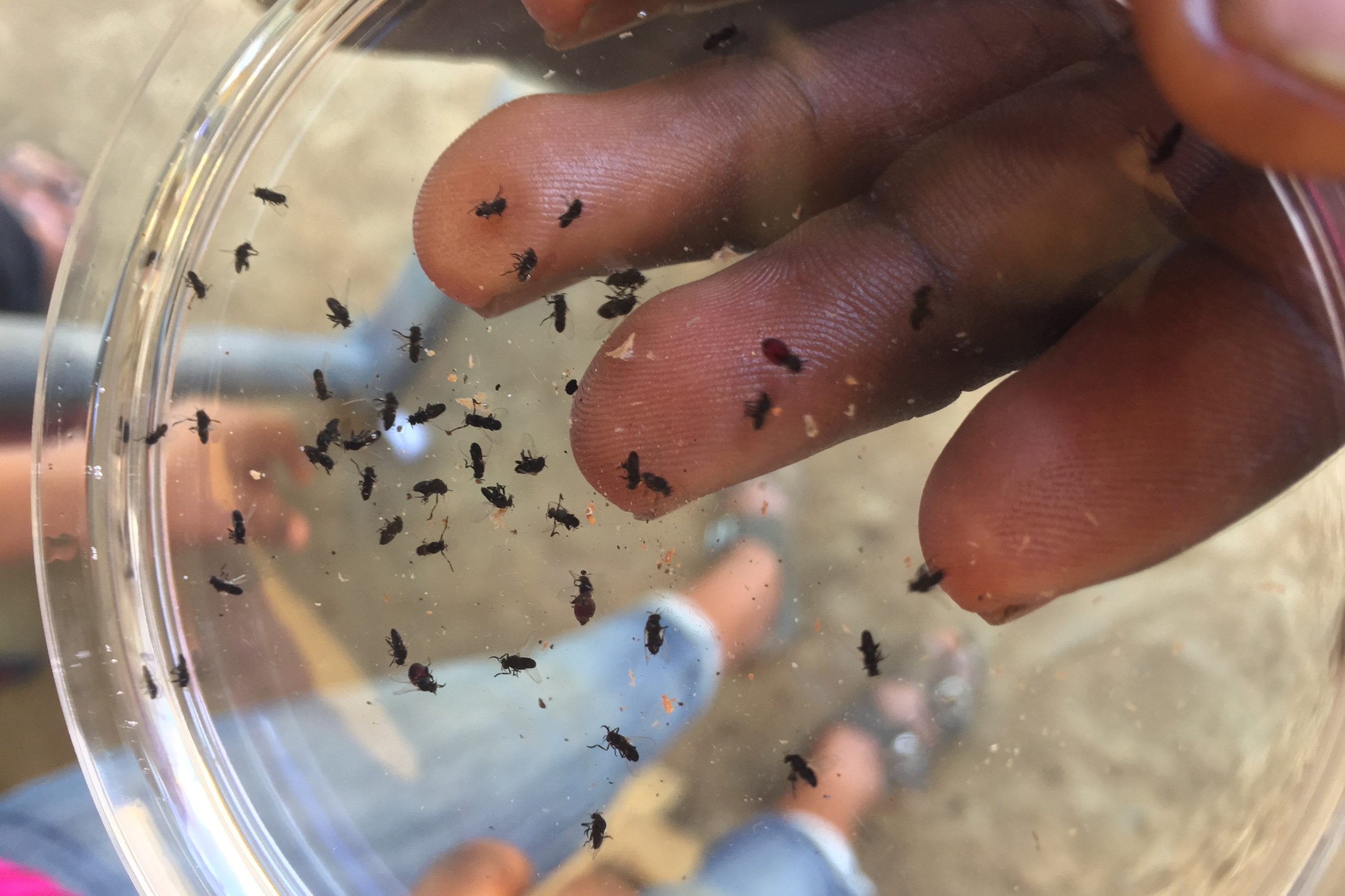
Onchocerciasis, or river blindness, is a neglected tropical disease (NTD) caused by a parasitic worm transmitted by blackflies. It affects around 21 million people, with 99% of cases occurring in 31 Sub-Saharan African countries. Approximately 14.6 million onchocerciasis infected individuals suffer debilitating skin disease and a further 1.15 million suffer visual impairment. Onchocerciasis is the second leading cause of preventable blindness due to infection and prioritised for elimination as a public health problem by the World Health Organisation as part of the NTDs Roadmap to 2030.
Meeting these ambitious elimination targets requires new strategies. A new short-course curative (macrofilaricide) treatment or a short-course agent which permanently blocks parasite reproduction and transmission is needed to accelerate elimination. A new therapy should also be safe to deploy as an alternative strategy to eliminate onchocerciasis where the related filarial parasite, Loa loa, is co-endemic in Central Africa.
About the project
Pre-clinical studies and computer modelling suggest that fusidic acid (FA; fucidin), an existing antibiotic, could be repurposed to treat onchocerciasis with a short, seven-day course of tablets. FA targets Wolbachia bacteria, which live inside the disease-causing parasitic Onchocerca worms and are essential to their survival.
Led by LSTM in collaboration with the University of Buea (Cameroon), Universitätsklinikum Bonn (Germany) and DNDi, the FA Macofilaricide Evaluation (FAME) project will advance FA into a proof-of-concept clinical trial. The study will evaluate dosing, exposure and safety in a Cameroonian population affected by onchocerciasis, exploring once- or twice-daily regimens of 7 or 14 days. Efficacy will be assessed through reductions in Wolbachia within female O. volvulus worms and effects on reproduction, compared with the current four-week doxycycline treatment.
Strategy and impact
The major output of FAME will be to generate clinical safety, pharmacology and pilot efficacy data for FA as a potential new treatment for river blindness. These results will help pave the way for a larger Phase II clinical study to further test FA’s use against onchocerciasis.
Scientific impacts
Current elimination programmes for river blindness rely on long-term, community-wide treatment with ivermectin. While these mass drug administration (MDA) campaigns have made major progress, they depend on consistently high coverage and can face challenges in some areas.
FAME aims to address these gaps by developing fusidic acid (FA) as a short-course treatment that targets adult worms. Introducing an affordable, curative drug like FA could greatly accelerate progress towards elimination, especially in regions where MDA alone is not sufficient.
By offering a new treatment option, FAME also helps protect the gains already achieved through ivermectin programmes, reducing the risk of disease resurgence and helping to manage potential drug resistance in the future.
Societal impacts
Around 205 million people live in areas affected by river blindness. The disease causes immense hardship with 14.6 million people suffering from severe skin disease and 1.15 million experiencing visual impairment and blindness. A further 300,000 children in sub-Saharan Africa are affected by epileptic syndromes strongly linked to onchocerciasis. Patients and their caregivers also suffer from social stigma and poor mental health.
Like many NTDs, onchocerciasis traps vulnerable communities, mainly in rural areas, in a cycle of illness, poverty and catastrophic health costs. Eliminating NTDs is essential to achieving the UN’s Sustainable Development Goals, not only for health and wellbeing, but also for ending poverty, reducing hunger, improving access to education, supporting decent work and economic growth, and promoting equality.
Economic impacts
NTDs such as river blindness place a huge financial burden on affected communities. Each year, an estimated US$33 billion is lost through out-of-pocket healthcare costs and reduced productivity. Eliminating NTDs like onchocerciasis could generate economic benefits worth more than US$342 billion by 2030 by preventing these losses and enabling people to lead healthier, more productive lives.